
Vandaag of morgen in huis

Kwaliteit gegarandeerd

Welkomstaanbiedingen ontgrendelen: GRATIS bezorging | Tot 80% korting | Gratis 30 dagen JoyPlus-proefperiode
Download de app
When you want to buy glassware, you will often look first at colour, shape and price. However, it is mainly the capacity, care requirements and number of pieces that determine whether a set works well for everyday use. An attractive glass that is not dishwasher-safe, tips over easily or turns out to be too small for a normal drink can quickly become a disappointing purchase.
Product titles can be confusing. Always check the number of glasses in the packaging rather than relying solely on the set name. A set might be called a “glass set”, for example, while the product information states a different number. For a four-person household, a set of four or six drinking glasses is often more practical than individual glasses.
Not every glass product is suitable for the dishwasher. Some models are explicitly dishwasher-safe, while others require hand washing. This difference affects everyday convenience. Also check whether the recommendation applies to the glass itself, the lid or any metal and plastic components.
Tall glasses take up more space in a kitchen cupboard and may be less stable. Coloured or smoked glasses may not coordinate as well with your other tableware. Also consider the capacity: 180 ml is suitable for a smaller serving of sparkling wine, while 400 ml offers more room for soft drinks, squash or a cocktail with ice.
Choose the capacity according to how you plan to use the glass:
The stated capacity is the maximum volume. In practice, you will usually not fill a glass to the brim.
Glass is transparent, flavour-neutral and suitable for many types of tableware. However, it remains fragile. Borosilicate glass is often used for food storage containers because of its stated temperature resistance, but always check the manufacturer’s specific usage instructions. With ordinary glasses, avoid sudden temperature changes, hard knocks and boiling liquids unless the product is specifically designed to handle them.
With glass storage containers, the combination of the glass and lid is particularly important. Check:
A glass lunch box is useful for leftovers and meal preparation, but glass weighs more than plastic. A secure fastening is therefore important when transporting it.
Dishwasher-safe glasses save time, but position them so that they do not knock against one another. According to the product information, some models, such as certain coloured tumblers and crystal wine glasses, require hand washing. In that case, use a mild washing-up liquid and a soft cloth.
Also consider the dimensions. Stackable water glasses can save space, while tall wine glasses and champagne flutes are best stored upright. If in doubt, measure the height of your kitchen cupboard before ordering.
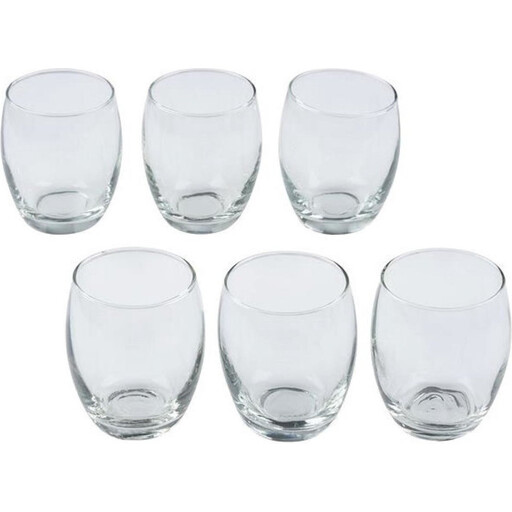
Why it suits this profile: This set of six 350 ml glasses is ideal for everyday use, family meals and entertaining. The simple round shape is easy to coordinate with existing tableware.
The quantity of six and the 350 ml capacity are clearly stated. According to the product information, these glasses are dishwasher-safe, so hand washing is not required.
Six pieces, 350 ml per glass, transparent glass and dishwasher-safe according to the product description.
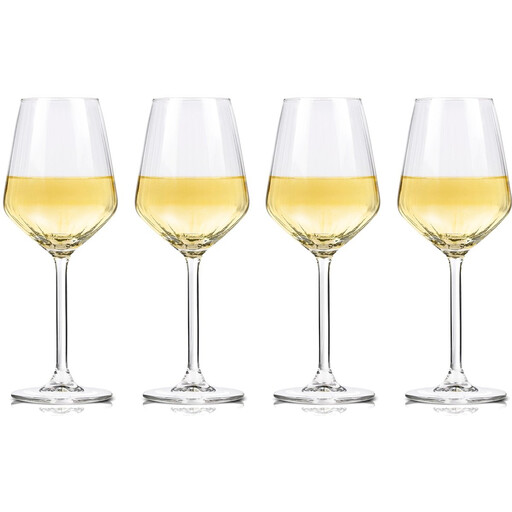
Why it suits this profile: This set is designed for anyone looking for elegant wine glasses for dinner parties and special occasions. The slender shape and stem give the table a classic look.
The 380 ml capacity, white wine glass design and quantity of four are specified. According to the product information, the glasses are dishwasher-safe.
Set of four, 380 ml per glass, transparent glass, slender shape and dishwasher-safe according to the product details.
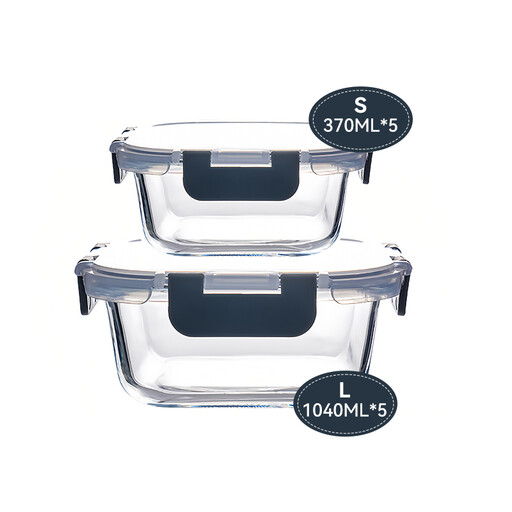
Why it suits this profile: For families, meal preppers and office lunches, a set of glass storage containers in several sizes is practical. The set contains five 1040 ml containers and five 370 ml containers.
The ratio of large to small storage containers is clear from the outset. According to the product name, the sealable lids are included in the set. Check the individual usage instructions before purchase.
Ten pieces, borosilicate glass according to the product title, and two useful sizes for leftovers and lunches.
We have put together a complete, up-to-date list of products that fully meet these strict selection criteria and the applicable European safety regulations.
For most households, water glasses or drinking glasses of 280 to 350 ml are a practical starting point. If you often serve soft drinks, cocktails or drinks with ice, you can add long-drink glasses of around 400 ml. For dinner parties, separate wine glasses or champagne glasses are useful when shape and presentation matter.
Its lifespan depends on the thickness of the glass, how it is used and how it is cared for. Glass can last for many years if you avoid knocks, stacking without protection and sudden temperature changes. When using a dishwasher, follow the manufacturer’s instructions. A dishwasher-safe glass is not automatically resistant to hard impacts or thermal shock.
They can be, provided the size and fastening suit how you plan to use them. Small containers are suitable for snacks or side dishes, while larger models are better for a full meal. Before buying, check that the lid closes securely and what information the manufacturer provides about use in the fridge, freezer, microwave and dishwasher. For everyday transport, a sturdy bag with protection around the glass is advisable.
