
Vandaag of morgen in huis

Kwaliteit gegarandeerd

Welkomstaanbiedingen ontgrendelen: GRATIS bezorging | Tot 80% korting | Gratis 30 dagen JoyPlus-proefperiode
Download de app
Glass tableware and storage containers suit many kitchens: from glass drinking cups for days out to glass storage jars for pasta, rice and breakfast cereals. However, a transparent design says little about how practical a product is. A lid may leak, a product may hold less than expected and “glass” in the product name does not always mean that the item is made entirely of glass.
With these buying tips, you can compare glass bottles, jars, carafes and drinking glasses based on the features that matter in everyday use.
Always check the material specification rather than relying solely on the title. A product advertised as a “glass set” may still be made of plastic according to the details. For example, plastic is listed as the material for the Excellent Houseware set, despite the product name containing “Glass Set”. This may be a suitable choice if you are looking for shatter resistance, but it is not glass tableware.
Also check components such as caps, handles, straws and pouring spouts. A glass bottle will often have a closure made of plastic, silicone or stainless steel.
For dishwasher-safe glassware, check whether the claim applies to the entire product. According to the product information, the 5five glass jar is dishwasher-safe, while the stainless steel lid is preferably washed by hand. Oil and vinegar bottles may also require extra care around the pouring spouts and seals.
Also check the temperature warnings. According to the description, the Secret de Gourmet Gaspard glasses are suitable for cold and room-temperature liquids, but not for hot or boiling drinks and not for use in the microwave.
A tall bottle or wide jar can sometimes look larger than it really is. So check the capacity in millilitres or litres as well as the external dimensions. For example, a 1.7-litre jar may be too tall for a kitchen cupboard with fixed shelves. Also measure the opening: a wide opening makes filling and cleaning easier.
The product description for the 5five set of two glass oil and vinegar bottles mentions 160 ml per bottle, while the specifications state a capacity of 320 ml. When details differ like this, it is wise to check the current product page before ordering.
Borosilicate glass, toughened glass and standard glass do not have the same properties. Only buy based on the material clearly stated in the product specifications. A stainless steel lid may be sturdy, but the seal could still be made of plastic or TPE/TPR.
Glass storage jars are useful for storing food because the material is transparent, so you can see the contents. For airtight glass jars, check how the closure works. “Airtight” is a product description; the actual seal depends on the design, the rubber ring and correct use.
Use these guidelines as a practical starting point:
A drinking glass with a lid can help reduce spills, but check whether the lid provides a proper seal or is merely intended to keep out dust. The same applies to glass bottles with straws.
Before buying, check whether a product:
Avoid sudden changes in temperature when using glass products. Do not pour boiling water into a cold glass unless the product information specifically allows it. Place glassware securely in the dishwasher and use a mild washing-up liquid when washing by hand.
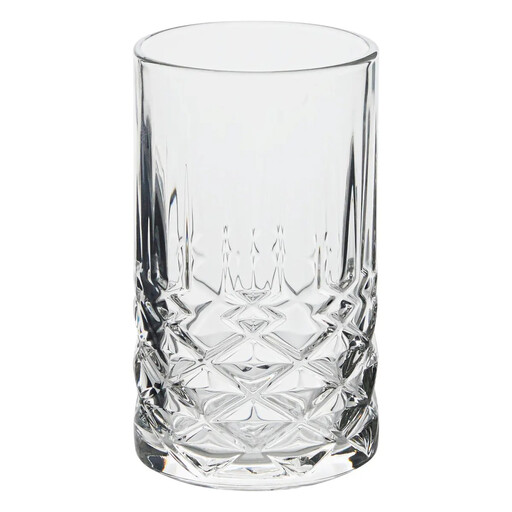
Why it suits this profile: A set of four tall glasses with a capacity of 36 cl is practical for everyday use, without having to combine several individual designs straight away.
The product specification clearly states that the glasses are made of glass, with a capacity of 36 cl each, and that the set contains four glasses. The warning against hot liquids makes the usage limitations clear.
Four transparent glasses, dishwasher-safe according to the product information and suitable for water, juice, cocktails and soft drinks.
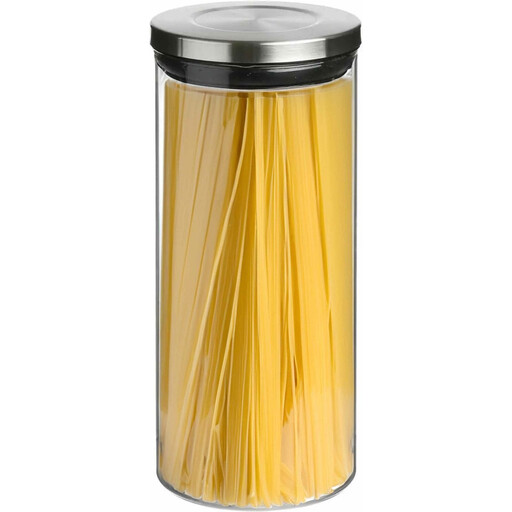
Why it suits this profile: The 1.7-litre capacity and 22 cm height are suitable for an organised cupboard storing dry ingredients.
The dimensions and capacity are listed, so you can check in advance whether the jar will fit in your cupboard. The lid should preferably be washed by hand.
1.7-litre glass jar with stainless steel lid, suitable for dry foods such as rice, pasta, salt and sugar.

Why it suits this profile: This set is designed for serving oil, vinegar or other seasonings at the table. Its slim design takes up very little space.
The product information lists the materials used for the bottle, lid and pouring spout separately. However, check the current capacity, as the stated specifications do not fully match.
Two glass bottles with pouring spouts, a transparent design and, according to the product description, dishwasher-safe construction.
We have put together a complete, up-to-date list of products that fully meet these strict selection criteria and the applicable European safety regulations.
For drinking on the go, a glass drinking cup with a straw or a cup with a lid can be useful. The 600ml Glass Straw Cup, Set of 2, mentions a glass cup with a straw in its product name. As the accompanying description contains no further details about the materials or care instructions, it is wise to check the product page for dishwasher suitability, leak resistance and temperature limits.
A cup with a handle, such as the YumiPLUS Glass Cup with a Lid and Handle, is well suited to use at a desk or breakfast table. If you mainly need a sealable container for small ingredients, consider a glass jar with a lid, such as the 350 ml JORDAN&JUDY Glass Jar with Lid and Spoon.
Not automatically. According to the product information, the 5five jar is recommended for dry foods such as rice, pasta, salt and sugar. For moist foods, acidic ingredients or prolonged refrigeration, check that the closure and seal are designed for this purpose.
This varies by product and component. According to the product information, the Gaspard glasses and the 5five oil and vinegar bottles are described as dishwasher-safe. For products with a lid, straw or pouring spout, check whether these components are suitable separately. Washing by hand can help extend the service life of delicate closures.
Avoid hard knocks, stack glassware carefully and do not expose it to sudden temperature changes. Do not place a cold glass directly on a hot surface, and do not use products for boiling liquids when the manufacturer advises against it. Before buying, also check whether the item is suitable for use in the microwave, freezer or with hot drinks.
