
Livraison le jour même et le lendemain

Qualité garantie

Débloquez vos offres de bienvenue: Livraison GRATUITE | Jusqu'à -80 % | 30 jours d'essai gratuits à JoyPlus
Téléchargez l'application
A tidy kitchen often starts with the right storage containers. Glass storage jars keep their contents visible and are suitable for many dry ingredients, but not every jar is right for every cupboard. For example, a lid may not seal as well as the product name suggests, while an attractive jar can take up a surprising amount of space because of its shape.
So don’t focus solely on appearance. Capacity, closure, dimensions and care instructions determine whether a glass storage jar remains practical for everyday use.
‘Keeps fresh’ or ‘airtight’ in a product description does not mean that every jar is suitable for every type of food. Check which closure mechanism is used. A clip-top lid with a silicone ring seals differently from a loose metal lid that simply rests on the jar.
For flour, sugar, pasta and rice, a well-fitting seal is important to keep moisture and kitchen odours out as much as possible. If you want a storage jar with an airtight lid, check whether a silicone ring, clips or a screw closure are explicitly mentioned.
A 1.7-litre jar can be useful for pasta or rice, but it also takes up more space. Measure the shelf height and depth first. Also consider the diameter: a tall, narrow jar is not always more stable or easier to fill than a wider model.
The weight of glass storage jars is also relevant. Glass is sturdy and transparent, but a large jar becomes heavy once filled. This matters particularly on upper kitchen shelves or open wall shelves.
Some products are dishwasher-safe, while the lid, silicone ring or metal clips need to be cleaned by hand. Check each component separately. A removable sealing ring is practical, but only if you allow it to dry properly after washing and replace it correctly.
Also, don’t automatically use glass in the oven or microwave. Borosilicate glass may be more heat-resistant according to a product description, but always follow the manufacturer’s specific instructions.
Glass is transparent and generally absorbs odours or colourants less readily than some plastics. This makes a glass jar suitable for coffee, tea, grains, nuts and dry snacks. The downside is its greater weight and the risk of breakage.
A plastic storage jar is often lighter and more convenient for families with children, but check the type of plastic and the usage instructions. Stainless steel food containers are robust and suitable for transport, but you cannot see their contents straight away.
Choose the capacity based on what you actually store:
A glass jar for pasta and rice should have an opening wide enough for filling and scooping. A narrow neck may look compact, but it makes cleaning and portioning more difficult.
An airtight storage jar usually has a silicone seal, a clip-top lid or a well-fitting screw-top lid. Check whether the product is described as leak-proof and what that feature is intended for. A storage jar for dry ingredients does not need the same type of closure as a jar carried in a bag.
For herbs, a shaker opening or compact size is more important than a large capacity. If you use several varieties, you could choose herb jars or a spice rack with jars, so that labels remain easy to read and you don’t have to search at the back of a cupboard every time.
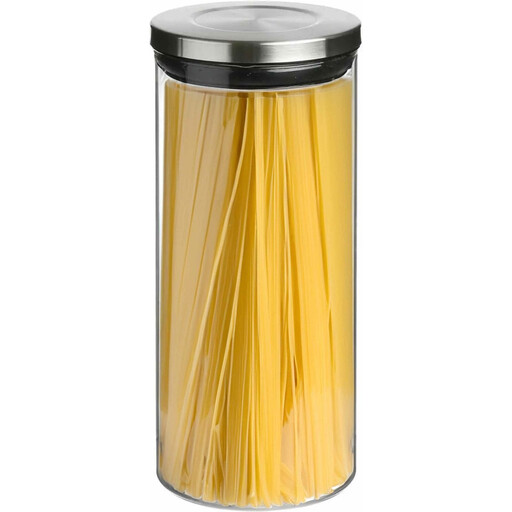
Why it suits this profile: This 1.7-litre glass storage jar is suitable for households looking to start with a single jar for rice, pasta, sugar or salt.
The capacity, 11 cm diameter and 22 cm height are stated, allowing you to check the available cupboard space in advance.
Transparent glass, a 1.7-litre capacity and a stainless steel lid. According to the product information, the jar is dishwasher-safe; hand-washing the lid is recommended.
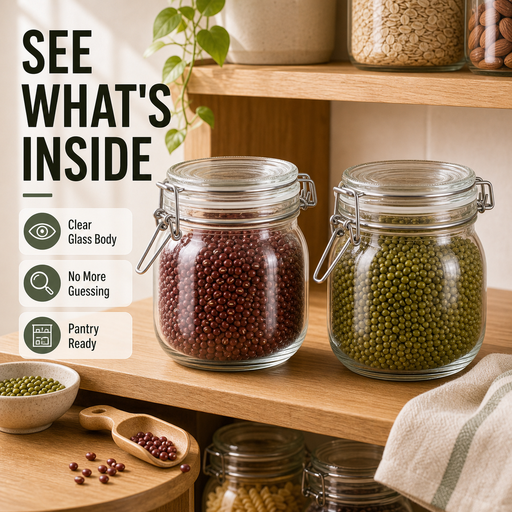
Why it suits this profile: The set of two 700 ml jars is ideal for anyone who wants to organise dry ingredients and snacks neatly.
The silicone ring is removable, and the product information describes stainless steel clips for a closure that you can check at a glance.
Borosilicate glass, two 700 ml jars and a silicone-ring seal. The manufacturer states that they are suitable for grains, herbs, dried goods and snacks.
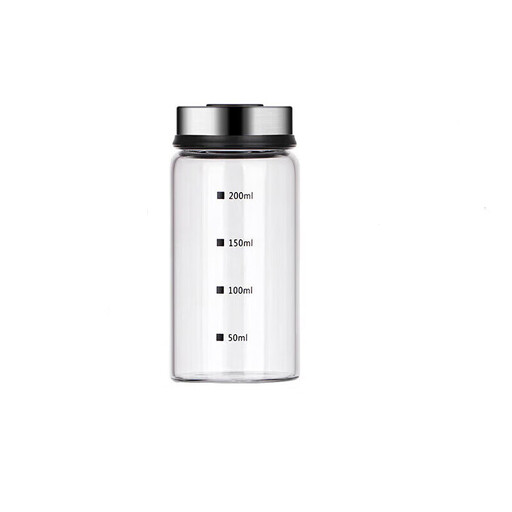
Why it suits this profile: A rotating spice jar is practical when you use lots of spices and want quick access to different jars.
The rotating function reduces the need to search through a deep drawer or cupboard. However, check the exact layout and dimensions on the product page beforehand.
Made from high-borosilicate glass according to the product description, with a design focused on rotation and easy visibility when storing herbs.
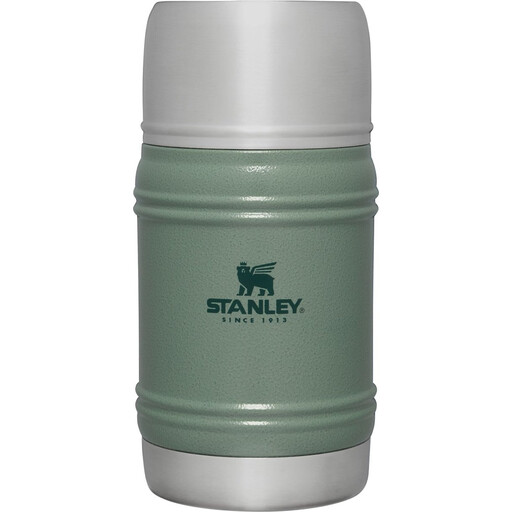
Why it suits this profile: This food jar is designed for hot or cold portions on the go, for example to take to work or school, or on a day out.
The leak-proof closure and 500 ml capacity are clearly stated. This makes it clear that it is a portable thermal food jar, not a storage jar for a kitchen cupboard.
Stainless steel, cork components, a 500 ml capacity and dishwasher-safe construction according to the product information. The manufacturer states that it keeps food warm for up to 13 hours and cool for up to 15 hours.
We’ve put together a complete, up-to-date list of products that fully meet these strict selection criteria and the applicable European safety regulations.
Start with the ingredients you use every day. Place rice, pasta, porridge oats and sugar in larger jars at eye level. Use smaller herb jars for spices, and put less frequently used products higher up or at the back.
A label showing the product name and opening date prevents confusion. Only refill a jar when it is empty and clean. This prevents old and new supplies from being mixed unnecessarily. Also store glass jars containing dry goods in a dry place, and only close them when the inside is completely dry.
When choosing a storage jar set, look for matching shapes. Sets can create a neat, cohesive look, but different capacities are more practical when you buy ingredients in varying quantities.
Yes, provided the jar has a suitable capacity and a wide opening. Check that the lid fits securely and store the jar in a dry place. A tall jar is useful for long pasta, while a wider opening is often more convenient for rice or short pasta.
Wash the jar according to the manufacturer’s instructions. If it is dishwasher-safe, check the lid and sealing ring separately. Removable silicone rings can be cleaned separately. Allow all components to dry completely before filling the jar again.
Their lifespan depends on how they are used, sealed and handled. Glass can last for many years as long as it is not dropped or exposed to sudden changes in temperature. Check silicone rings and closures regularly for warping or wear. Replace any damaged jar or a lid that no longer seals properly.
