Who is this choice relevant to?

Photographing tiny glass details

If you want to show inclusions, tiny air bubbles or surface texture at a larger scale, compare the magnification offered by the exact camera and lens combination rather than looking at the camera body alone. Manufacturer information from Canon Netherlands, Nikon Netherlands and OM SYSTEM Netherlands outlines different macro and close-up options.

Creating product photos against a dark background

If you want to keep the outline of transparent glass visible against a dark background, consider the position of the light and reflections on the object. Westcott University and Canon Europe describe techniques for dark backgrounds and controlled lighting setups.

Photographing several sharp views

If you want details at different depths to appear clear at the same time, look at focus bracketing or focus stacking, and bear in mind that these involve extra steps when taking the photo. Canon Netherlands and OM SYSTEM Netherlands list these features for specific camera models.

What should you consider when choosing?

Compact camera with a close-up mode

A good fit if: you want to try photographing small details without separate lenses, and the fixed lens can achieve the framing you want. The OM SYSTEM TG-7 manual describes a microscope mode that can focus from 1 cm; this distance does not guarantee that there will be enough room for lighting.

Trade-off: the lens cannot be changed, and working at close range can make it harder to position side lighting.

Mirrorless camera with a macro lens

A good fit if: you want to fill the frame with tiny details or choose the distance between the lens, glass and lighting. Canon Netherlands lists 1.4× magnification for the RF 100mm F2.8L Macro; Nikon Netherlands lists 1:1 for the Z MC 50mm.

Trade-off: a camera body or standard zoom lens does not automatically offer macro capability. Canon Netherlands lists 0.25× for the RF-S 18-45mm in MF mode; adding a separate macro lens makes your kit larger.

Existing camera with adjusted lighting

A good fit if: the whole paperweight already fits in the frame, but the edges of the glass disappear or reflections are distracting. First, try moving the light source and dark screening.

Trade-off: better lighting will not make up for insufficient magnification; focus bracketing requires a stationary subject and extra steps when taking the photo.

What to consider What should you check? Who is this important for?
Glass edges and reflections Check whether there is room for side or backlighting and screening; assess test shots against the dark background you plan to use. If I want to keep the edge of the glass visible without distracting reflections, I focus on the lighting setup. Around 33% of consumers put control of light and reflections first.
Magnification of details Compare the maximum magnification and the working distance from the front of the lens for the exact combination. If you want to fill the frame with inclusions or surface texture, compare the lens or close-up mode with that need in mind. Around 27% of consumers prioritise magnifying details.
Sharpness at different depths Check whether the exact camera body offers focus bracketing or stacking, and try the feature with a stationary paperweight. If I want to show different depths of the glass in focus at the same time, I look at the focus features and the extra steps involved. Around 20% of consumers prioritise this depth of field.
Complete kit Check which lens is included in the kit, whether a macro lens fits the camera body and what lighting you will need. If I would rather know in advance which components I need, I compare a fixed-lens camera with an interchangeable-lens kit. Around 20% of consumers prioritise simplicity and a complete kit.

Common pitfalls

  • Comparing camera bodies alone

    The lens also affects how large small details appear in the frame. Canon Netherlands, for example, lists different magnification levels for the RF-S 18-45mm and the separate RF 100mm F2.8L Macro.

    Before buying, note the full names of the camera body and lens, then compare the magnification offered by that combination.

    Adjusting the lighting and screening may take extra time and equipment.

Camera brands to consider

OM SYSTEM

The TG-7 offers a fixed-lens option with close-up modes; the OM-5 Mark II is a mirrorless camera with interchangeable Micro Four Thirds lenses and Focus Stacking.

  • The TG-7 manual describes focusing from 1 cm in microscope mode.
  • This short distance can leave little room in front of the camera for lighting. The M.Zuiko 60mm F2.8 Macro is a separate lens for a compatible mirrorless camera, not the TG-7.

Canon

The EOS R50 offers an interchangeable-lens option with focus bracketing; for greater macro magnification, there is the separate RF 100mm F2.8L Macro.

  • Canon Netherlands lists 1.4× magnification for the RF 100mm F2.8L Macro.
  • The RF-S 18-45mm standard zoom is a different lens; Canon lists 0.25× for it in MF mode. So check which lens is actually included in a kit.

Nikon

The NIKKOR Z MC 50mm f/2.8 is a separate macro option in the Z system.

  • Nikon Netherlands lists a reproduction ratio of 1:1.
  • Nikon gives a distance of around 5 cm from the front of the lens at the closest focusing distance; check whether your lighting will fit in your setup.

Sony

The FE 90mm F2.8 Macro G OSS is an E-mount lens for a compatible mirrorless camera.

  • Sony Netherlands lists up to 1.0× magnification and optical stabilisation.
  • The minimum focusing distance of 0.28 m is measured from the focal plane and is not the same as the clear space in front of the lens.

Fujifilm

The XF80mmF2.8 R LM OIS WR Macro is a macro option in the Fujifilm X system.

  • Fujifilm describes the longer focal length as a way to frame your subject from further away.
  • This manufacturer guidance does not guarantee that every glass setup will leave enough room for lighting.

Cameras and kits at Joybuy

This selection includes cameras and camera-and-lens kits for photography. For each model, check whether the included lens offers enough close-up capability and leaves room for the lighting setup you want.
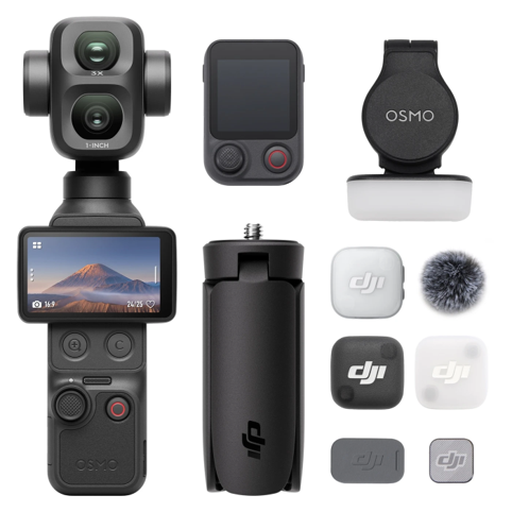
Osmo Pocket 4P Vlog Combo, Black

Osmo Pocket 4P Vlog Combo, Black

This camera is worth considering for framing a whole paperweight; check its close-up capability and the space available for lighting.

Vlog Combo; Black.

View at Joybuy

Komery W6 digital camera

Komery W6

This camera is worth considering for general product photography; check whether the lens can achieve the close-up framing you want.

12× optical zoom; 4K; 64 MP; Wi-Fi.

View at Joybuy

DJI Osmo Pocket 3

DJI Osmo Pocket 3

This camera is worth considering for product photography; check whether the fixed lens suits your preferred framing and level of detail.

1-inch CMOS sensor; 4K/120fps video; 3-axis stabilisation; 2-inch rotating touchscreen.

View at Joybuy
Sony ZV-E10 with 16-50mm zoom lens, black

Sony ZV-E10 + 16-50mm Zoom, Black

A zoom-lens kit worth considering for framing the whole paperweight; check whether the lens can also capture the close-up details you want.

16–50mm zoom lens; Black.

View at Joybuy
Sony Alpha A6100 with 16-50mm f/3.5-5.6 OSS II lens

Sony Alpha A6100 + 16-50mm f/3.5-5.6 OSS II

This camera and lens kit is worth considering for product photography; check whether the zoom lens suits the close-up distance you want.

16–50mm f/3.5–5.6 OSS II lens.

View at Joybuy

Frequently asked questions

Does the camera need a macro mode to photograph a whole paperweight?

Not necessarily: first check whether your existing lens can frame the whole object well and whether side lighting makes its outline visible. If you want inclusions to fill the frame, compare the magnification offered by the exact lens or close-up mode.

How can you keep the background dark without losing the edge of the glass?

Light the glass in a controlled way from the side or at an angle from behind, and avoid shining direct light onto the background. Adjust the light source, screening and camera based on test shots, as glass can also reflect its surroundings. Westcott University describes dark-field lighting for creating bright glass edges against a dark background.

What should you check on a camera with focus bracketing?

Check that the feature is available on the exact camera body and whether the images are stacked in-camera or require post-processing. Canon Netherlands lists focus bracketing for the EOS R50; OM SYSTEM Netherlands lists Focus Stacking for the OM-5 Mark II.

Does a mirrorless camera normally come with a suitable macro lens?

It depends on the specific kit. Check the full lens name: the Canon RF-S 18-45mm is a different lens from the separate RF 100mm F2.8L Macro and, according to Canon Netherlands, has a different maximum magnification.

What guarantee and cooling-off period apply when buying online in the Netherlands?

When you buy online from a business, you are often entitled to a 14-day cooling-off period, subject to exceptions, according to the Dutch government. Statutory guarantee also applies: if a product becomes faulty sooner than expected under normal use, the seller is responsible for providing an appropriate solution. ACM ConsuWijzer explains that statutory guarantee does not have a fixed term of exactly two years.
