Start by considering the size of your ornaments and how much control you need over reflections and the white background. No camera body can eliminate unwanted reflections on its own. A compact camera with a close-up mode may suit you if you want to capture small details without changing lenses; for more lens options, consider a mirrorless camera with a suitable lens. In either case, factor in a tripod, lighting and background. Photography guidance from Orbitvu Nederland and Canon Europe highlights the importance of controlling light and keeping your framing consistent.
Who is this buying guide for?
Online shop owner with a permanent photo setup
You photograph several glass ornaments against the same white background and want to control reflections, framing and colour in every shot. Orbitvu Nederland discusses managing reflections when photographing glass, while Canon Europe covers using a tripod to keep your framing consistent.
Maker focusing on small glass details
You might want to show engravings or small pendants in close-up. Check the magnification offered by the specific camera and lens combination, as illustrated by the product specifications from Nikon, Sony and OM SYSTEM.
Occasional seller
You want to get started without an extensive kit, but you’ll still need a suitable close-up mode and manageable lighting setup. The OM SYSTEM manual describes a close-up mode for the TG-7, but lighting glass remains a separate consideration.
What should you look for when choosing?
Compact camera with a close-up mode
Best for: photographing small details without changing lenses; OM SYSTEM says the TG-7 can take close-ups from as little as 1 cm from the subject.
Bear in mind: the lens is fixed, and the stated minimum shooting distance doesn’t guarantee that you’ll get the framing or lighting you want for every glass ornament.
Mirrorless camera with a standard or kit zoom lens
Best for: photographing whole ornaments, with the option of choosing another lens later; one example is the Canon EOS R50 kit with an RF-S 18–45mm lens.
Bear in mind: Canon lists a maximum magnification of 0.25× for this lens in MF mode, not 1:1. Check whether that’s enough for your smallest details.
Mirrorless camera with a separate macro lens
Best for: filling a large part of the frame with engravings or pendants; Nikon specifies 1:1 magnification for the NIKKOR Z MC 50mm f/2.8, as does Sony for the FE 50mm F2.8 Macro.
Bear in mind: the lens is a separate purchase. Check that it’s compatible with your camera mount and that there’s room for lighting and reflectors at the shooting distance.
When photographing glass ornaments, your setup matters just as much as your camera. Orbitvu Nederland and broncolor explain how glass can reflect or transmit light, while Canon Europe discusses using a tripod to keep your framing consistent.
| What to consider |
What to look for when buying |
Who it matters most to |
| Reflections and the glass outline |
Check that you can adjust the exposure and white balance. Leave room for light from behind or beside the glass, and for reflectors. |
For a permanent tabletop setup, I want to control reflections and keep the outline of each ornament visible. Around 33% of consumers prioritise this. |
| Small details |
Compare the maximum magnification and focusing distance of the exact lens or close-up mode. Check that there’s room for lighting at that distance. |
If engravings or small pendants need to fill the frame, I want to know what the complete camera and lens combination can do. Around 27% of consumers prioritise magnifying details. |
| Consistent results |
Check for RAW support if you want to adjust colour and white balance afterwards. Consider whether you can keep the camera, tripod and background in fixed positions. |
When photographing a series of ornaments, I want to be able to repeat the framing and colour workflow. Around 20% of consumers share this priority. |
| Keeping the full setup simple |
Check whether the offer includes a body, kit lens or separate lens. Factor in a tripod, background and lighting too. |
If I want to get started with as little separate equipment as possible, I weigh that against the option of choosing another lens later. Around 20% of consumers prioritise a simple setup. |
Common buying mistakes
-
Comparing camera bodies alone
Glass can reflect light sources, while the white background and the outline of the ornament each need attention. Switching to a different camera body won’t solve the lighting problem by itself.
First plan a practical tabletop setup, then decide which camera will work with it.
-
Assuming a close-up mode or kit zoom is the same as a 1:1 macro lens
Magnification varies between lenses and cameras. Canon lists a maximum of 0.25× in MF mode for the RF-S 18–45mm; separate macro lenses from Nikon and Sony are specified at 1:1.
Compare the magnification of the exact lens being offered and check that it’s compatible with your chosen camera body.
-
Assuming consumer rights automatically apply to a business purchase
According to ACM ConsuWijzer, whether consumer protections apply depends in part on whether you’re buying mainly for private or business use.
Before ordering, check in what capacity you’re buying and read the terms and conditions that apply to your purchase.
Camera brands to consider
Canon
The EOS R50 with RF-S 18–45mm kit lens is an option for photographing whole products, with the flexibility to choose another compatible lens later.
- Canon lists a 24.2-megapixel APS-C sensor for the EOS R50.
- Canon states that the kit lens reaches a maximum of 0.25× in MF mode; that isn’t 1:1 macro magnification. Check whether you’ll need another lens for small engravings.
Nikon
The Z50II is a mirrorless camera body that lets you choose a Z lens to suit the size of your ornament and your shooting distance.
- Nikon specifies 1:1 magnification for the separate NIKKOR Z MC 50mm f/2.8 lens.
- That magnification doesn’t automatically apply to a kit lens with the Z50II; check which lens is included in the offer.
Sony
The ILCE-6400A is an APS-C mirrorless option where your choice of E-mount lens is key for close-up photography.
- Sony specifies 1:1 magnification and a minimum focusing distance of 0.16 m for the separate FE 50mm F2.8 Macro.
- The camera body and a version supplied with a macro lens aren’t the same thing; check which parts are included in the offer.
FUJIFILM
The X-S20 is a mirrorless option for anyone who wants a RAW workflow and prefers to choose a lens separately.
- FUJIFILM specifies 26.1 million effective pixels, 14-bit RAW and a manual exposure mode for the X-S20.
- These camera body specifications don’t tell you whether a supplied lens can focus close enough for small details.
OM SYSTEM
The Tough TG-7 has a fixed lens and close-up modes, making it an option if you don’t want to choose an interchangeable lens.
- OM SYSTEM lists 12 megapixels and RAW shooting; the manual describes close-up shots from as little as 1 cm away.
- The lens is fixed. The short shooting distance alone doesn’t guarantee suitable framing or lighting for every ornament.
Cameras at Joybuy
These Joybuy products include cameras and versions with different lenses supplied. Check whether the lens and other included items suit your ornaments and photography setup.
 No image available
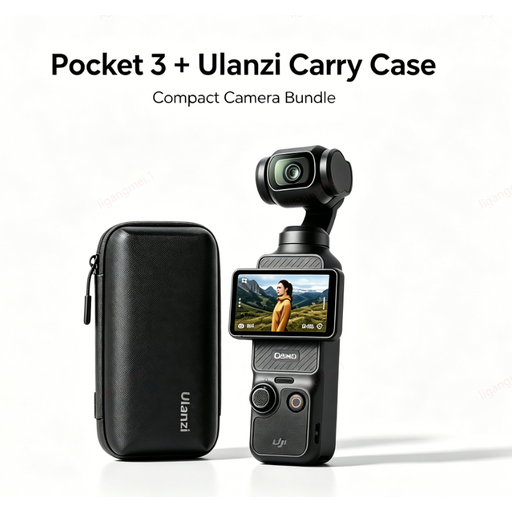
DJI Pocket 3 camera with Ulanzi Custom Storage Carry Case
The product title lists a camera with a Ulanzi storage case. Consider whether this version suits the fixed lighting and background setup you’ll need for glass.
Joybuy
 No image available
Sony ZV-E10, body only
This version may suit you if you want to choose a compatible Sony E-mount lens yourself. No lens is included; check the magnification and focusing distance of the lens you plan to use.
Joybuy
 No image available
Sony ZV-E10 with 16–50mm zoom lens, black
The product title lists a camera with a 16–50mm zoom lens. Check whether this lens’s magnification and shooting distance are suitable for the smallest details you want to photograph.
The product description lists a Sony E mount.
Joybuy
 No image available
Sony Alpha A6100 with 16–50mm f/3.5-5.6 OSS II lens
The product title lists a 16–50mm lens. Check whether its magnification and focusing distance suit your ornaments and leave enough room for lighting.
The product description lists a Sony E mount.
Joybuy
Frequently asked questions
Are more megapixels more important than lighting glass properly?
No. For this setup, start by controlling the light and reflections. Transparent glass needs lighting that shows its outline without unwanted reflections. Then check whether the lens and resolution suit the framing you want.
How can you photograph several ornaments with the same framing?
Keep the camera and product in fixed positions, use a tripod and leave the background unchanged. For each ornament, check whether the lighting shows the glass outline as you want it to.
Is a faulty camera bought online covered by a guarantee?
For a consumer purchase, ACM ConsuWijzer says the seller must offer a suitable solution if the product doesn’t meet what you could reasonably expect under normal use. Consumer rights don’t necessarily apply to a purchase made mainly for business use, so check in what capacity you’re buying.
When shopping online in the Netherlands, do you always have 14 days to change your mind?
ACM ConsuWijzer says that consumers generally have a cooling-off period for online purchases, ending 14 days after delivery, although there are exceptions. This consumer rule doesn’t automatically apply if you’re buying the camera mainly for business use.


