
Photographing reflective glass ornaments
You want to show the shape, transparency and decoration, and can adjust the background and lighting position. Simply switching to a different camera won’t solve unwanted reflections.


For overview shots and close-ups without a separate lens, a compact camera with a close-up mode offers a straightforward approach. For tiny engravings and greater flexibility, a mirrorless camera with a suitable macro lens is another option. Check the focusing capabilities and the exact lens kit. Practical examples from broncolor show that, with reflective glass, the positioning of the light can affect how visible the outlines and decorations are.
You want to show the shape, transparency and decoration, and can adjust the background and lighting position. Simply switching to a different camera won’t solve unwanted reflections.
You want to photograph small patterns or engravings on their own, so you’re comparing magnification with the space between the lens and the ornament.
You want to frame ornaments consistently and are weighing up a simple setup with a fixed lens against the flexibility to expand a mirrorless camera system.
Best for: you want to try overview shots and very close-up details without separate lenses. OM SYSTEM says the Tough TG-7 can focus from 1 cm away in microscope mode.
Consider: shooting from this close can leave little room to position a light beside the glass; the lens can’t be changed.
Best for: tiny engravings are important and you want to choose a lens suited to those details. Nikon quotes 1:1 magnification for the separate NIKKOR Z MC 50mm f/2.8; Sony quotes a maximum of 1× for the separate FE 50mm F2.8 Macro.
Consider: a camera body or standard zoom lens doesn’t automatically make a macro kit; also check how much room you’ll have for lighting.
Best for: overview shots are your priority and you want to work out how much magnification you need for your own ornaments first. Canon’s EOS R50 kit includes an RF-S 18–45mm lens.
Consider: the 0.5× magnification of the RF 85mm F2 Macro applies to that separate lens, not the kit lens.
With shiny glass, the position of the light and the background can affect how clearly you can see both the outline and the decoration. Examples of glass photography from broncolor show that adding more light isn’t automatically the right solution.
| What to consider | What to look for when buying | Who is this most relevant to? |
|---|---|---|
| Reflections and visibility | Test the lighting position with your ornament, along with a plain background and any screening; assess both the edge of the glass and its decoration. | When I photograph shiny glass, I want to assess the outline and decoration without distracting reflections hiding them. Around 36% of consumers make reflection control their top priority. |
| Small details | Compare the maximum magnification of the exact lens and test how much room you’ll have for lighting. | When I want an engraving to fill the frame, I look at both magnification and the space in front of the lens. Around 29% of consumers prioritise fine details. |
| Consistent results | Check the tripod mount and whether the camera supports the focus bracketing you want. | When photographing a range of ornaments, I want to keep the framing and focus consistent while adjusting the setup. Around 21% of consumers prioritise consistency across a range. |
| Ease of use and a complete kit | Check which lens is included and whether the mount is compatible with any macro lens you might want. | When I want to avoid having to match lots of separate components, I weigh convenience against the options offered by an expandable kit. Around 14% of consumers prioritise simplicity and a complete kit. |
The Canon EOS R50 kit includes an RF-S 18–45mm lens; the quoted magnification of 0.5× applies to the separate RF 85mm F2 Macro, not the kit lens.
Compare the full model name and kit contents with the lens you need for your smallest detail.
A macro lens may need to be bought separately.
With glass, the shape and position of the light can change which outlines or engravings are visible. A polarising filter can reduce reflections, but it doesn’t let you choose exactly which reflections disappear.
Take test shots with different lighting positions and backgrounds. Use a suitable filter only if the reflection it reduces is actually distracting.
When shooting very close up, there may be little room to position a light beside the glass.
Check the space in front of the lens using an ornament and lighting setup similar to what you plan to photograph.
The Tough TG-7 is a compact camera with a fixed lens and a microscope mode for close-ups.
The EOS R50 kit offers a mirrorless camera setup for general portfolio photography; a macro lens is a separate upgrade option.
The Z50II is a mirrorless camera that can be paired with a suitable Z lens; the NIKKOR Z MC 50mm f/2.8 is a separate macro lens.
The α6400 has an E-mount; the FE 50mm F2.8 Macro is a separate lens for detail shots.
A selection of Joybuy cameras for portfolio photography. For each model, check that its close-up capabilities suit your smallest ornament and lighting setup.
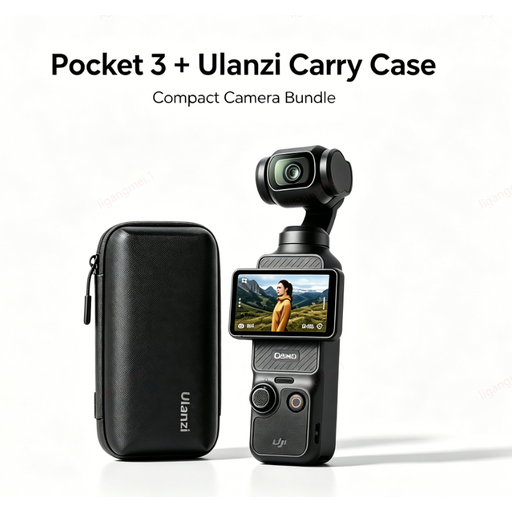 Image unavailable
This camera is worth considering for general portfolio shots; check that its close-up capabilities suit your smallest ornament.
The listed set includes a Ulanzi storage bag.
 Image unavailable
This digital camera is worth considering for general portfolio shots; check its close-up capabilities against the smallest detail you want to capture.
The product name lists 80MP UHD and 18X zoom.
 Image unavailable
This digital camera is worth considering for general portfolio shots; check its close-up capabilities with your ornament before choosing a model.
The product name lists 80MP UHD and 18X zoom.
 Image unavailable
This camera could be an option for general portfolio shots; check separately whether the supplied lens offers enough close-up range for your smallest decoration.
The product information lists a 24.2 MP APS-C sensor and a 16–50mm kit lens.
No, not necessarily. 1:1 describes how large a subject can appear on the sensor; for an overview shot, choose a framing that fits the whole ornament. Magnification matters most when you want to show small patterns on their own.
Keep the ornament still and take test shots while changing the direction of the light and how it is screened. In a setup for engraved glass described by broncolor, general lighting made the glass look even, but the engraving remained almost invisible; more targeted lighting made it easier to see. This example isn’t a guarantee for every ornament.
For a distance purchase made by a consumer, there is generally a statutory cancellation period of up to 14 days after delivery, with some exceptions. The seller is also responsible for the statutory guarantee if a product doesn’t meet what you could reasonably expect under normal use. Before buying, check who the seller is and which items are included in the kit.
The Dutch government states that the photographer automatically holds the copyright to a photograph. If you photograph someone else’s work or use other people’s protected photographs, text or designs, separate usage rights may apply; whether you need permission depends on what you publish.