What should you consider when choosing?
Start with test shots under the lighting you plan to use, then decide whether your main limitation is magnification, consistency or the overall set-up. Orbitvu Nederland discusses light control when photographing glass, while Shopify recommends a tripod to help you repeat your framing.
Existing smartphone or camera
Choose this if: the ornaments appear large enough in the frame and a test series under controlled lighting shows the details you want.
Trade-off: Shopify notes that a smartphone can be useful on a limited budget, but offers fewer setting options.
Compact camera with close-up modes
Choose this if: you want to capture small details without separate lenses; OM SYSTEM lists macro modes and a microscope mode for the Tough TG-7.
Trade-off: The stated minimum focusing distance of 1 cm doesn’t prove that you can easily light a reflective ornament from that distance; a fixed lens also limits your future choice of angle of view and magnification.
Mirrorless camera with standard zoom lens
Choose this if: you want to take both wider shots and different crops, with the option to choose another lens later.
Trade-off: Canon specifies a maximum magnification of 0.14–0.26× for the RF-S 18-45mm, depending on focal length and focusing mode. Don’t assume it will provide macro magnification without testing it first.
Mirrorless camera with a separate macro lens
Choose this if: you need engravings or other small details to fill the frame and want to use a suitable macro lens.
Trade-off: Canon specifies up to 1:2 magnification for the RF 35mm F1.8 Macro, while Nikon specifies 1:1 for the NIKKOR Z MC 50mm f/2.8. Also check how much space will be left in front of the lens for your lighting set-up.
| Challenge |
What to look for when buying |
Who should prioritise this? |
| Reflections in glass |
Test the camera with stable framing and controlled lighting; assess the ornament under the lighting you plan to use. |
If I see distracting bright spots, I want to get the lighting under control before replacing the camera body. Around 33% of consumers say controlling reflections is their main purchasing concern. |
| Small decorations |
Compare the maximum magnification of the exact lens and take a test crop; leave room in front of the lens for the lighting. |
For engravings or small fittings, I want to check whether the detail appears large enough in the frame. Around 25% of consumers prioritise showing small details. |
| A consistent product range |
Try using a tripod and a fixed shooting position; check whether you can repeat the framing and settings. |
If I photograph lots of variations, I want to create similar images without changing the set-up each time. Around 25% of consumers give repeatability top priority. |
| The complete set-up |
Compare your current equipment with the set-up you have in mind, and check which lenses and other components are included in the version you choose. |
Before choosing a camera body, I want to know which components I’ll need to achieve the level of detail I’m after. Around 17% of consumers prioritise the contents of the complete kit. |
Cameras at Joybuy
These Joybuy products are camera options to compare with your shooting set-up. Test each model under controlled lighting to see whether it gives you the framing and detail you need.
 No image available
Komery W6 digital camera, 64 MP, 12× optical zoom, 4K and Wi-Fi
The stated 12× optical zoom could be useful if you want to take different crops; test whether the ornament details you need appear sharp and large enough in the frame.
The product name lists 64 MP, 12× optical zoom, 4K and Wi-Fi.
View at Joybuy
 No image available
DJI Osmo Pocket 3
The product title describes this as a vlogging camera; take a test shot to see whether its controls and framing suit your product set-up.
The product title lists a 1-inch CMOS sensor, 4K/120 fps video and 3-axis stabilisation; these video features alone don’t indicate how it will handle reflections or close-ups of glass.
View at Joybuy
 No image available
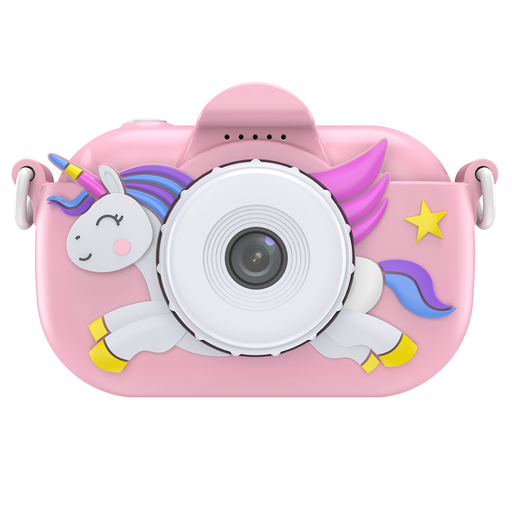
Songdian Kids Camera, pink
The product name describes this model as a pink children's camera; take a test shot to see whether it captures the details of your glass ornaments.
View at Joybuy
 No image available
Sony ZV-E10 with 16–50mm zoom lens, black
The listed 16–50mm zoom is useful if you want to take different crops; test it with your complete lighting set-up to see whether even the smallest details appear clearly.
The product name lists a 16–50mm zoom lens.
View at Joybuy
 No image available
Sony Alpha A6100 with 16–50mm f/3.5–5.6 OSS II
The listed zoom lens is useful if you want to take different crops; take a test shot to check whether the ornament details you want appear large enough in the frame.
The product name lists a 16–50mm f/3.5–5.6 OSS II lens.
View at Joybuy
Frequently asked questions
Will reflections disappear if you buy a more expensive camera?
No, not automatically. When photographing reflective glass, light placement and the shooting environment need to be considered separately. Start with test shots using a set-up you can control.
Is the supplied zoom lens automatically suitable for small decorations?
No, it depends on the magnification of the exact lens and the detail you want to show. Canon specifies a maximum of 0.14–0.26× for the RF-S 18-45mm, depending on focal length and focusing mode; compare this with a test crop.
How can you keep a series of ornament photos consistent?
Where possible, use a fixed camera set-up and keep the framing and lighting as consistent as you can. Shopify recommends a tripod to help you repeat your framing.
What should you check besides the camera body?
Check which lens is included in the kit you choose and what other components you’ll need for your intended shooting set-up. For a business purchase, also check which sales, returns and warranty terms apply.
Can you use another seller’s photos in your online shop?
Not without permission. The Dutch government states that you may only use other people’s copyright-protected photos with the creator’s permission; check the usage rights before adding an external product photo.


