Start by getting to grips with light and reflections, then decide how much magnification you need. A more expensive camera body won’t automatically eliminate reflections in glass. A compact camera with useful close-up features keeps your kit simple, while a mirrorless camera with the right lens gives you more choice of magnification. Always check the lens and the complete kit, not just the megapixel count.
Who is this choice relevant to?
Glass ornament maker
You want to create a recognisable series of product photos at home, with particular control over reflections, backgrounds and a consistent set-up. Orbitvu discusses the role of precise lighting when photographing glass, while Canon Netherlands explains how a tripod can help you achieve consistent framing.
Photographer of small glass details
You want to capture engravings, hanging points or decorations clearly. So assess the camera and lens together for their close-up capabilities; Canon Netherlands and OM SYSTEM describe options for macro and detail photography.
Beginner with a small home studio
You want to get started with fewer separate camera components, but you still need to check whether the lens can achieve the framing you want and how to position the camera and lighting. Orbitvu, Canon Netherlands and OM SYSTEM cover aspects of product lighting and more compact camera options.
What should you look for when choosing?
First decide how you’ll control reflections and arrange your set-up. Then choose based on the level of detail you want to capture and how much separate equipment you’re willing to use.
| What to consider |
What to look for |
Who this matters to |
| Reflections and the shape of the glass |
Allow space for controlled lighting, light modifiers and a fixed camera set-up. |
If I want to show the shape of an ornament without distracting reflections, I start with the lighting set-up. Around 33% of consumers put reflection control first. |
| Small details |
Check the maximum magnification of the exact lens and the practical shooting distance. |
If you want to fill the frame with engravings or small decorations, check that the lens can achieve the framing you need. Around 27% of consumers give detail magnification top priority. |
| Consistent photos |
Check whether the model offers the manual settings and file formats you need; keep the camera and lighting in fixed positions. |
For a series of ornaments, I want to be able to repeat the composition and process. Around 20% of consumers put a consistent series ahead of other purchasing priorities. |
| Complete kit |
Compare the fixed lens or included kit lens with any additional lenses and the lighting set-up you’ll need. |
If I want to start with a straightforward kit, I want to know in advance which components I actually need for the photos I’m planning. Around 20% of consumers make a simple, complete kit their top priority. |
Pitfalls to avoid
-
Buying a more expensive camera to eliminate reflections
Glass reflects its surroundings and light sources. Replacing the camera alone won’t change the environment.
First control the background and the direction of the light, then decide which camera features you still need.
A controlled lighting set-up may require extra time and equipment.
-
Assuming a mirrorless camera kit automatically includes macro equipment
Magnification depends on the specific lens. A kit lens may be enough for an entire ornament, but not necessarily for its smallest decorations.
Check the included lens and the maximum magnification of the exact kit before choosing.
You may need a separate, suitable lens for some close-ups.
-
Assuming you automatically have a consumer cooling-off period for a business purchase
ACM ConsuWijzer distinguishes between purchases used mainly for private purposes and those used mainly or exclusively for business.
Before buying, check in what capacity you’re making the purchase and which terms apply to the agreement.
Camera brands to consider
Canon
Canon offers both mirrorless cameras with interchangeable lenses and compact cameras with a fixed lens, including the EOS R50 and PowerShot G7 X Mark III.
- Canon says the EOS R50 supports RF and RF-S lenses. For the RF-S 18-45mm, Canon specifies maximum magnification of 0.25× in MF mode.
- According to Canon, the PowerShot G7 X Mark III has focus bracketing, but its fixed lens cannot be changed. These specifications are not an independent comparison of image quality.
OM SYSTEM
The Tough TG-7 is a compact camera for anyone who wants to photograph small subjects without choosing an interchangeable lens.
- OM SYSTEM lists a microscope mode, RAW shooting and 12 MP for the TG-7.
- The ruggedness for outdoor use highlighted by the manufacturer doesn’t, on its own, tell you how well the camera can control reflections in a home studio.
Fujifilm
The X-S20 is an APS-C mirrorless camera with an X mount, for anyone who wants to choose a suitable lens.
- Fujifilm specifies 26.1 million effective pixels, RAW shooting and built-in sensor stabilisation for this model.
- The close-up magnification you need depends on the lens you choose; sensor stabilisation is no substitute for a controlled lighting set-up.
Sony
The α6400 (ILCE-6400) is an APS-C mirrorless camera with an E mount.
- Sony specifies approximately 24.2 effective megapixels and an E mount for the ILCE-6400.
- These specifications don’t show that every kit lens on offer can provide the magnification you need for a small ornament.
Nikon
The Z50II is a mirrorless camera option for anyone who wants to choose a suitable Z lens separately.
- Nikon offers the Z50II in a range of kit configurations.
- The product review mode described by Nikon shifts focus from a face to an object held in front of the camera; that doesn’t prove it’s suitable for still glass ornaments.
Cameras at Joybuy
These cameras are options to consider for this subject. For glass ornaments, specifically check their close-up capabilities, settings and suitability for a fixed studio set-up.
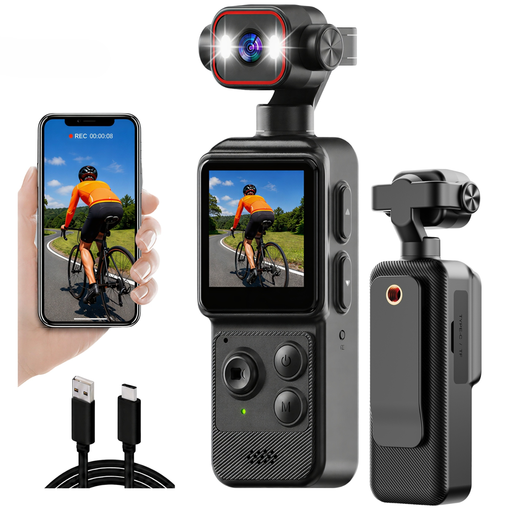 Image unavailable
Mini Action Camera 4K with clip, 1.54-inch display
If you’re considering this camera for ornaments, first check that its close-up capabilities and controls suit your shooting distance.
The product title lists a 140° wide-angle lens, app control, LED light and a 1200 mAh battery.
View at Joybuy
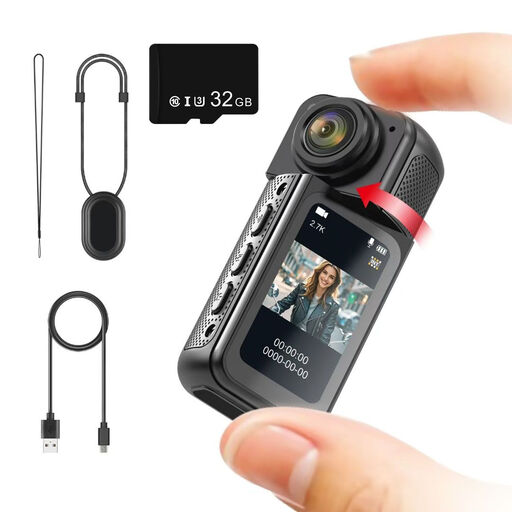 Image unavailable
NAXSIR Mini Action Camera 2.7K
For small glass details, check whether this action camera’s shooting distance and close-up capabilities suit the framing you want.
The title lists a 180° rotating lens, magnetic mount, 1.47-inch IPS screen and included 32 GB memory card.
View at Joybuy
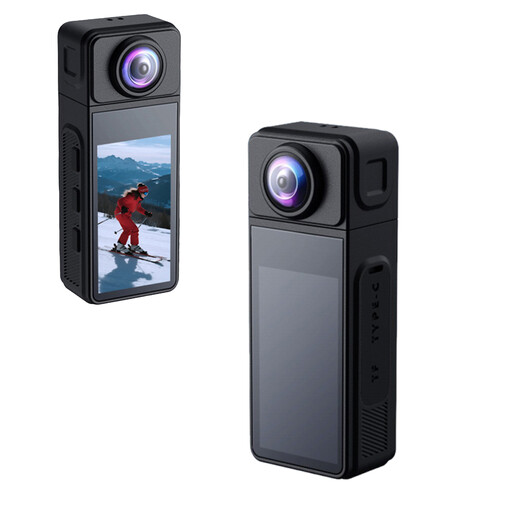 Image unavailable
NAXSIR 2K Mini Action Camera
Check that the camera supports the close-up shots and fixed framing you need for your ornaments; the wide-angle specification alone doesn’t tell you this.
The title lists a 270° rotating wide-angle lens, magnetic housing and electronic image stabilisation.
View at Joybuy
 Image unavailable
Komery W6 digital camera
If you’re looking at this camera for glass ornaments, check that the lens can focus close enough and provide the framing you want.
The product title lists 12× optical zoom, 4K, Wi-Fi and 64 MP.
View at Joybuy
 Image unavailable
DJI Osmo Pocket 3 Creator Combo
The title also mentions photography; check separately whether its close-up capabilities are suitable for capturing the details of your glass ornaments.
The title lists a 1-inch CMOS sensor, 4K/120fps video, 3-axis stabilisation, tracking, fast focusing and an included microphone.
View at Joybuy
Frequently asked questions
Does a polarising filter remove all reflections from a glass ornament?
No. Don’t use a filter as a substitute for controlling the light. Nikon says a polarising filter can reduce reflections from glass; also position the light sources and background so unwanted reflections stay out of the frame. Check the filter size of the lens you choose, too.
Do I always need a separate macro lens for small ornaments?
Not always. First compare the framing you want with the capabilities of the exact lens: Canon specifies maximum magnification of 0.25× for the RF-S 18-45mm in MF mode, while OM SYSTEM lists a microscope mode for the TG-7. If those capabilities aren’t enough for the details you want to capture, you could consider a different lens or camera option.
How can I take a series of ornament photos with similar framing?
Keep the camera and lighting in fixed positions and use a composition you can repeat. Canon Netherlands explains how using a tripod can help keep framing consistent across product photos.
What are my rights when I buy a camera online in the Netherlands?
If you buy online as a consumer, ACM ConsuWijzer says you’ll generally have up to 14 days after delivery to change your mind, subject to applicable exceptions. You’re also entitled to a legal guarantee if the product doesn’t perform as you could reasonably expect under normal use; in the Netherlands, there isn’t automatically one fixed two-year period. Consumer rights don’t necessarily apply to a purchase used mainly or exclusively for business.


