
Maker of small glass details
Wants to capture engravings and small decorations clearly. The maximum magnification of the lens you choose partly determines how large these details appear on the sensor.


For capturing tiny details that need to fill the frame, a mirrorless camera with a macro lens chosen separately offers flexibility. If you want to take close-ups quickly without changing lenses, a compact camera may be more practical. The right choice depends on the magnification of the specific lens and how much room you have left for lighting. When photographing glass, test the background, lighting and camera angle first: simply changing the camera body won’t eliminate reflections.
Wants to capture engravings and small decorations clearly. The maximum magnification of the lens you choose partly determines how large these details appear on the sensor.
Takes photographs in a space shared with other workstations and wants to control what appears in the reflective glass by adjusting the lighting, background and camera angle. Adobe and Digital Photo Mentor explain the importance of a controlled set-up for product and glass photography.
Wants to take close-ups without changing lenses in a shared workshop. A camera with a fixed lens can be a practical option, but space for lighting is still important.
When: If you want a simple set-up and don’t want to change lenses. According to its manual, the OM SYSTEM TG-7 can photograph subjects from as close as 1 cm away.
Consider: Such a short shooting distance can make it harder to position lighting around a delicate ornament.
When: If magnification and the option to choose a different lens later are important to you. Nikon specifies 1:1 magnification for its separate NIKKOR Z MC 50mm f/2.8 lens.
Consider: The macro lens you want isn’t automatically included with the camera body or kit zoom. Canon’s RF 85mm F2 Macro IS STM offers a maximum magnification of 0.5×, according to Canon.
When: If you’re still deciding whether you need to buy anything, first try using a plain background, changing the lighting position and adjusting the camera angle.
Consider: Changing your set-up won’t give you close-up capabilities that your current equipment doesn’t offer.
| What to consider | What to look for when buying | Who is this important for? |
|---|---|---|
| Small details | Check the maximum magnification of the specific lens and which lens is included in the set. Canon lists focus bracketing for the EOS R10; this doesn’t change the lens’s magnification. | If I want engravings to fill the frame, I check the magnification of the exact lens I’ll be using. Around 33% of consumers prioritise magnification for detail. |
| Reflections | Try changing the background, camera angle and lighting position before buying a different camera body just to deal with reflections. Adobe highlights a controlled environment and good lighting as important considerations for product photography. | When reflections obscure the decoration, I want to be able to adjust the set-up first. Around 27% of consumers prioritise controlling reflections. |
| Workspace | Test your preferred framing where you’ll be taking photographs and check whether there’s room around the lens for lighting. | If space is limited and I don’t want to change lenses, a compact way of working matters more to me. Around 20% of consumers give this need top priority. |
| Complete set-up | Compare the camera body with the exact lens included in the packaging, and see whether your existing camera or smartphone can already achieve the framing you want. | If I want to keep the whole set-up affordable and practical, I consider what I already have as well as what else I need. Around 20% of consumers prioritise the cost of a complete set-up. |
The stated magnification applies to the specific lens. Nikon specifies 1:1 magnification for the NIKKOR Z MC 50mm f/2.8 lens; Canon lists a maximum of 0.5× for the RF 85mm F2 Macro IS STM.
Before choosing, read the full lens name and check which components are included in the set.
You may need to buy a separate macro lens to get the magnification you want.
Glass is transparent and reflective. The background and lighting will still show in the image; changing the camera body won’t automatically change the set-up.
Take test shots with a different background, camera angle and lighting position before deciding that the camera body is the problem.
According to its manual, the OM SYSTEM TG-7 can photograph subjects from as close as 1 cm away. This proximity can make it harder to position lighting around the ornament.
Try your preferred framing in the actual workspace and check where you can position the camera, lighting and ornament.
EOS R cameras are worth considering if you’re looking at focus bracketing and a separately chosen RF macro lens.
A Z-series mirrorless camera with a separate Micro lens is worth considering if magnifying small details is your priority.
E-mount cameras offer one option for using a separate E-mount macro lens.
The TG-7 is a compact camera with a fixed lens for taking close-ups without changing lenses.
This selection from Joybuy focuses on compact, portable camera equipment. Check that the product offers the close-up capabilities and framing you need for glass ornaments.
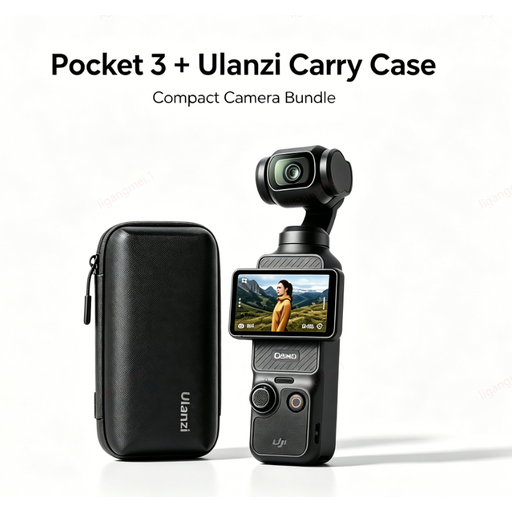 Image unavailable
The product description mentions a compact handheld design and an included carry case, making it a good fit if portability and compact storage matter to you.
Before buying, check that its close-up capabilities and framing suit your ornaments and the space available for lighting.
No. First, try to see whether your current camera or smartphone can achieve the framing and sharpness you want. If small details need to fill the frame, compare the maximum magnification of the specific lens; a kit zoom isn’t automatically a 1:1 macro lens.
Start with a plain background and see what’s reflected in the glass. Then move the lighting, camera or background and take a test shot. Position your equipment so you don’t need to use anyone else’s space.
If you’ve bought as a consumer in the Netherlands, you’re entitled to a product that works properly; according to the Dutch government, the seller must provide a solution if there’s a problem. Many distance purchases also come with a 14-day cooling-off period, subject to exceptions. Check which terms apply to your purchase.
According to the Dutch Data Protection Authority, a lawful basis under the GDPR is required to take and publish identifiable images for professional or commercial purposes. If an employer photographs employees, the regulator says consent is the relevant basis in most cases. Keep colleagues out of shot if you don’t need to include them.