
Vandaag of morgen in huis

Kwaliteit gegarandeerd

Welkomstaanbiedingen ontgrendelen: GRATIS bezorging | Tot 80% korting | Gratis 30 dagen JoyPlus-proefperiode
Download de app
Glass kitchenware fits into many British kitchens: from glass drinking tumblers and storage containers to water carafes, oil bottles and serving dishes. Glass looks neutral, shows off the contents and generally doesn't absorb food odours or colours. However, not every glass product is suitable for the same purpose.
A nice-looking package doesn't always tell you much about everyday use. So pay close attention to the material, dimensions, care instructions and details about the included components.
With some items, the title differs from the technical product information. For example, the Alpina Drink Glass Set is described as a set of three glasses, yet the product specification lists the quantity as 1 piece. If in doubt, always check the packaging contents before ordering.
A glass container may be dishwasher-safe, while the lid, silicone seal or wooden stand needs hand washing. For glass oil and vinegar bottles, hand washing is often recommended. So check whether the care information applies to the whole product or just the glass part.
Not every glass product is suitable for hot drinks, the oven or the microwave. A water carafe may be explicitly listed as not heat-resistant. Other dispensers, according to the product description, are suitable for cold and warm drinks up to a maximum of 60 °C. Always avoid sudden temperature changes, such as pouring boiling water into a cold glass jug.
For drinking glasses, vases and serving dishes, ordinary glass is often fine for normal use. For glass storage containers that go from fridge to microwave or freezer, borosilicate glass is a practical specification to look out for. This type of glass is often linked in product information to use with temperature changes, but always follow the manufacturer's specific instructions.
Also pay attention to the combination with other materials:
These parts help determine how easy a product is to clean and use.
Choose the capacity based on the intended use. For a single serving, glass drinking tumblers of around 220 to 270 ml are practical. A 1.4-litre water carafe will usually fit in a fridge door, while an 8-litre drinks dispenser is better suited to a barbecue, birthday party or other gathering.
Also consider the external dimensions. A tall dispenser may struggle to fit under a kitchen cupboard. For glass storage containers, the length, width and height matter for stacking and storing in the fridge or freezer.
Before buying, check the following points:
Glass is fragile. Place heavy carafes and storage jars on a stable surface, and after cleaning, check for any cracks or sharp edges.
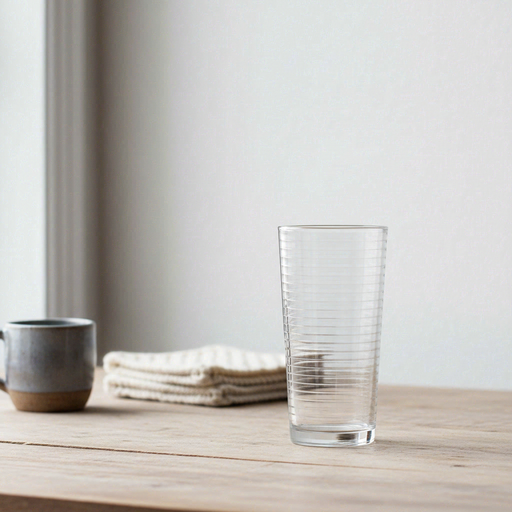
Why this fits the profile: A transparent 220 ml drinking glass is suitable for everyday use at the breakfast table, during dinner or for soft drinks.
The product page lists both a set of three and one item in the specifications. So check the exact packaging contents before ordering.
Transparent glass, 220 ml capacity and, according to the product information, dishwasher-safe.
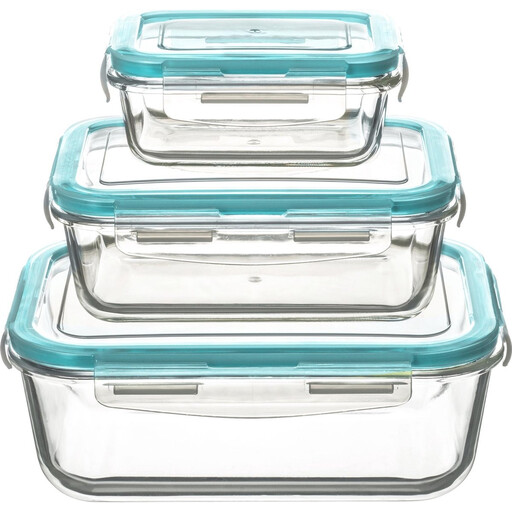
Why this fits the profile: Handy for meal prepping, leftovers and lunches thanks to the rectangular shape and transparent design.
The product information specifies use in the dishwasher, microwave and freezer. When using the microwave, the lids or clips must be removed or loosened.
Borosilicate glass, three containers, leak-proof clips and a total stated capacity of 1.73 litres.
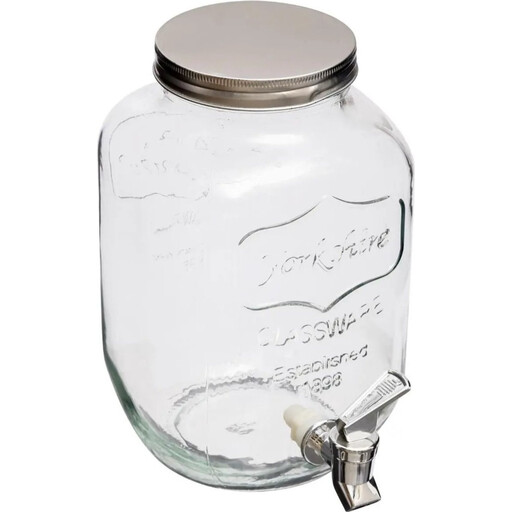
Why this fits the profile: The 8-litre capacity is designed for guests, barbecues and occasions where several people can help themselves.
The product description mentions a plastic tap, screw cap and a maximum temperature of 60 °C. This makes it clear that boiling-hot drinks are not intended.
8-litre capacity, tap, screw cap, dishwasher-safe cleaning according to the product information and dimensions of approximately 20 × 31 cm.
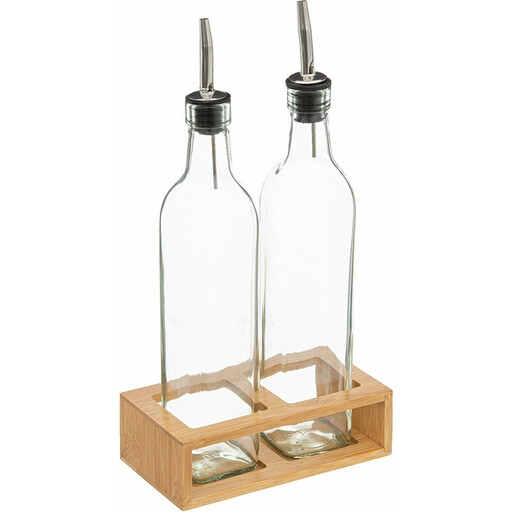
Why this fits the profile: Ideal for anyone who wants to store and dispense oil and vinegar neatly on the worktop or dining table.
The product information states that the bottles are fragile and should preferably be washed by hand. This prevents misuse of the stand and pouring spouts.
Two glass bottles, a bamboo stand and a stated capacity of approximately 0.48 litres per bottle.
We've put together a full, up-to-date list of products that fully meet these strict selection criteria and comply with current European safety regulations.
That varies by product. The 5five containers in this selection are listed as microwave-safe according to the product information. The lid must be removed or loosened. Only use a glass storage container in the microwave when this is explicitly stated on the product page or packaging.
Use lukewarm water, a mild detergent and a soft sponge. Avoid abrasive materials to minimise scratches. Also check the information about the lid, tap or wooden parts. A carafe with a narrow opening can be harder to clean by hand than a wide-necked model.
Avoid hard knocks and sudden temperature changes. Place glass jars, drinking glasses and serving dishes on a stable surface and check them regularly for cracks. Do not put products that are not heat-resistant according to the specifications with hot contents onto a cold surface.
