
Vandaag of morgen in huis

Kwaliteit gegarandeerd

Welkomstaanbiedingen ontgrendelen: GRATIS bezorging | Tot 80% korting | Gratis 30 dagen JoyPlus-proefperiode
Download de app
Glass kitchenware suits many households in the Netherlands: it is transparent, generally does not absorb colours or odours, and suitable models can be used for baking, serving or storing food. However, the word “glass” alone says little about how practical a product is. A glass oven dish needs different properties from a glass storage jar or glass mixing bowl.
The biggest purchasing mistakes usually stem from three common pitfalls:
Always check the product specifications and instructions for use before purchasing a product.
Borosilicate glass is often chosen for baking dishes because, according to product information, it can be suitable for coping with temperature changes. That does not mean you should put a cold dish straight from the freezer into a hot oven. Even suitable glass can break due to sudden thermal shock.
Pay attention to the individual specifications:
According to the product information, the 5five Glass Pie Dish measuring 32 cm is suitable for use in the oven, microwave, freezer and dishwasher. The maximum oven temperature is stated as 300 degrees. Nevertheless, check the current instructions before use and avoid sudden temperature changes.
A large glass oven dish can be useful for a family, while a smaller glass pie dish may be better suited to a compact household. Do not just look at the diameter; also consider the height, handles and the space around the dish.
A few practical guidelines:
A glass pie dish is particularly practical when you want to be able to see the base and edges clearly. A deep glass serving dish or salad bowl with a wooden stand is intended for presentation, not heating.
Glass is generally easy to wipe clean, but accessories determine how much maintenance a product requires. A wooden stand, for example, should not be put in the dishwasher. A silicone sealing ring may also need to be cleaned by hand to help prevent food residue and odours.
When buying glass storage jars, check:
For an electric food chopper with a glass bowl, the motor power, capacity, number of speeds and safety lock are also more important than the bowl material alone.
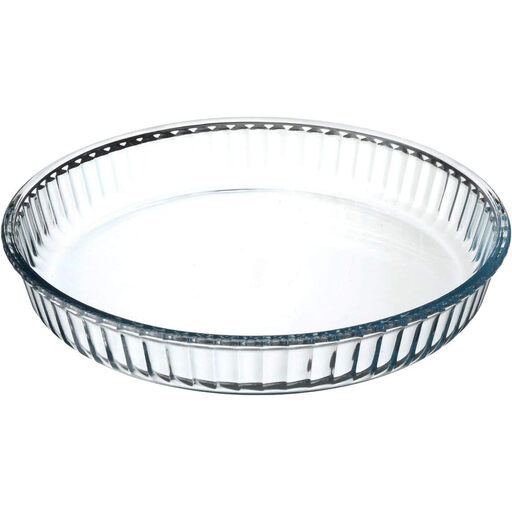
Why it suits this profile: This round dish is suitable for oven dishes and pies, with a capacity of 1.6 litres. The transparent design makes it easy to keep an eye on your food as it cooks.
The product information explicitly states that it is suitable for use in the oven, microwave, freezer and dishwasher. There is no lid that could cause confusion.
32 cm diameter, 5 cm high, 1.6-litre capacity and, according to the product description, dishwasher-safe.
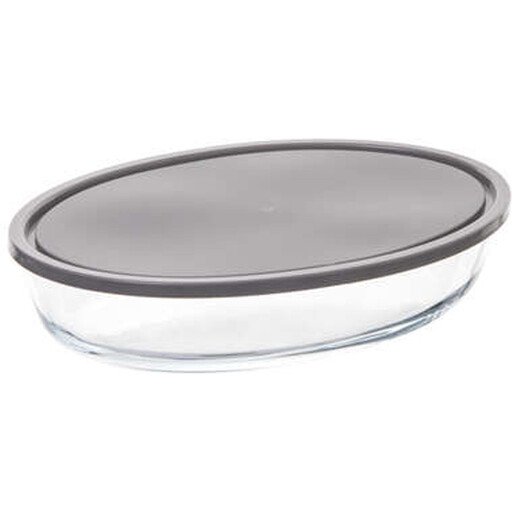
Why it suits this profile: This 2.4-litre oval dish supports cooking, storing and serving in a single container. That makes it practical for families and meal prepping.
The product specification distinguishes between the glass dish and the plastic lid. The lid is not suitable for use in the oven, microwave or dishwasher.
Borosilicate glass, 2.4-litre capacity, 32 x 21 x 6.7 cm and oven-safe up to a maximum of 400 degrees, according to the product information.
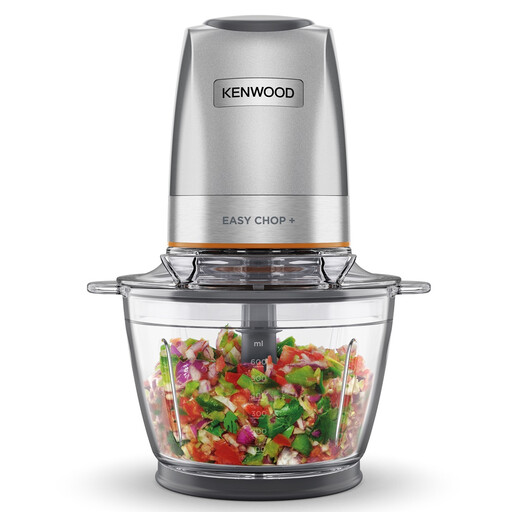
Why it suits this profile: This electric food chopper with a glass bowl is designed for everyday food preparation, from onions and herbs to harder ingredients and ice.
The capacity is clearly specified as 600 ml and there are two speeds. This helps prevent buying a small chopper for large quantities.
500 watts, 600 ml glass bowl, two speeds, stainless-steel QuadBlade system and non-slip ring, according to the product information.
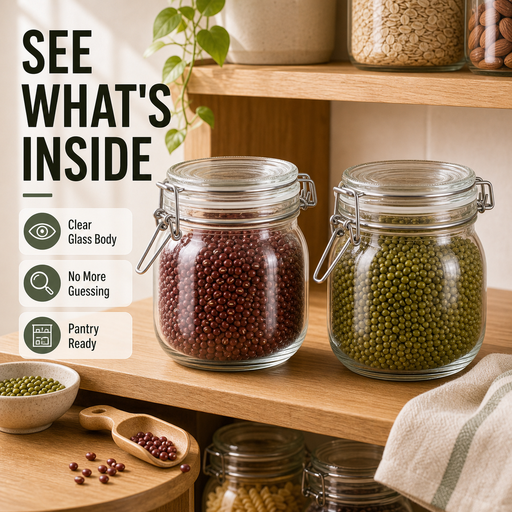
Why it suits this profile: The 700 ml jars are suitable for dry goods such as rice, nuts, herbs and snacks. The transparent glass lets you see the contents at a glance.
The set lists the material and closure separately: borosilicate glass, a silicone ring and stainless-steel clips. The product information warns against using the jar in the oven or microwave unless this is explicitly indicated.
Two 700 ml jars, an airtight clip closure and a removable silicone ring. Suitable for the pantry and fridge, according to the product description.
We have put together a complete, up-to-date list of products that fully meet these strict selection criteria and the applicable European safety regulations.
A glass serving dish or salad bowl with a wooden stand can become a permanent feature on your table, but it is not automatically suitable for intensive kitchen use. The Secret de Gourmet Salad Bowl has transparent glass and a wooden stand. According to the product information, this bowl is not suitable for use in the microwave, dishwasher or oven and should be cleaned with a damp cloth. Use it for serving, not as a glass mixing bowl or oven dish.
If you want to combine different kitchen accessories, you can also look for:
A non-stick frying pan is not glass kitchenware, of course, but it can be a logical addition. For example, check whether the pan is suitable for induction cooking. According to the product specification, the Tefal Easy Cook & Clean pan listed is suitable for gas, electric, ceramic and glass-ceramic cooking, but not induction.
This varies from product to product. A glass dish may be dishwasher-safe, while the lid, wooden stand or silicone ring may need to be washed by hand. Always read the care instructions for each individual component.
This is generally not recommended if it would create a significant temperature difference. Allow the dish to come to room temperature first and check the manufacturer’s instructions. Do not place a cold dish straight into a hot oven.
Its lifespan depends on use, the thickness of the glass, temperature changes, and whether it is dropped or knocked. Check glass products regularly for hairline cracks, and stop using damaged dishes or jars for food preparation.
