Choose a compact glass jar if you mainly put chocolate flakes on the table as a topping. If you want to store an opened packet, a sealable jar with plenty of room is more practical. A 200 g, 240 g or 300 g packet doesn’t automatically correspond to a particular jar capacity in litres. Check how much room you need using the packet you usually buy, and follow the storage instructions on the packaging.
Who would find a glass jar useful?
Home bakers who serve chocolate flakes at the table
If you decorate cupcakes, biscuits or desserts at the table, a small jar keeps chocolate flakes within easy reach. PLUS’s product description for De Ruijter milk chocolate flakes lists cakes, cupcakes and biscuits among the suggested uses.
Bakers with an opened packet
A sealable jar keeps an opened packet tidy and easy to store. Follow the storage instructions for the flakes: Jumbo and PLUS advise storing the varieties described in a cool, dry place.
Anyone storing several toppings
Separate jars help you keep different dry cake decorations apart and label them. If you’d like to stick to one range of jars, compare the sizes: Dille & Kamille lists capacities from 90 ml to 3 l for its clip-top jars.
What should you look for?
First decide whether you’ll mainly use the jar on the table or to store an opened packet. Then check the opening, the lid and the space on your shelf. The percentages below relate to consumers considering a glass jar for chocolate flakes when baking at home, grouped by their main need.
| What to consider | What to check before buying | Who it matters to |
|---|
| Serving and portioning |
Check the capacity and width of the opening if you want to use a spoon or scoop. A 0.5 l jar is a serving size, not a guaranteed fit for a whole packet. |
When I put small amounts of chocolate flakes on the table while baking, I want to be able to scoop them out easily without putting out a large storage jar. For around 40% of consumers, ease of serving is the top priority. |
| Sealed storage |
Check how the lid closes and how to clean the jar and lid. Choose a storage spot that also suits the instructions on the packet. |
After a baking session, I want to seal an opened packet properly and store it somewhere suitable. For around 40% of consumers, storage comes first. |
| Organising your supplies |
Measure the available shelf space and keep different varieties separate, with the information from the original packet stored with each jar. |
When I have several toppings, I want to be able to fit the jars in the cupboard without mixing up the flavours or packaging information. Around 20% of consumers give this organisation top priority. |
Common mistakes when choosing
-
Assuming the weight in grams tells you the jar capacity
A 200 g, 240 g or 300 g packet doesn’t tell you how many litres of space the chocolate flakes will take up in a jar. The jar could turn out to be too small for the packet you usually buy.
Test the capacity with your own packet or choose a jar with extra room. Don’t assume that a 0.5 l serving jar will hold a whole packet.
-
Choosing a jar based on looks alone
If you’re storing an opened packet, how the lid closes matters too. A jar with a bamboo lid may also need different care from the glass part; Dille & Kamille recommends hand-washing the bamboo lid described on its website.
Check how both parts close and the cleaning instructions for each. Then store the chocolate flakes according to the instructions on their packaging.
-
Combining different chocolate flakes without labelling them
Ingredients and allergens can vary between varieties. The colour of the flakes or a ‘plain’ label on a jar won’t tell you the information shown on the original packet.
Keep varieties separate. When transferring the chocolate flakes, copy the relevant ingredient, allergen and best-before information from the packaging onto the jar.
Brands as a guide to packet sizes
De Ruijter
PLUS also presents the 200 g packet of milk chocolate flakes described as a topping for home-baked treats. Jumbo also lists a 240 g Royaal variety.
- The different packet weights are useful starting points when testing jar sizes with your own packet.
- The packet weight doesn’t tell you how many litres of jar capacity you’ll need.
Jumbo
Jumbo’s category page shows chocolate flakes in a range of varieties and packet sizes, including 200 g, 240 g and 300 g.
- The sizes listed can help you plan a capacity test with the packet you use.
- A listing on a category page doesn’t tell you whether a specific shop has the product in stock.
PLUS
PLUS lists a 300 g box of dark chocolate flakes and advises storing it in a cool, dry, dark place.
- The 300 g packet gives you a specific size to use when testing the jar you want.
- Even with dark chocolate flakes, check the label of the exact variety for allergen information.
ALDI / Kiekeboe
ALDI lists Kiekeboe chocolate flakes in milk and dark varieties, both in 300 g packets.
- Use your own 300 g packet to check whether your chosen jar has enough room.
- Before buying, check which variety is available at your local shop.
Lidl
The Lidl page described lists 300 g of dark chocolate flakes and directs customers to the shop to buy them.
- The packet weight listed gives you a starting point for a capacity test.
- Check the packaging in store for the ingredients, allergens and storage instructions for the current variety.
Glass jars for chocolate flakes on Joybuy
These jars suit two ways of storing your supplies: a larger jar for dry ingredients and a set that lets you keep toppings separate. Test with your own packet to check whether the capacity and opening suit the way you use your chocolate flakes.
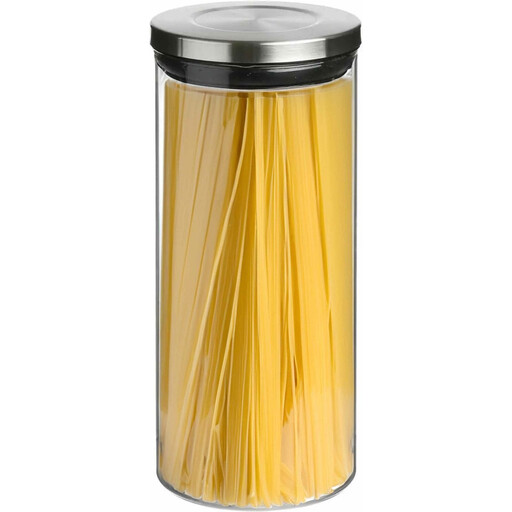 Image unavailable
5five glass storage jar with stainless steel lid, 1.7 l
Consider this jar if you’d rather store your chocolate flakes in a larger container than a small serving jar. The clear glass shows what’s inside. Check with your own packet whether 1.7 l is enough and whether the opening suits your spoon.
View on Joybuy
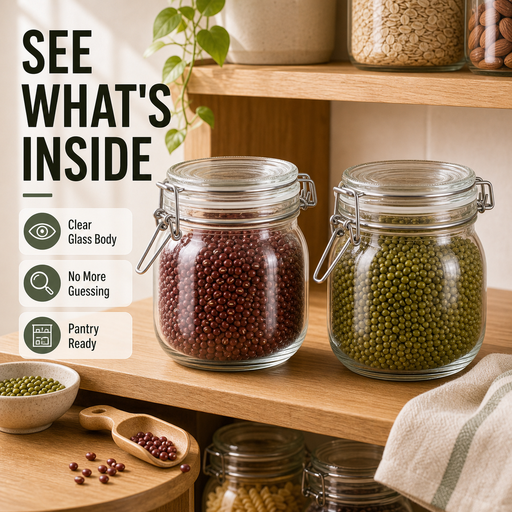 Image unavailable
PURECOOK glass storage jars with clip-top lids, 2 × 700 ml
This set of two jars could be handy if you want to store different toppings separately. Each clear glass jar has a capacity of 700 ml and a clip-top lid with a silicone seal. Check that your packet and scoop will fit. Also confirm the cleaning instructions before buying, as the product title and description give conflicting information about whether the jars are dishwasher-safe.
View on Joybuy
Frequently asked questions
What size jar do I need for a 200 g or 300 g packet of chocolate flakes?
The weight alone doesn’t tell you what size jar you need: the space taken up by chocolate flakes depends on the variety and their shape. Test with your own packet and leave enough room to close the jar. Jumbo and PLUS list packets including 200 g, 240 g and 300 g.
How should I store chocolate flakes in a glass jar after opening?
Close the jar after use and follow the storage instructions on the exact packaging. For the varieties described, Jumbo and PLUS advise storing the flakes in a cool, dry place; PLUS also says to keep them somewhere dark. So don’t put the jar next to a hot oven or in direct sunlight.
Is a jar labelled ‘dark’ enough to identify allergens?
No. The word ‘dark’ doesn’t replace the allergen information on the original packet. Always check the label for the exact variety before serving, and keep that information with the jar if you transfer the chocolate flakes.
Can a broken glass storage jar go in a bottle bank?
Don’t assume that a storage jar you’ve bought belongs with packaging glass. According to Milieu Centraal, bottle banks are for glass packaging such as bottles and jars, not items such as drinking glasses or dishes. Check your local council’s waste and recycling guidance for a broken storage jar.


