
Vandaag of morgen in huis

Kwaliteit gegarandeerd

Welkomstaanbiedingen ontgrendelen: GRATIS bezorging | Tot 80% korting | Gratis 30 dagen JoyPlus-proefperiode
Download de app
Glass home accessories and tableware can quickly add more colour and character to your interior. Think coloured glasses on the table, a glass vase for flowers or decorative glass accessories for a cabinet, windowsill or festive table setting. However, glassware often looks different online from how it does in everyday use. An attractive shape may prove impractical, while a colourful design is not always suitable for the dishwasher.
With this buying guide, you can compare glassware for your home based on specific features. This helps you avoid disappointing purchases and makes it easier to choose between drinking glasses, glass vases and other colourful tableware.
An eye-catching design attracts attention, but says little about ease of use. So always check the capacity, height and diameter. A 280 ml glass is suitable for water or juice, while a 350 ml model offers more room for drinks such as iced coffee or a smoothie. A narrow vase may look beautiful, but could be less suitable for a large bouquet.
Not all glass tableware can go in the dishwasher. Some glasses explicitly state that they are not dishwasher-safe and must be washed by hand. This difference has a direct impact on day-to-day care. Also check whether the product is described as fragile, and use a soft sponge when washing by hand to help prevent scratches and knocks.
A glass cloche with lighting or a small vase is intended as decoration, not as a drinking glass or food container. Check the product description before using an item on the dining table for food or drink. For illuminated products, also check the included components, such as a wooden base, LED cable or battery holder, and place decorations securely out of reach of small children and pets.
For drinking glasses, capacity and size are the first practical considerations. A set of six stackable glasses of around 280 ml takes up less cupboard space and is convenient for everyday use. Glasses of 310 ml or 350 ml are better suited to larger drinks. Also check the diameter if you have limited space in a kitchen cupboard.
For vases, the height, opening and stability of the base are particularly important. A vase approximately 25 cm high with an opening of around 6.4 cm provides room for longer stems. Small vases of approximately 8.5 cm are more suitable for a few flowers, dried flowers or a low table arrangement.
Glass can be transparent, coloured, ribbed or handmade. Handmade glass vases may have slight colour variations or small air bubbles. This is not automatically a defect, but it is one of the product characteristics you should consider in advance.
Also pay attention to the rim and base. A smooth drinking rim feels more comfortable, while a heavier base can improve stability on the table. These features should be stated in the product information; do not assume them based on a photograph alone.
Check the following before buying:
A glass product is covered by the standard statutory consumer rights in the European Union. Several items in this overview state a minimum statutory guarantee of two years. The exact terms may vary by product and seller.
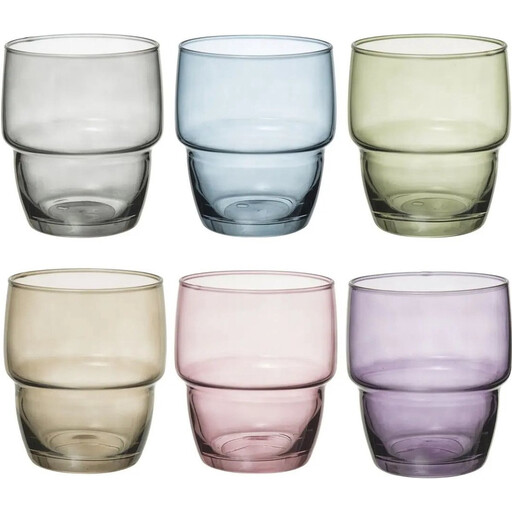
Why it suits this profile: A set of six coloured drinking glasses is a practical starting point for a household that wants to add more colour to the dining table with minimal effort.
The capacity of approximately 280 ml, stackable design and stated dishwasher-safe suitability make this a straightforward choice for everyday use.
Six glasses, a capacity of 0.28 litres per glass, stackable and suitable for the dishwasher according to the product information.
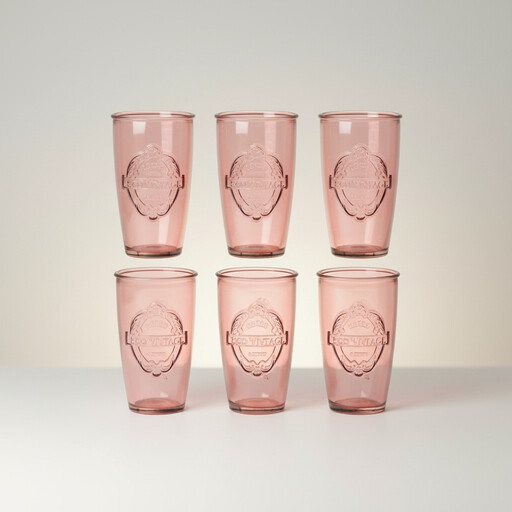
Why it suits this profile: This set is ideal for anyone looking for a coordinated table setting and who considers material choice important when selecting colourful tableware.
The product description clearly states the capacity and dimensions and confirms that the glasses are made from recycled glass. However, check the care instructions before buying.
Set of six, blush colour, 350 ml capacity and made from 100% recycled glass according to the product information.
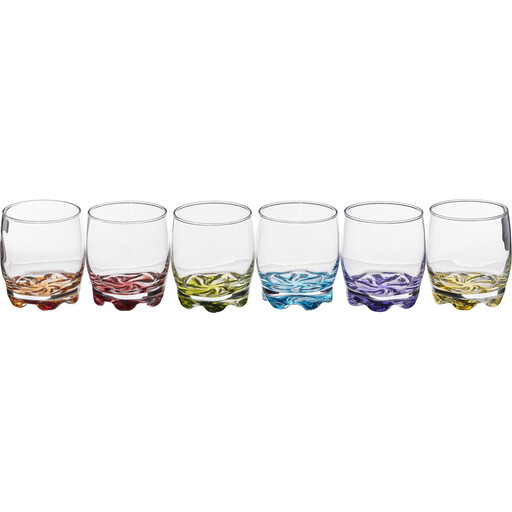
Why it suits this profile: A capacity of 310 ml is useful for water, juice and other cold drinks during meals, when entertaining guests or at a small event.
The product information clearly states that the glasses are not dishwasher-safe. This means you can decide in advance whether the care requirements suit your household.
Six 310 ml glasses, a diameter of approximately 7 to 8 cm and a transparent design with a coloured base, according to the product description.
We have put together a complete, up-to-date list of products that fully meet these strict selection criteria and the applicable European safety regulations.
Use colour as an accent rather than giving every element the same shade. Transparent drinking glasses suit almost any table, while coloured glasses place greater emphasis on tableware and table linen. A set of mini vases works well arranged in a row on a dining table or windowsill. A larger brown glass vase can instead serve as a standalone centrepiece with long branches, dried flowers or artificial flowers.
For festive occasions, you can combine decorative glass accessories with neutral plates and cutlery. Always check whether decorations include loose components and whether the product stands securely. For example, a glass cloche with micro-LED lighting can be used as an atmospheric accent, but it is not a substitute for general room lighting.
That depends on the product specifications. Check the stated capacity, material, fragility and, above all, whether the glasses are dishwasher-safe. A stackable model is often practical in a smaller Dutch kitchen because it takes up less cupboard space.
Rinse the vase with lukewarm water after use and remove limescale with a suitable mild cleaning product. Do not use an abrasive sponge. A soft bottle brush can help with a narrow opening. Dry the vase thoroughly before putting it back, particularly on a wooden or painted surface.
Using it usually does not involve any separate costs. The main differences relate to care, replacement if the glass breaks and any energy used by the dishwasher. A dishwasher-safe set can save time, while hand-wash models require more attention but are not automatically less suitable. So first consider how much care fits into your daily routine.
