
Vandaag of morgen in huis

Kwaliteit gegarandeerd

Welkomstaanbiedingen ontgrendelen: GRATIS bezorging | Tot 80% korting | Gratis 30 dagen JoyPlus-proefperiode
Download de app
As a Joybuy Product Recommendation Officer, I see people making the switch from plastic to glass food containers every day. The reasons are clear: glass is more hygienic, doesn't absorb odours or stains, and is a more sustainable choice. But not all glass containers are created equal. The market is flooded with options, and marketing promises can be misleading. Before you invest, it's crucial to know what to look for to prevent a bad purchase.
Many buyers fall into the same traps. They end up with a kitchen cabinet full of containers that don't meet their expectations. These are the most common problems:
A good set of glass food storage containers is an investment that will last for years. Let's look at the specifications that truly make a difference.
You don't need to be a material scientist to make the right choice. Focus on three concrete features that determine whether a glass food container is practical and durable for daily use.
The term you want to see is borosilicate glass. Unlike normal (soda-lime) glass, this type is highly resistant to thermal shock. This means it won't easily crack when going from cold to hot. This makes oven-safe food containers made of borosilicate glass suitable for placing a meal directly from the freezer into the oven or microwave (always check the manufacturer's instructions, as this is often done without the lid). It is stronger, lighter, and more durable than standard glass, which is essential for a product you use every day.
A glass container is only as good as its lid. The most reliable glass food containers with lids have a combination of two elements:
glass lunch box used to transport liquids like soup or curry.Consider what you will primarily use the containers for. Are you someone who does meal prep? Then a glass food container set with various sizes is ideal. This allows you to prepare main courses, side dishes, and snacks separately. Are you simply looking for a replacement for your plastic lunch box? Then a single, spacious container of about 1 to 1.5 litres will suffice. Always check if the containers (without the lid) are suitable for the oven, microwave, freezer, and dishwasher. This versatility ensures you can use them for almost anything.
Based on these objective criteria, we have selected a number of products that suit different user profiles.
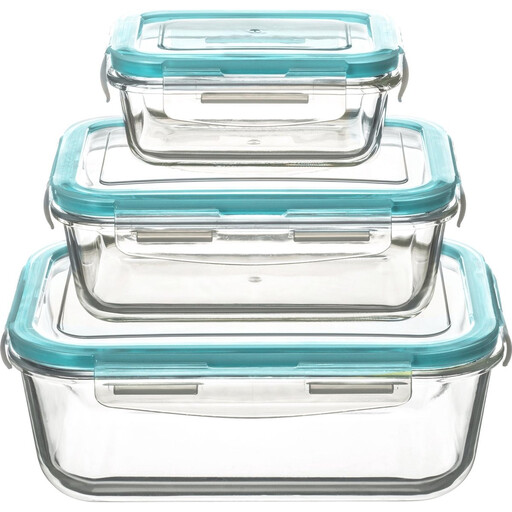
Why This Fits Their Persona: Ideal for those starting with meal prepping who want a practical, streamlined set. The three different sizes are perfect for a main course, a salad, and a snack, without immediately filling up the entire kitchen cabinet.
The containers are made of borosilicate glass, which minimises the risk of cracking. The polypropylene lids with a silicone seal and clips prevent the typical leaks and warping.
A complete, stackable starter set that is freezer, microwave, and dishwasher safe. The transparent containers provide an instant overview in the fridge.
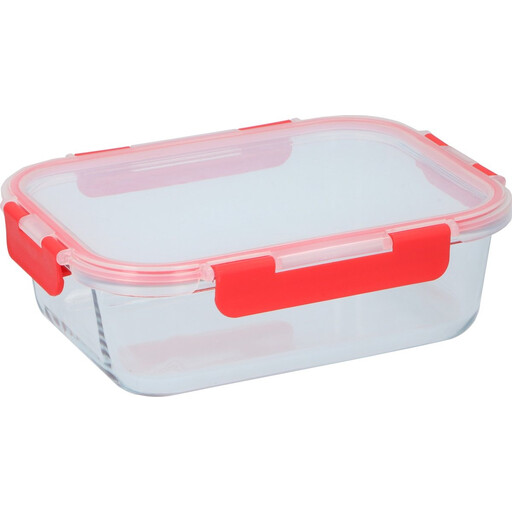
Why This Fits Their Persona: Perfect as a spacious and reliable glass lunch box. The 1.5-litre capacity is large enough for a full meal, and its sturdy construction is built for daily transport to the office.
The lid with four clamps and the airtight specification tackles the leakage problem. The borosilicate glass is heat-resistant up to 400°C (without the lid) according to the manufacturer, making reheating safe.
Large capacity for a full meal. Suitable for the oven, microwave, freezer, and dishwasher, offering maximum flexibility for a busy lifestyle.
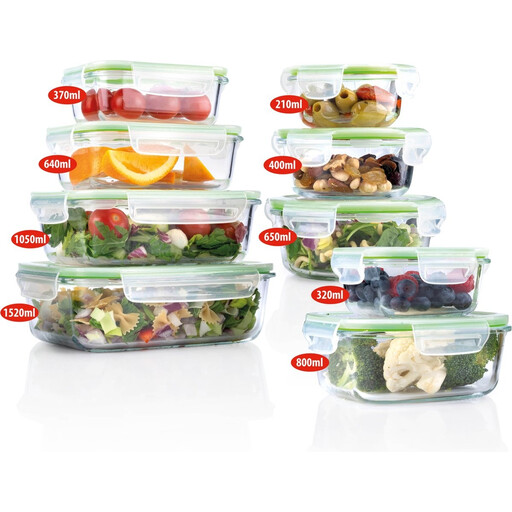
Why This Fits Their Persona: For households that want to reduce food waste. This comprehensive set of 9 containers in various sizes offers a solution for every leftover, from a bit of sauce to a full lasagna.
The set is made of borosilicate glass and, according to the manufacturer, can withstand temperatures from -40 to 300 degrees. The lids are specified as airtight and leak-proof, which is essential for storing various foods in a full fridge.
A very comprehensive set with 9 different sizes for maximum versatility. The containers are stackable, which helps keep the fridge and kitchen cabinets organised.
We have compiled a complete, up-to-date list of products that fully meet these strict selection criteria.
Generally, no. Most lids, even those made from high-quality polypropylene, are not designed for the high temperatures of an oven. For the microwave, manufacturers often recommend removing the lid or unlatching the clips to allow steam to escape. Always read the instructions for your specific product. The glass container itself (if made of borosilicate glass) can usually go in both the oven and microwave.
The most important step is to choose borosilicate glass. Beyond that, avoid extreme and sudden temperature changes. For example, do not place a hot container directly on a cold, wet countertop or into cold water. While borosilicate glass is much more resistant to this than normal glass, it's still a good habit to let the glass cool down gradually.
Glass containers are indeed heavier than their plastic counterparts. An average 1-litre glass lunch box weighs around 700-800 grams (empty). For many people, the benefits—no odours, no stains, no chemicals, and a better taste experience—outweigh the extra weight in their bag.
