
Vandaag of morgen in huis

Kwaliteit gegarandeerd

Welkomstaanbiedingen ontgrendelen: GRATIS bezorging | Tot 80% korting | Gratis 30 dagen JoyPlus-proefperiode
Download de app
A set of good glass food containers seems like a simple purchase. Yet, many people end up with a cupboard full of impractical containers that leak, crack, or are simply not user-friendly. Before you invest in a new set, it's wise to know what to look for. As a Product Recommendation Officer at Joybuy, I see daily which specifications make the difference between a bad buy and a purchase you'll enjoy for years to come. We've listed the most common pitfalls and the key points of attention for you.
Marketing often promises the world, but reality can be harsh. These are the three problems consumers most frequently encounter:
food container set, but end up using only two sizes. The rest just get in the way. Or worse: the containers themselves are dishwasher-safe, but the lids must be washed by hand, which negates the convenience.To avoid the problems above, focus on three concrete features. These determine the quality and usability of your glass containers with lids.
Not all glass is created equal. For food containers you want to use in the freezer, microwave, or even the oven, borosilicate glass is the only right choice. Unlike standard (soda-lime) glass, borosilicate glass expands much less when heated and contracts less when cooled.
An airtight storage container is only as good as its lid. Pay attention to two components here:
Think about how you will use the containers. Are you a meal prepper? Then you'll benefit from a set with various sizes for main courses and side dishes. Do you use it as a glass lunch box? Then a container with compartments might be useful.
Also, consider the shape. Rectangular and square containers are more space-efficient than round ones. They work better as a fridge organiser because you can place them tightly against each other. Check if the containers (with lids) are stably stackable to make optimal use of the vertical space in your fridge or kitchen cabinet.
Based on these objective criteria, we have selected a number of products that suit different user profiles.
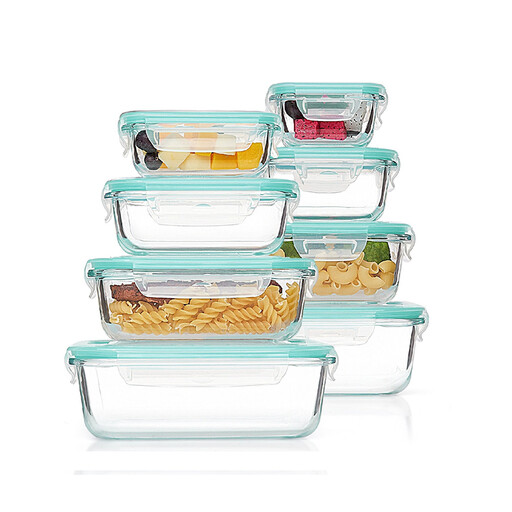
Why This Fits Their Persona: This user prepares meals for the entire week. This set offers eight different sizes, from small snack containers (150ml) to full-sized meal containers (1040ml). Perfect for portioning complete meals, sauces, and side dishes.
Tackles the 'impractical sizes' pitfall by offering a very wide range. The use of borosilicate glass prevents cracking when reheating meals from the fridge.
A very complete food container set with 8 different, practical volumes. The rectangular shape ensures efficient, stackable storage in the refrigerator.
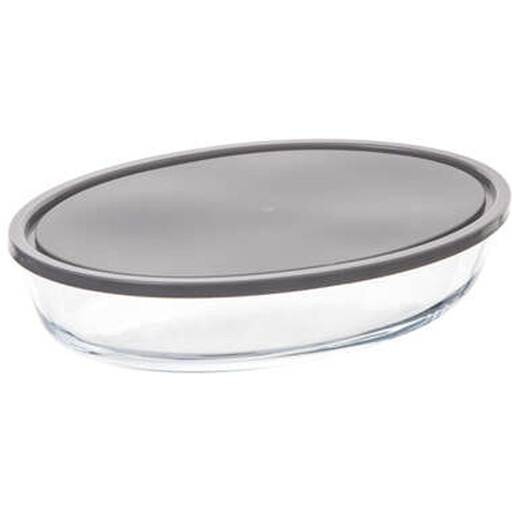
Why This Fits Their Persona: This person seeks a high-quality, multifunctional dish. Ideal for preparing a lasagna or casserole that can go directly from the oven to the table, with leftovers stored in the fridge using the same dish and lid.
This is a specific oven-safe food container, made from strong borosilicate glass that the manufacturer claims can withstand up to 400 degrees Celsius. This avoids the pitfall of cracking glass.
Large 2.4-litre capacity and high heat resistance. Combines the function of a casserole dish and a storage container. Note: the lid is not suitable for the oven, microwave, or dishwasher.
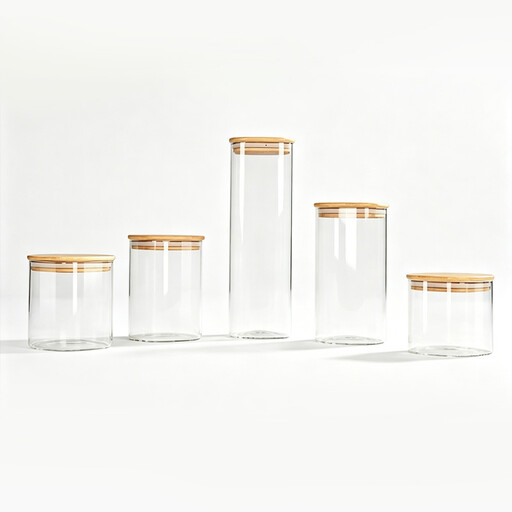
Why This Fits Their Persona: This user wants a tidy and stylish pantry. This set of glass storage jars is designed for dry goods like pasta, rice, and grains. The uniform look with wood-grain lids creates a sense of calm and order.
These jars are specifically designed for dry storage, with lids focused on airtightness for long-term freshness, rather than the leak-proof seals needed for liquids.
Aesthetic and functional design for an organised pantry. The set includes five jars with ascending capacities (from 750ml to 2300ml) for various types of dry food.
We have compiled a complete, up-to-date list of products that fully meet these strict selection criteria and UK safety regulations.
No, this is a common misconception. Always check if the product is explicitly sold as 'oven-safe' and made from borosilicate glass. For use in the microwave or oven, the plastic or wooden lid must almost always be removed to prevent pressure build-up and melting.
Choose lids with a sturdy, removable silicone ring and a locking mechanism with clips on all four sides. To extend the life of the seal, it is advisable to wash the lids and rings by hand, even if they are labelled 'dishwasher-safe'. High temperatures in the dishwasher can warp the plastic and silicone over time.
Glass has several clear advantages. It is non-porous, meaning it does not absorb odours, flavours, or stains from food. A glass container that held curry will be completely neutral again after washing. Additionally, glass is durable and scratches less easily. Over time, plastic containers can develop a 'film' and scratches where bacteria can accumulate. For those looking for a durable and hygienic long-term solution, glass is often the superior choice.
