
Vandaag of morgen in huis

Kwaliteit gegarandeerd

Welkomstaanbiedingen ontgrendelen: GRATIS bezorging | Tot 80% korting | Gratis 30 dagen JoyPlus-proefperiode
Download de app
Switching from plastic to glass food containers seems like a simple choice for anyone wanting to live a healthier, more sustainable lifestyle. Glass is hygienic, doesn't absorb odours or colours, and is BPA-free. However, not all glass containers are created equal. The wrong choice can lead to frustration: a leaking lunchbox in your bag or a cracked dish in the oven. Before you invest, it's wise to know what to look for.
Marketing often promises the world, but reality can be more challenging. These are the two problems many people encounter:
A good set of glass meal prep containers doesn't have to cost a fortune, but you do need to know which specifications truly matter.
To avoid the problems above, there are two technical details that make all the difference. Always check these before making a purchase.
Not all glass food containers are made the same. Most cheaper options are made of standard (soda-lime) glass. This type of glass is fine for storage at room temperature but handles sudden temperature changes poorly.
For true versatility, you need borosilicate glass. This material has a lower thermal expansion coefficient, meaning it doesn't shrink or expand quickly with heat or cold. This makes borosilicate glass containers safe to use from freezer to oven (note: always remove the lid). This makes them ideal oven-safe food containers. They are stronger, more scratch-resistant, and last significantly longer.
A glass lunch box is only practical if it's truly leak-proof. The quality of the lid and its seal is crucial. Pay attention to the following two elements:
glass containers are airtight and allows for thorough cleaning, preventing mould growth.Based on these objective criteria, we have selected a number of products that suit different user profiles.
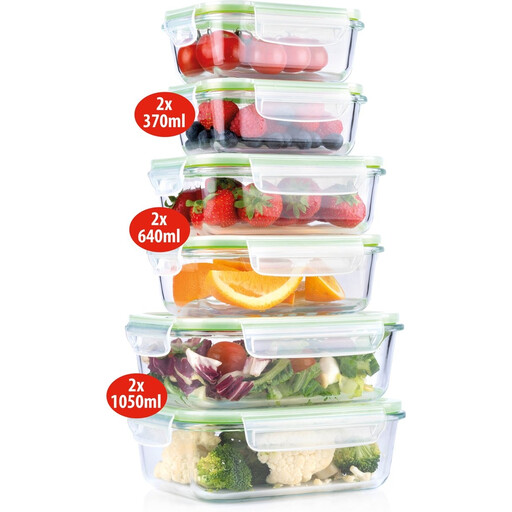
Why This Fits Their Persona: Anyone starting with meal prep needs flexibility. This `glass food container set` offers three different sizes (370 ml, 640 ml, and 1050 ml), ideal for salads, main courses, and snacks. You get a complete kit right away.
The containers are made of borosilicate glass, allowing them to go from freezer to microwave. The lids feature a click-lock system that ensures an airtight and leak-proof seal.
Complete 12-piece set (6 containers, 6 lids) with 3 practical sizes. Suitable for dishwasher, freezer, and microwave (without lid).
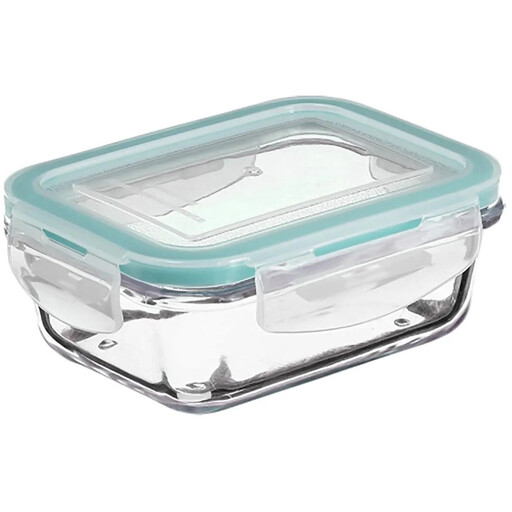
Why This Fits Their Persona: For families who want to store leftovers from dinner, volume is essential. This large 1.73-litre container is perfect for a generous portion of lasagna, stew, or soup. No more fussing with multiple small containers.
Made from borosilicate glass, so the dish can go directly from the fridge to the oven or microwave. The four-sided clips and silicone seal ensure that even liquid dishes won't leak.
Extra-large capacity (1.73 L) for family meals. Suitable for freezer, oven (without lid), microwave, and dishwasher.
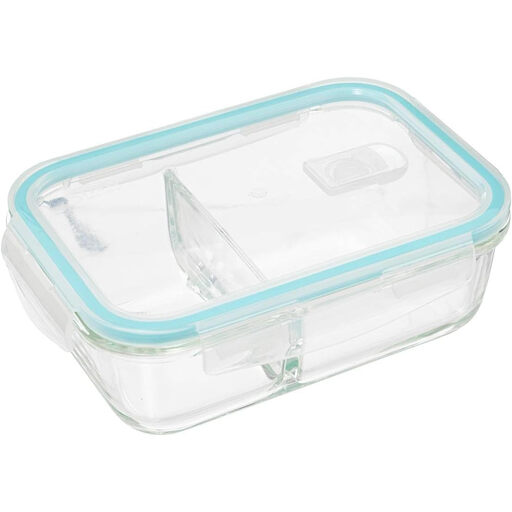
Why This Fits Their Persona: A good `glass lunch box` keeps components separate. Nobody wants a salad soaked in dressing from the chicken. The compartments in this container are ideal for bringing a complete, varied lunch to work or school.
The combination of borosilicate glass and a lid with sturdy clips and a silicone seal prevents both cracking during reheating and leaking during transport.
Convenient compartments for separating food. At 1.1 litres, it's a generous size for a full meal.
We have compiled a complete, up-to-date list of products that fully meet these strict selection criteria and safety regulations.
No, in most cases, it cannot. The lids are typically made of polypropylene (plastic) with a silicone sealing gasket. These materials are not resistant to the high temperatures of an oven. For microwave use, the advice is to remove the lid or place it loosely on the container to allow steam to escape. The glass container itself (provided it is made of borosilicate glass) can safely go in the oven and microwave.
A major advantage of glass is its durability. A borosilicate glass container can last for years with normal use. It doesn't discolour, warp, or absorb odours. The lifespan is usually determined by the lid. The silicone gasket and locking clips are the parts that can wear out over time. By hand-washing the lid instead of putting it in the dishwasher, you can significantly extend its lifespan.
Borosilicate glass is superior for food storage due to its thermal resistance. You can place a meal directly from the freezer into the microwave or oven without the risk of it cracking. Additionally, it is a non-porous material, which means no chemicals, odours, or flavours can leach into the food. This ensures a pure taste and makes it a hygienic and safe choice for storing all types of food.
