
Vandaag of morgen in huis

Kwaliteit gegarandeerd

Welkomstaanbiedingen ontgrendelen: GRATIS bezorging | Tot 80% korting | Gratis 30 dagen JoyPlus-proefperiode
Download de app
Switching from plastic to glass food containers seems like a simple choice for anyone aiming for a healthier, more sustainable lifestyle. Yet, the market is filled with options that look perfect at first glance but quickly disappoint in practice. A leaking lid in your bag or a cracked container after just a few uses is unnecessary and frustrating.
Before you invest in a new set, it's wise to understand the common pitfalls. Many buyers fall for the same marketing traps, resulting in wasted money.
You don't need to be a materials scientist to make a smart choice. Pay attention to the following three points, and you'll instantly separate the wheat from the chaff.
The term you'll want to remember is borosilicate glass. Unlike regular (soda-lime) glass, this material is highly resistant to thermal shock. This means you can use glass containers for the freezer and microwave without worrying about them cracking. It's stronger, more durable, and won't absorb odours or stains from foods like tomato sauce or curry. Products that specify this are typically a more sustainable investment.
A good airtight glass container depends entirely on its lid. Look for lids with the following features:
Think about how you'll use them. Are you an avid meal prepper? Then a glass food container set with various sizes is likely the most convenient and cost-effective option. It allows you to prepare a full week of meals. Do you mainly use the container as a glass lunch box for on-the-go? Then a single, sturdy container of around 1 litre, possibly with compartments, is often sufficient.
Based on these objective criteria, we have selected several products that suit different user profiles.
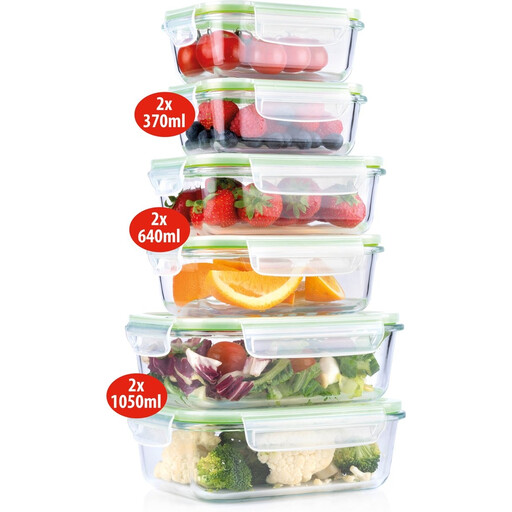
Why This Fits Their Persona: This set is ideal for those starting with meal prep. With containers of 370 ml, 640 ml, and 1050 ml, you immediately have the right sizes for snacks, lunches, and larger meal components.
The containers are made of borosilicate glass, allowing them to handle the freezer, microwave, and oven (without the lid). The lids with a locking system are designed to be airtight and leak-proof.
A complete glass food container set with three versatile sizes. The containers are stackable, which saves space in the fridge and kitchen cabinets.
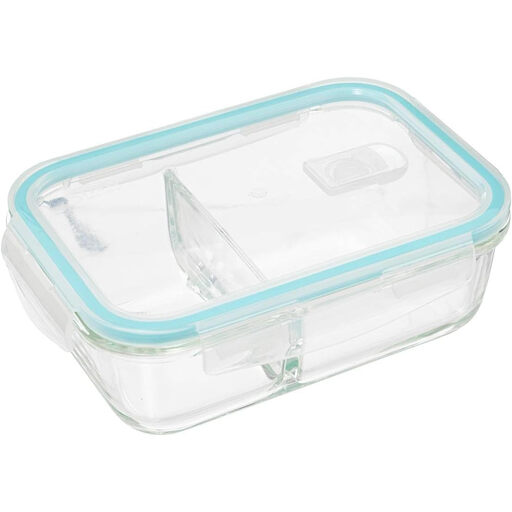
Why This Fits Their Persona: Ideal for those who pack a varied lunch. The compartments keep ingredients separate, so your salad stays crisp and your main course doesn't mix with your side dish. A practical glass lunch box.
Made from borosilicate glass and equipped with a lid featuring a silicone seal. The compartmentalised design prevents the common annoyance of a soggy lunch—a practical problem many standard containers don't solve.
The two compartments enable an organised meal. The container is dishwasher-, freezer-, and microwave-safe (without the lid).
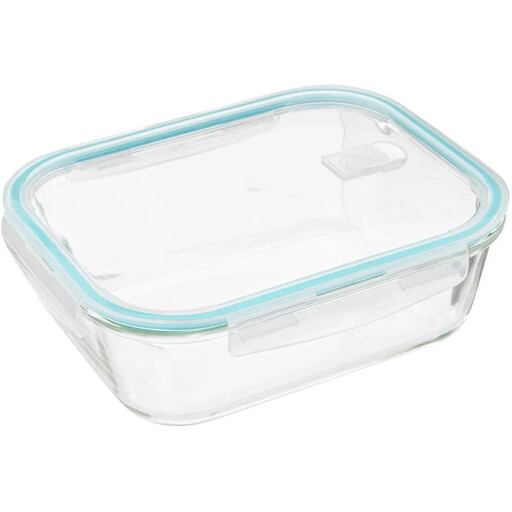
Why This Fits Their Persona: With a capacity of 2.26 litres, this container is perfect for storing dinner leftovers, a large batch of soup, or a family-sized salad. Ideal for those who cook and store in bulk.
Its large size is supported by sturdy borosilicate glass and a lid with reliable, airtight clips. This prevents the lid from popping open or leaking under the weight of its contents.
Very generous 2.26-litre capacity. Suitable for the refrigerator, freezer, microwave (without the lid), and dishwasher, making it a versatile addition to any family kitchen.
We have compiled a complete, up-to-date list of products that meet these strict selection criteria and EU regulations.
Yes, that is its main advantage. Borosilicate glass is designed to withstand significant temperature changes. However, it is always wise to remove the lid before placing the container in the microwave. To maximise its lifespan, it's best to let a frozen container sit at room temperature for a short while first.
Most lids and containers are dishwasher-safe (always check the product information). For a thorough cleaning, you can gently remove the silicone ring from the lid. Wash it by hand or in the top rack of the dishwasher to prevent food residue from getting trapped, which can cause odours or leaks. Ensure the ring is completely dry before putting it back in place.
Glass is heavier than plastic. An average glass lunch box of about 1 litre weighs approximately 750 grams. However, many users find that the benefits—no stains, no odours, no chemical leaching, and a better taste experience—outweigh the extra weight. It's a trade-off between portability and durability.
