
Vandaag of morgen in huis

Kwaliteit gegarandeerd

Welkomstaanbiedingen ontgrendelen: GRATIS bezorging | Tot 80% korting | Gratis 30 dagen JoyPlus-proefperiode
Download de app
Switching to glass food containers seems like a simple choice for a healthier, more sustainable kitchen. Yet, many people end up with buyer's remorse: containers that leak, crack in the oven, or have lids that warp after just a few washes. Before you invest, it's crucial to know what to look for.
As a Product Recommendation Officer at Joybuy, I see daily which specifications make the difference between a useful product and a source of frustration. In this guide, I'll explain how to sidestep the common pitfalls and choose the right glass food containers for your household.
The market is flooded with options, but many products hide their weaknesses behind clever marketing. These are the three most common problems:
glass lunch box that leaks soup in your bag or meals that get freezer burn quickly.glass container for the oven, but after buying it, you discover the lid can't go in the microwave or dishwasher. These kinds of hidden limitations make daily use unnecessarily cumbersome.To avoid a bad purchase, focus on three technical features. These determine the durability and ease of use of your glass food containers.
The gold standard for versatile food containers is borosilicate glass. Unlike regular glass, it expands less when heated and contracts less when cooled.
borosilicate glass containers in the freezer, microwave, and oven (usually without the lid). The risk of cracking due to temperature differences is significantly lower. This makes them ideal for preparing, storing, reheating, and serving meals all in the same container.You can recognize a truly airtight glass container set by its lid. Pay attention to the following two components:
A container is only truly practical if both the glass and the lid fit your routine. Always check the product information for:
By checking these specifications, you can be sure you're buying a product that makes your life easier, not harder.
Not everyone has the same needs. Below are some popular choices, matched with specific user profiles.
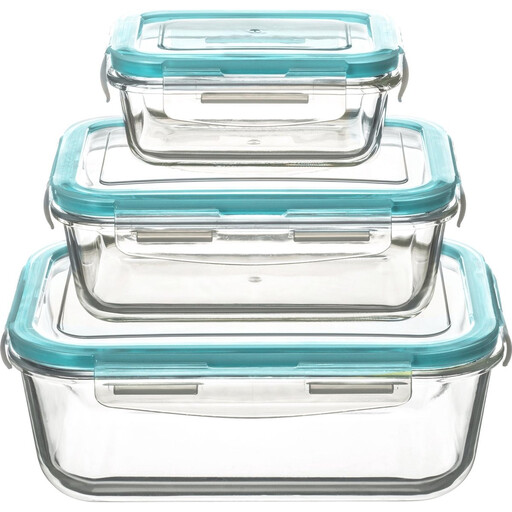
Why This Fits Their Persona: Ideal for those starting with meal prep. This set of three containers provides a great starting point without immediately filling an entire kitchen cabinet. The rectangular shape is efficient for stacking in the fridge and a bag.
Made from borosilicate glass, making it suitable for the oven, freezer, and microwave. The lids feature an airtight clip closure, which minimises the risk of leaks.
A complete and versatile glass container set. Suitable for the dishwasher, microwave, and freezer, which simplifies daily use.
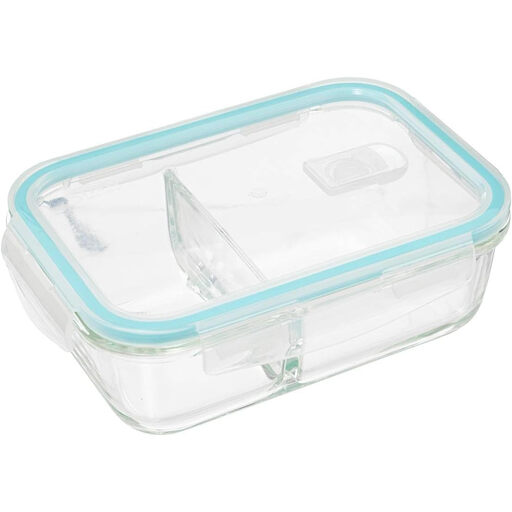
Why This Fits Their Persona: Perfect for those who like to keep different parts of their lunch separate. No more soggy salad from the dressing, or a mix of the main course and a snack.
This container is made of borosilicate glass and has a lid with a silicone seal. It solves the specific problem of food mixing, a common frustration with standard lunch boxes.
The built-in compartments make this an excellent glass lunch box. It's an all-in-one solution for an organised and fresh meal on the go.
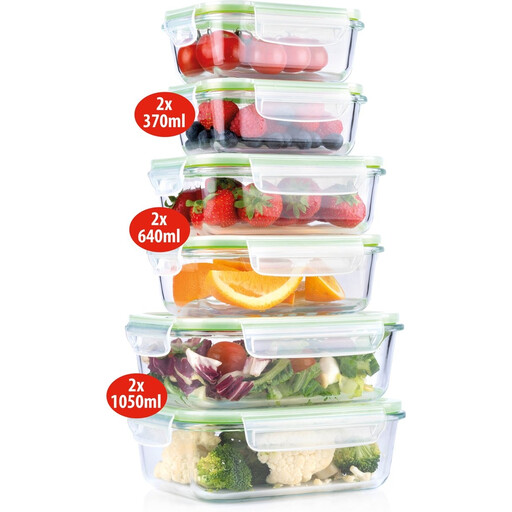
Why This Fits Their Persona: For families or serious meal preppers who want an all-in-one set. This comprehensive set includes six containers in three different sizes, suitable for everything from snacks to full meals.
According to the manufacturer Alpina, the containers are made of strong borosilicate glass. The lids are designed to be airtight and leak-proof, which is essential when storing large quantities of food.
A complete set for glass meal prep containers. The three different sizes (370 ml, 640 ml, and 1050 ml) offer flexibility for any meal or portion size.
We have compiled a complete, up-to-date list of products that fully meet these strict selection criteria and safety regulations.
Yes, for versatile use, it is. Its higher resistance to thermal shock makes it a safer choice for applications where you go from cold to hot, such as from the freezer to the microwave or oven. For simple storage in the refrigerator, regular glass is sufficient, but for meal prep, borosilicate glass is the recommended choice.
This varies by product. Always read the manufacturer's instructions. Many lids are made of polypropylene (PP), which is generally microwave-safe. It is often recommended to open the clips or place the lid loosely on the container to allow steam to escape. Lids with metal parts or made of unknown plastics should never be put in the microwave.
Although borosilicate glass is strong, it is not unbreakable. The most important rule is to avoid extreme and sudden temperature changes. For example, do not place a hot oven dish directly on a cold or wet countertop; use a trivet instead. Also, do not add cold liquid to a hot container.
