
Vandaag of morgen in huis

Kwaliteit gegarandeerd

Welkomstaanbiedingen ontgrendelen: GRATIS bezorging | Tot 80% korting | Gratis 30 dagen JoyPlus-proefperiode
Download de app
Glass dispensers are a popular choice in many Dutch kitchens and dining rooms. You can use them for squash, water, oil, vinegar, dressings or herbs. However, the difference between a useful dispenser and a poor purchase is not just about appearance. A tap that drips, an opening that is too narrow or a bottle that is difficult to clean may only become apparent after a few weeks.
In this buying guide, we highlight the most important points to consider. This will help you choose a glass drinks dispenser, glass water jug, oil and vinegar bottle or dispenser for your kitchen and table that suits the way you use it.
A decorative pattern or wooden stand may look attractive, but it says little about everyday use. So also check the capacity, dimensions, closure and cleaning method. A 1.7-litre glass carafe is suitable for serving water at the table, while a squash dispenser with a tap mainly needs space on a stable surface.
A large dispenser may seem convenient for a barbecue, but a filled glass reservoir holding several litres can become heavy. Check whether the table or stand can support it and whether the tap is high enough above the edge to fill a glass.
For everyday use, a smaller glass water jug or carafe is often easier to move. For a party, a 4- or 8-litre model may mean fewer refills.
Not every model is suitable for hot drinks, the dishwasher or sudden changes in temperature. According to the product information, some Secret de Gourmet dispensers are suitable for drinks up to a maximum of 60 degrees Celsius. This does not mean they are suitable for boiling water.
Also pay attention to decoration and components. With patterned glass jugs, hand washing can help keep the design looking its best for longer. An oil dispenser with a brush also has several components that need to come apart properly for thorough cleaning.
Choose the capacity based on when you plan to use it:
Do not just check the number of millilitres; also look at the height and diameter. A tall bottle may not fit inside a kitchen cupboard. A wide drinks dispenser, meanwhile, can take up a lot of table space.
A pouring spout works well for oil and vinegar when you want to control the amount accurately. A spray mechanism can be useful when you want to distribute a thin layer of oil over a pan, salad or baking tray. However, the amount released per spray can vary depending on the liquid, the pump mechanism and how firmly you press it.
An integrated brush is particularly practical for marinades, oil, egg wash, honey or jam. According to Maxcook’s product information, the brush is made of silicone and can be removed. Before buying, check whether the brush can be detached and how you can reach the inside of the bottle.
Glass gives you a clear view of the contents and generally does not absorb the colour of the liquid. However, it is still a fragile material. Place a full dispenser on a flat surface and avoid sudden changes in temperature.
Pay attention to the combination of materials. A glass bottle may, for example, have a lid made of plastic, stainless steel, silicone or PP. Check which components are dishwasher-safe. Do not use a metal scouring pad or abrasive cleaner if the product information advises against it.

Why it suits this profile: Two compact glass bottles are practical for oil and vinegar on a small dining table or in a first kitchen.
With a capacity of 160 ml per bottle, you avoid leaving oil or vinegar sitting on the table in a large bulk bottle for months. The product information states that the design is dishwasher-safe.
Set of two, glass body and convenient pouring spouts for oil, vinegar or other dressings.
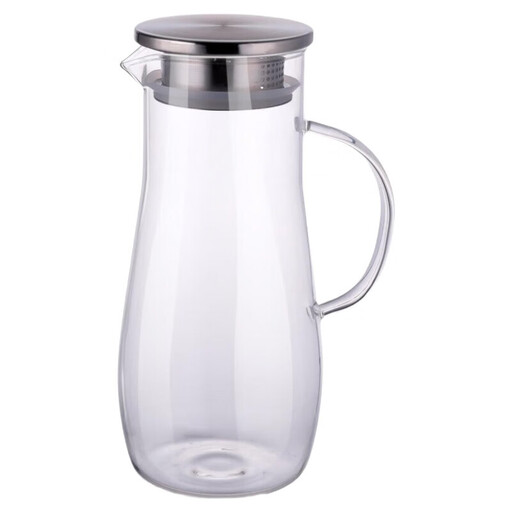
Why it suits this profile: This glass water jug is designed for everyday serving at the table and, according to the specifications, fits in a fridge door.
The stated specifications make it clear that the carafe is not heat-resistant and is not completely drip-free. This allows you to choose how to use it with a clear understanding of its limitations.
1.4-litre capacity, stainless steel lid and integrated strainer according to the product description.

Why it suits this profile: Handy for cooking, marinating and barbecuing when you want to pour and brush with a single accessory.
According to the product information, the components can be removed. This makes cleaning more straightforward than with a non-detachable brush design.
280 ml capacity, glass bottle, silicone brush and wide filling opening according to the product description.
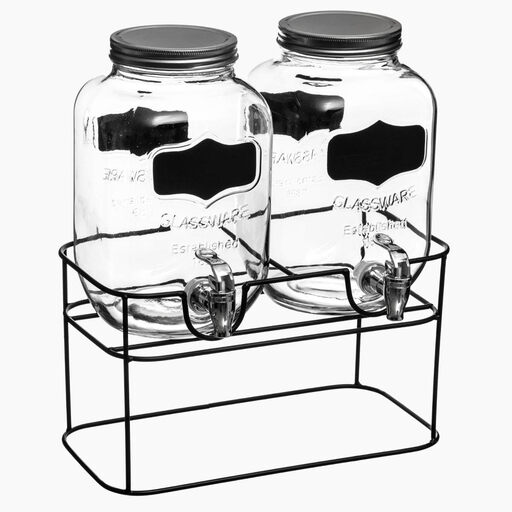
Why it suits this profile: Two 4-litre reservoirs provide space for different drinks during a birthday celebration, barbecue or garden party.
The capacity and set configuration are clearly stated. The tap and lid are part of the design; it is still sensible to check for leaks manually before use.
Two glass dispensers, plastic tap, airtight lids and chalk labels according to the product information.
We have put together a complete, up-to-date list of products that fully meet these strict selection criteria and the applicable European safety regulations.
That depends on the product. According to the product information, some dispensers are suitable for drinks up to 60 degrees Celsius, while other jugs are explicitly not heat-resistant. Never use boiling water in a model without a clear temperature rating, and avoid sudden changes from cold to hot.
Rinse the dispenser after use and clean it with warm water and a mild washing-up liquid. Check whether the model is dishwasher-safe. With an oil dispenser with a brush, it is best to remove the brush, lid and pouring spout. Allow all components to dry thoroughly before reassembling them.
Its lifespan depends mainly on careful use. Glass can last for a long time if you avoid dropping it, impacts and major changes in temperature. Rubber rings, sprays and plastic taps can wear out over time. So check whether replacement parts are available and replace a damaged glass bottle immediately.
