What should you look for when choosing?
First, decide whether you’ll be sharing at one table or taking portions with you for your school holiday lunch. Then compare the pack format and check any ingredient or allergen requirements for each product.
| What to consider |
What should you check? |
Who is this most important for? |
| Enough portions to share |
Compare the weight, the stated number of portions and whether the loaf is sliced. |
I want to serve everyone at one table without needing to open a second pack halfway through. An estimated 36% of consumers prioritise having enough portions to share. |
| Serving or taking with you |
Tell the difference between pre-sliced pieces and slices that are individually wrapped too. |
If lunch is being split between several bags, I want to be able to pack the portions in advance. Around 29% of consumers prioritise ease of sharing. |
| Nutritional information |
If you have a specific preference, read the ingredients and nutritional information, including sugars and fibre per 100 g; check any warnings too. |
I’m looking for an option that suits my preference for added sugars or wholegrain ingredients, not just a different pack size. An estimated 21% of consumers prioritise these product features. |
| Allergens and gluten |
Read the allergen declaration on the exact pack, even if the product is labelled Gluten Free. |
If I’m serving someone with a specific allergy or gluten restriction, suitability matters more than pack convenience. For around 14% of consumers, checking this is the top priority. |
Individually portioned cake at Joybuy
If you’re looking for individual portions for lunch, you could consider this Snelle Jelle Breakfast Cake. Check the product name on the packaging if you’re specifically looking for gingerbread.
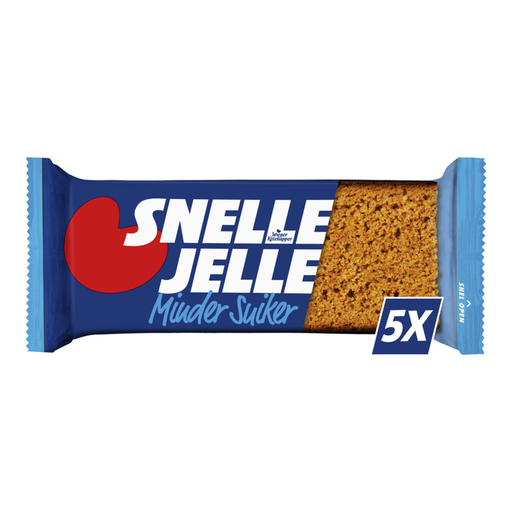 Image unavailable
Snelle Jelle Breakfast Cake Less Sugar-Free, 250 g
An option to consider if you want to pack individual portions rather than share a large loaf at the table.
The product name doesn’t confirm that it’s sugar-free. If you have questions about sugar or allergens, read the ingredients and nutritional information on the current packaging.
View at Joybuy
Frequently asked questions
How much gingerbread do I need for a school holiday lunch?
Start with the number of people eating, then compare the number of slices or portions listed on the pack. For example, Albert Heijn lists a 600 g gingerbread loaf, while Peijnenburg’s plain 10-pack contains ten individually wrapped 28 g slices. Weight alone doesn’t tell you how many portions you’ll need for children or guests.
When should I choose a sliced loaf rather than a 10-pack?
A sliced loaf is a good choice if you’re eating together at the table and want to decide how to serve it. A 10-pack is better if you want to pack sealed portions in advance. Peijnenburg’s plain 10-pack contains ten individually wrapped 28 g slices. Pre-sliced doesn’t automatically mean individually wrapped.
Does Zero mean that gingerbread is sugar-free?
No, don’t assume that from the name of the option. Jumbo says its sliced Zero option contains naturally occurring sugars and sweeteners. Check the sugar content in the nutritional information, the ingredients and any warnings on the pack.
Can I serve gluten-free gingerbread to everyone with an allergy?
No, a gluten-free product name doesn’t give you definitive information about other allergens. According to PLUS, the Peijnenburg option it lists as gluten-free contains lupin and milk. Read the allergen declaration on the exact pack before serving it.
Does all gingerbread contain iodised baker’s salt?
You can’t tell that from the product name gingerbread. The Dutch Commodities Act Decree on the Addition of Micronutrients to Foods defines baker’s salt as iodised table salt for bread and other bakery products; that definition doesn’t mean that all gingerbread is made with baker’s salt. If this matters to your choice, check the ingredients list on the specific pack.


