
Map reader
You use colours and keys to understand geographical images. Compare the colour reproduction and readability using a full sample page.


If you mainly read continuous text, choose a device that’s easy to carry and check that the books you want work on it. Colour can be useful for maps, but a small colour screen won’t automatically make fine details easy to read. A tablet may be more practical for books with lots of fixed-layout PDF pages. The Consumentenbond notes that zooming in on PDFs is generally easier on a tablet, although tablets are larger or heavier and have a shorter battery life than e-readers when used intensively.
You use colours and keys to understand geographical images. Compare the colour reproduction and readability using a full sample page.
You read pages with a fixed layout or lots of small details. Check whether zooming and navigating work well on the screen you choose. The Consumentenbond warns that many PDF files are laid out for A4 and therefore don’t fit well on e-readers.
You mainly read continuous text and want to know whether the titles you’re looking for are available as e-books and, if borrowing digitally, can be transferred to your device. The online Library says that not every e-book is available on an e-reader.
Best suited if: you mainly read continuous text and want a handy device to take with you.
Trade-off: maps won’t have colour differentiation, and fixed-layout PDF pages may require a lot of zooming.
Best suited if: colour is important in maps or diagrams and you also read regular e-books.
Trade-off: on the Kaleido 3 models reviewed, the stated pixel density for colour is lower than for black and white. A colour screen doesn’t guarantee that small map labels will be readable.
Best suited if: you want to view your own larger documents or take notes, and black-and-white maps are enough for you.
Trade-off: the device is less compact, and fixed-layout PDFs and zoom controls still need consideration.
Best suited if: your books mainly consist of large PDF pages, detailed maps or lots of images.
Trade-off: according to the Consumentenbond, zooming in on PDFs is generally easier, but tablets are larger or heavier and have a shorter battery life than e-readers when used intensively.
| Consideration | What to look for | Who should pay extra attention? |
|---|---|---|
| Maps and colour | Compare colour reproduction and screen size using a full map page, including its key and small labels. | If I need colour coding to understand a map, I want to assess it on an actual book page. Around 28% of consumers prioritise map colours. |
| Fixed-layout PDF pages | Test whether small labels remain readable without lots of zooming and panning; compare with a tablet if necessary. | When an atlas page is displayed in full, I want to be able to read the details without constantly moving the view. Around 22% of consumers prioritise PDF readability. |
| Digital borrowing | Check whether each title is available for e-readers and, for borrowing, check support for Adobe DRM and EPUB or PDF files. | If I want to borrow geography books digitally, I want to know in advance whether the titles I’m after can be transferred to my device. Around 22% of consumers prioritise access to borrowed titles. |
| Portability | Compare the dimensions, weight and screen size with the books you read. Also consider adjustable lighting if you read in different places. | When I take my e-reader to the library, a handy size matters, as long as the pages I read are still practical to use. Around 17% of consumers prioritise portability. |
| Note-taking | Check stylus compatibility, file type and your preferred way of taking notes; don’t assume you’ll be able to annotate protected borrowed books. | For my own study materials, I want to check whether writing on the screen will work with my documents. Around 11% of consumers choose note-taking as their main requirement. |
A colour screen won’t automatically make small map labels or fixed-layout PDF pages easy to read.
Compare a representative map or PDF on the screen you’re considering. If you read lots of detailed PDFs, compare a tablet’s zooming and navigation options too.
Not all titles from the online Library are available for e-readers; some books can only be read in the app or online. Eligible titles are also subject to requirements for the device and transfer method.
First check the titles you want, then check that the exact device supports the relevant DRM and file formats.
The online Library’s sign-in process changed on 23 June 2026. According to the online Library, new users and anyone who needs to sign in or authorise their device again must create a ByteBooks account.
When setting up a new device, follow the online Library’s latest instructions for your account, authorisation and transferring books to your e-reader.
The models reviewed range from compact text readers to colour models and larger devices for your own documents.
The InkPad Color 3 is worth comparing for books with colour images and your own files.
The Note Air4 C is a larger colour E Ink option for your own documents and notes.
The B751C S model reviewed is a compact colour option if you want to view map pages on a portable screen.
This selection includes compact colour E Ink readers for taking with you and larger E Ink tablets for your own documents and notes. Compare the stated screen sizes and features with the books and PDFs you actually use.
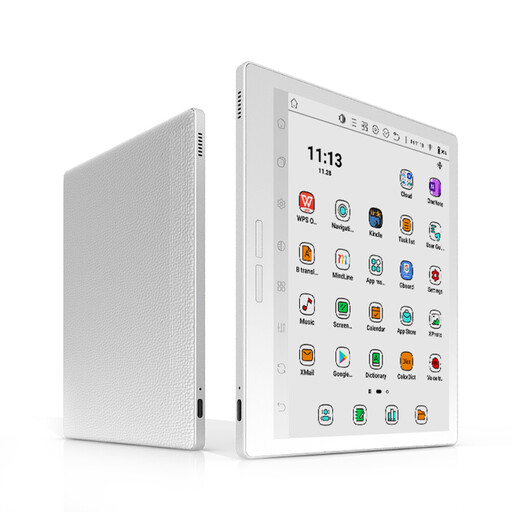 No image available
A portable colour reader to consider if colour is important in your maps; check fine labels on a sample page.
Stated specifications: 4+64GB; 300 ppi for black and white and 150 ppi for colour. The product information states that a power adapter is not included.
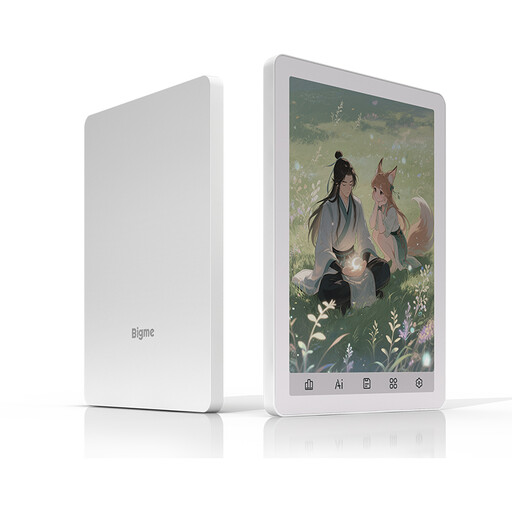 No image available
A compact option to consider if you mainly read continuous text; fine map labels may not be easy to read on a small screen.
Stated specifications: 6-inch screen, 36-level front light and 300 ppi for black and white compared with 150 ppi for colour.
 No image available
A compact colour option to consider if you want to view map colours on the go; compare the screen space with a full map page.
Stated specifications: 6.13 inches, 8GB+256GB, 300 ppi for black and white and 150 ppi for colour.
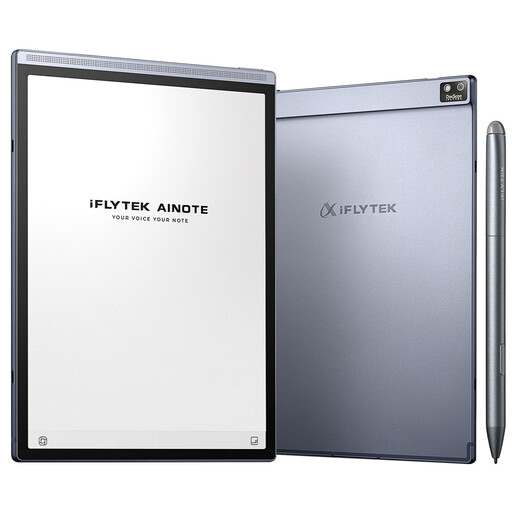 No image available
Worth comparing if you want to read and annotate your own e-books or PDFs with a stylus. Check that your preferred files and workflow are supported.
Stated specifications: 8.2-inch E Ink screen and stylus.
 No image available
A larger E Ink screen to consider if you want to read your own study materials and take notes.
Stated specifications and features: 10.65-inch screen, AI note-taking, speech-to-text and conversion of handwritten notes to text.
No, not every book is available for an e-reader. Check each title for the e-reader symbol or filter by ‘For e-reader’. According to the online Library, books with lots of images can sometimes only be read in the app or online.
The online Library explains how to transfer books using Adobe Digital Editions on a computer. Follow the latest instructions for your account and device authorisation, download an eligible title and transfer it to your connected e-reader using Adobe Digital Editions. Since 23 June 2026, new users and anyone who needs to sign in or authorise their device again must create a ByteBooks account.
According to the online Library, you need to borrow the title again and download it again. So, for e-reader books, don’t use the renew button instead of borrowing and downloading the book again.
No, you can’t share a copy made for your personal use. The Dutch Government distinguishes between a private copy and sharing or making it available to the public. You should also follow the library’s terms and the rights holder’s requirements.