What should you consider when choosing?
Start with how sensitive the information is and what the file needs to achieve as an archive. Then check that your client can open the stick and that it has enough space for all the files.
| What to consider |
What should you check? |
Who should pay particular attention? |
| Protection if the stick is lost or accessed |
Check whether the file contains information about living people. Make sure your client can unlock the encryption you choose, and agree how access details will be passed on. |
If the file includes information about living family members, my main concern is preventing unauthorised people from viewing it. Around 36% of consumers prioritise protection if the stick is lost or accessed. |
| Finding files and keeping a separate copy |
Check that your client can open the files, and provide a clear folder structure with source descriptions. Agree who will keep and manage a separate copy. |
I want my client to be able to find scans and sources later, even if the transfer stick isn't available. Around 29% of consumers prioritise future accessibility and having a recoverable copy. |
| Connector and file compatibility |
Ask which port and operating system your client uses. Test a file and, where necessary, check that it can be unlocked on the receiving device. |
If my client uses a different connector or computer, I want to know in advance whether the files will be readable on it. Around 21% of consumers prioritise device compatibility. |
| Capacity and write time |
Add up the size of the selected files and check the available space. For large transfers, look up the model's write speed and verify the full copy once it's written. |
For a large file, I want to transfer everything without having to guess the copying time based on read speed. Around 14% of consumers prioritise capacity and write time. |
Joybuy picks for file transfer
The products below are standard USB sticks for transferring files via USB-A, with an additional option for transferring between devices with USB-A and USB-C. If the file contains personal data, arrange and test suitable protection separately from your choice of capacity and connector.
 No image available
Kingston DataTraveler Exodia 64 GB
A standard USB-A stick for a file you're transferring via a USB-A port; arrange any access protection separately.
64 GB storage; USB Type-A; USB 3.2 Gen 1.
Joybuy
 No image available
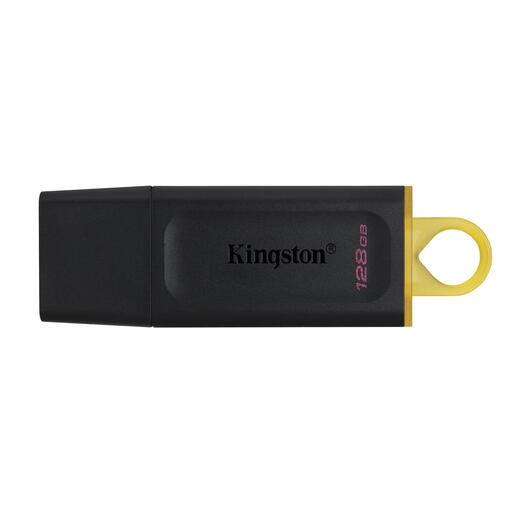
Kingston DataTraveler Exodia 128 GB
A standard stick for transferring files from a device with USB Type-A; check your client's computer connector in advance.
128 GB; USB Type-A; USB 3.2 Gen 1; backwards compatible with USB 2.0.
Joybuy
 No image available
SanDisk Ultra Flair 64 GB USB 3.0
A USB-A option for transferring files; check that your client can connect and open the stick directly.
64 GB; USB 3.0.
Joybuy
 No image available
SanDisk Ultra Dual Drive Go 512 GB USB 3.1 USB-C
An option for transferring files between devices with USB-A and USB-C; check the connectors on both computers and test the files in advance.
512 GB; USB 3.1; USB-C.
Joybuy
 No image available
Kingston DataTraveler Exodia USB 3.2 Flash Drive
A standard USB-A stick for transferring files from a device with USB-A; check in advance that your client's connector is compatible.
USB 3.2; USB Type-A; plug-and-play.
Joybuy
Frequently asked questions
Does the GDPR apply to a genealogy file containing information about deceased people?
According to the Dutch Data Protection Authority, information that relates only to deceased people is not personal data under the GDPR. A family tree may also contain information about living people, for example details of an inherited illness, so assess the contents of the file. This concerns a private transfer and does not give permission to publish personal data publicly.
Are you legally required to buy a specific encrypted stick model for a client transfer?
The Dutch Data Protection Authority does not specify a particular USB model as mandatory, but says that organisations must protect personal data appropriately. For sensitive documents that cannot be stored on a work server, it recommends an encrypted USB stick. The measures that are appropriate depend on the data and the transfer.
Why won't a large archive file fit on a stick with enough free space?
Check the file system and the maximum size allowed for each individual file. Microsoft lists a 4 GiB per-file limit for FAT32; exFAT supports larger files. First check that your client's computer and any encryption software support exFAT. Formatting deletes existing files.
Can the client keep the stick as their only archive for years?
Don't treat the transfer stick as a complete archiving plan. The National Archives describes archiving as selecting, organising and making files accessible. Also agree who will keep a separate copy, manage access and check the files later.
How long can personal data in the transferred file be kept?
According to the Dutch Data Protection Authority, the GDPR does not set a specific general retention period: personal data must not be kept for longer than necessary. The applicable period depends on the purpose and any other obligations. Agree at the point of transfer who will make this decision.


