
Vandaag of morgen in huis

Kwaliteit gegarandeerd

Welkomstaanbiedingen ontgrendelen: GRATIS bezorging | Tot 80% korting | Gratis 30 dagen JoyPlus-proefperiode
Download de app
Gel pens are handy for school, the office, journalling and creative projects. But colourful packaging doesn’t tell you how comfortable a pen is to write with. A nib that’s too thick can make small notes hard to read, while a fine nib may be more sensitive to pressure and rough paper. Erasable gel pens also have limitations you should know about beforehand.
Use this practical guide to compare features you can check, such as nib size, ink type, closure, grip and surface. That way, you can compare gel pen sets and other writing pens by how they perform, not just how they look.
Coloured gel pens are great for colour-coding, planners and creative notes. Just check whether the set really contains different ink colours. Some pens have several colours in the barrel but only write in one ink colour. Check the line width too: 0.5 mm is generally more precise than 0.7 or 1.0 mm.
Erasable gel pens usually use heat-sensitive ink. According to M&G’s product descriptions, you can remove the writing with the rubber eraser tip. This is handy for schedules, exercises and notes, but the same information says that high temperatures can also make the text fade. So don’t use this type of pen for documents that need to be kept for a long time or stored officially.
Acrylic markers, sketching pens and some highlighters contain more pigment or ink than ordinary gel pens. If you’re journalling or using a school notebook, test the pen on a page with another sheet behind it first. With alcohol markers, such as the Faber-Castell Goldfaber range, bleed-through on thin paper is a common consideration. A marker that works well on card or canvas won’t necessarily suit a diary.
A fine nib takes up less space, but may not write as smoothly if you press hard or use poor-quality paper. A broader nib is often easier to read, but less suited to the small boxes in a planner.
Standard gel ink usually gives you a smooth line. If you’re left-handed, check whether the product description mentions quick-drying or smudge-resistant ink. This isn’t guaranteed in every situation: drying time also depends on the paper, how hard you press and how much ink is applied.
Erasable gel pens are handy for making corrections, but their heat-sensitive ink makes them less suitable for archiving. For important documents, standard writing pens or ballpoint pens are a more sensible choice.
A rubber grip can be comfortable during long writing sessions. A click mechanism means you won’t lose a loose cap. Pens with caps should be closed carefully after use to help prevent them from drying out. Keep gel pens and markers away from direct sunlight and heat.
For child-friendly markers, other features matter too, such as water-based ink, ventilation holes in the cap and a stated minimum age. Always check the product information and keep small parts out of reach of young children.
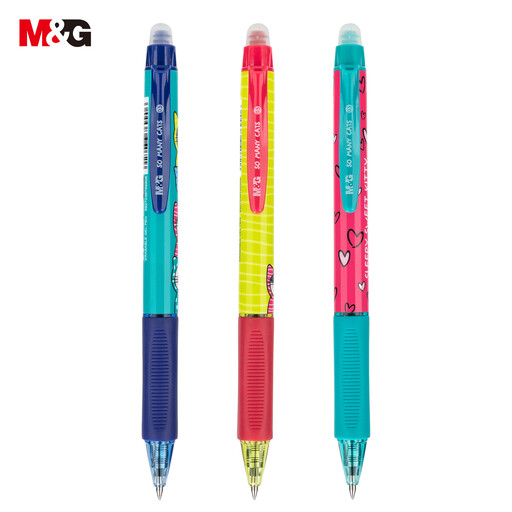
Why it suits this profile: This set includes six blue erasable gel pens with a 0.5 mm nib for school, planners and everyday notes.
The product description specifies the nib size, the type of heat-sensitive ink and the rubber eraser tip. So you’ll know the main limitations before you buy.
0.5 mm bullet tip, six pens and a click mechanism; M&G says they’re designed for easy corrections and everyday writing.

Why it suits this profile: For creative users who want to mark more than just paper, including ceramics, glass, wood, canvas and plastic.
The product description clearly lists the suitable surfaces, two tip sizes of 1 and 3 mm, and the steps for activating the markers. So you’ll know these aren’t ordinary gel pens.
Six metallic colours and water-based acrylic ink, according to the product information; an ink-level indicator helps you keep track of how much is left.
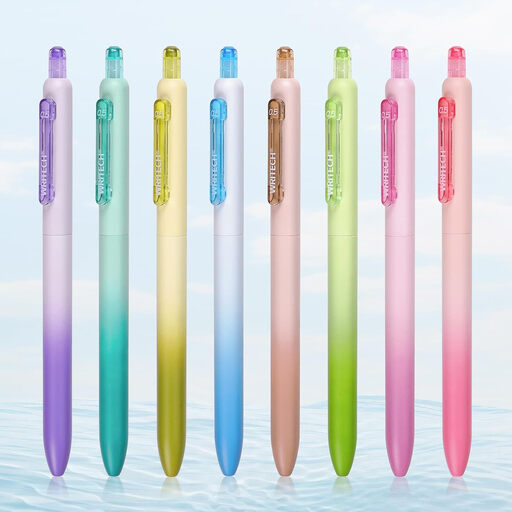
Why it suits this profile: This set is made for colour-coding, journalling, note-taking and detailed work where a fine line and a range of colours matter.
The product information specifies a 0.5 mm nib, a retractable mechanism and quick-drying ink. Even so, test the pen on your paper before colouring in a whole page.
Eight stated colours, an ergonomic grip and a quiet click mechanism, according to the product description.
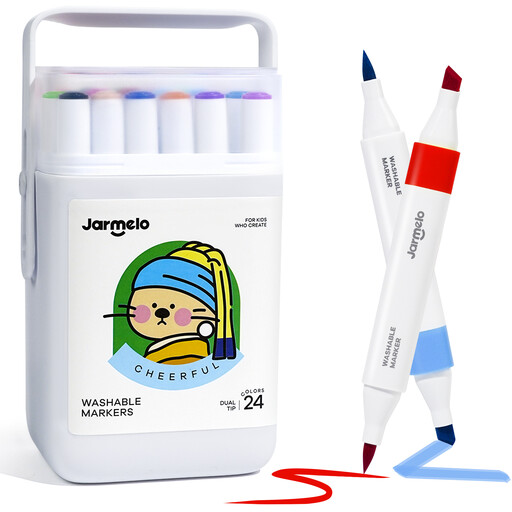
Why it suits this profile: The brush and chisel tips are ideal for colouring, sketching and lettering at home or on the go.
The product description says the set has ventilated caps and water-based ink. It states that the ink is about 90% washable from skin and most fabrics; remove any stains as quickly as possible.
24 colours, dual tips and a storage case with a handle, according to the product details.
We’ve put together a complete, up-to-date list of products that meet these strict selection criteria and current European safety regulations.
For school, a fine nib, clear ink colour and comfortable grip are usually more important than decoration. At the office, retractable gel pens are practical, especially if you often switch between documents and notes. Journalling pens can offer more colour, but keep an eye on bleed-through and drying time.
If you’re buying acrylic markers or sketching pens, focus especially on the surface, tip shape and drying time. Pastel highlighters are great for subtle markings; models with two line widths are handy for both underlining and colouring in larger areas. Always replace the cap firmly after using markers to help prevent them from drying out.
That depends on the rules set by your school or exam board. As heat-sensitive ink can fade, erasable gel pens aren’t necessarily suitable for official documents or exams. Check which writing instruments are allowed beforehand.
How long they last depends on how much you write, the nib size, the paper and how you store them. A pen with a broader nib generally uses more ink. Put the cap back on pens straight away, and retract the nibs of retractable pens after use. Don’t store them in direct sunlight or near heat for long periods.
A set is practical if you need several colours or spare pens. Buying an individual pen means you won’t end up with colours you never use. Before choosing, compare the number of pens, the colours, the nib size and how you’ll actually use them.
