
Vandaag of morgen in huis

Kwaliteit gegarandeerd

Welkomstaanbiedingen ontgrendelen: GRATIS bezorging | Tot 80% korting | Gratis 30 dagen JoyPlus-proefperiode
Download de app
A pen or pencil might seem like a simple purchase – until the tip skips, the ink smudges or the mechanism starts to falter after a short time. With gel pens and mechanical pencils, the choice isn't just about colour or appearance. The tip size, type of ink, grip and how you use the writing instrument all determine whether the product is right for you.
Also pay attention to marketing claims. Words like “extra smooth”, “no smear” or “premium” don't automatically tell you how a pen will write on your paper. Always check the product specifications and see whether the product is suitable for your needs.
A fine gel pen of 0.4 or 0.5 mm is handy for small handwriting, diaries, schedules and precise notes. A 0.7 mm gel pen generally writes with a fuller line and feels comfortable for longer texts. For broader handwriting, that can be more comfortable, but on thin paper the line may look less refined.
A similar principle applies to mechanical pencils. A 0.5 mm mechanical pencil is suitable for detailed writing, technical work and light sketching. A 0.7 mm mechanical pencil may be a better fit for everyday writing or when you tend to apply a bit more pressure. Also check whether the correct refills are included or available separately.
An erasable gel pen uses heat-sensitive gel ink. Friction from the eraser generates heat, making the text less visible. This is practical for planners, schoolwork and temporary notes. However, the text is not the same as a permanent document. Exposure to high temperatures can affect erasable ink.
For contracts, important forms or documents that need to be kept for a long time, a standard black or blue gel pen is usually a more logical choice. Also check whether the eraser is included with the pen and whether the product description clearly explains how the erasing works.
A set with lots of colours may seem like good value, but unused colours offer little benefit. For office supplies, black gel pens and perhaps red pens for corrections are often sufficient. For journaling, mind maps and colour-coding, coloured gel pens are actually useful.
Also look at the closure. A click mechanism is quick to operate and prevents a loose cap. A pen with a cap must be properly closed after use to prevent the tip from drying out. For children under three, be aware of warnings about small parts.
The stated size, such as 0.4 mm, 0.5 mm or 0.7 mm, refers to the tip or line specification of the product. The actual line can vary depending on the paper, writing pressure and ink formula. Use this measurement as a practical guide, not a guarantee for every writing style.
A black gel pen suits administration, forms and everyday notes. Red gel pens are handy for feedback or corrections. Blue ink is often used for school and general writing. With coloured gel pens, it's wise to check how many colours are actually in the set.
Brands may claim, based on their own research, that their ink dries quickly or smudges less. Don't present this as a guaranteed result for every type of paper. Left-handed writers should pay particular attention to drying time, as the hand moves more quickly over fresh ink.
A soft or textured grip can provide more control during long writing sessions. A metal body feels heavier than plastic and may feel more stable for some users. That's a matter of personal preference, not a universal quality guarantee.
Store gel pens horizontally when the product information recommends it. Retract click pens when not in use and close capped pens properly. A mechanical pencil only works well with the correct lead size. Don't force the mechanism if the tip gets stuck.
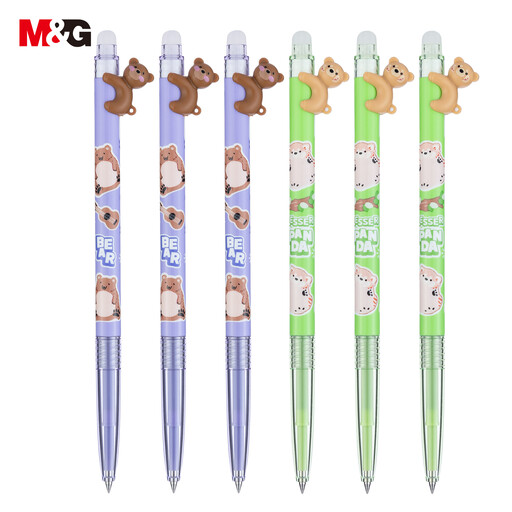
Why this fits the profile: This set contains six blue erasable gel pens with a fine 0.4 mm tip. That suits school pupils, planners and beginner journalers who want to be able to make corrections.
The tip size and number of pieces are clearly stated. Bear in mind that heat-sensitive ink is less suitable for important documents.
0.4 mm fine tip, six pieces, click mechanism and eraser on the back according to the product description.
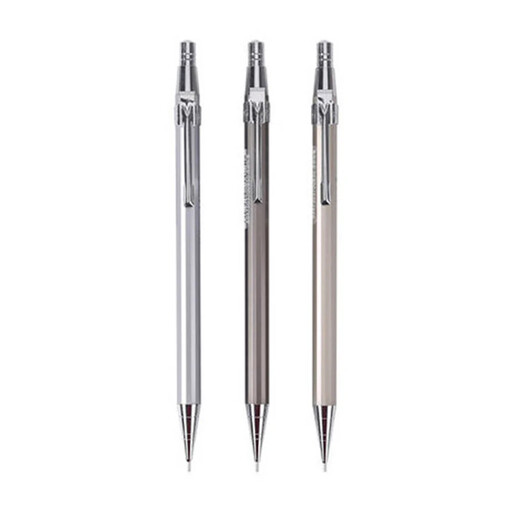
Why this fits the profile: The metal body and 0.5 mm black lead are aimed at controlled writing, drawing and sketching for office, study or design work.
The fixed 0.5 mm size prevents you from buying a broad writing pencil for detailed work. The metal body may feel heavier than plastic.
Set of three, metal body, push-button mechanism and black 0.5 mm lead for writing and sketching.
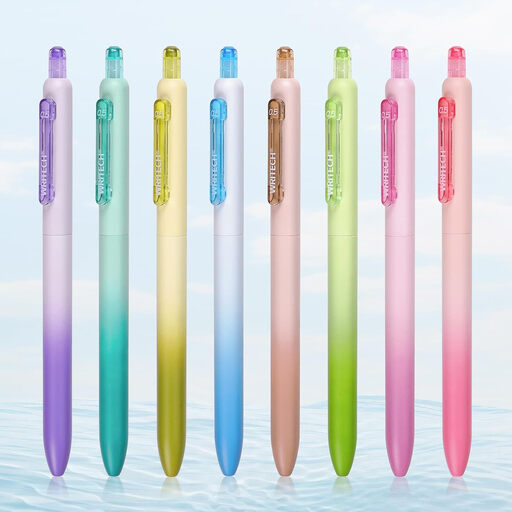
Why this fits the profile: The eight colours are practical for journaling, colour-coding, creative notes and planners. The fine tip supports detailed work.
The set states both the number of colours and the tip size. According to the product description, the pen has a click mechanism and quick-drying ink; results may vary depending on the paper.
Eight retractable colours, 0.5 mm fine tip, soft grip and a quiet click according to the product specifications.
We've put together a full, up-to-date list of products that fully meet these strict selection criteria and comply with current European safety regulations.
Usually choose a fine gel pen of 0.4 or 0.5 mm. These tip sizes give you room for small notes and detailed diaries. Ideally, test the pen on the paper you use every day, because paper texture and writing pressure affect the line.
The lifespan depends on how much you write, the amount of ink or lead and the pressure you apply. A click pen can dry out if the tip is left extended for a long time. With a mechanical pencil, you can extend its life by using the right lead and not pushing the tip through with excessive force. Check with sets whether refills are available separately.
That depends on how you use it. For school supplies and office supplies, a set of black or blue pens can be practical. For journaling, drawing and colour-coding, coloured gel pens offer more variety. Don't just compare the number of pens – also look at the tip size, ink colour, grip and type of closure.
