
Vandaag of morgen in huis

Kwaliteit gegarandeerd

Welkomstaanbiedingen ontgrendelen: GRATIS bezorging | Tot 80% korting | Gratis 30 dagen JoyPlus-proefperiode
Download de app
Gel pens often write more smoothly than standard ballpoint pens, but not every pen suits every purpose. A fine tip can be great for small handwriting, while a thicker tip writes faster for long notes. Colour, drying time and the closure also make a difference.
The main pitfalls when buying gel pens are:
The tip size partly determines how detailed you can write:
Don’t just focus on the number. The shape of the tip, the ink formula and the grip also affect how the pen feels. For example, a 0.5 mm rollerball pen uses liquid ink and can write differently from a 0.5 mm gel pen.
Gel ink usually consists of pigment or dye in a gel base. According to the product description from the relevant manufacturer, some models may use quick-drying ink to reduce smudging and smearing. That is a product claim from the brand, not a guarantee for every paper type.
For everyday use:
A non-slip or silicone grip can be more comfortable during long writing sessions. A cap protects the tip but can get lost. A retractable mechanism is practical in the office or in a pencil case.
Also look at the contents of the pack:
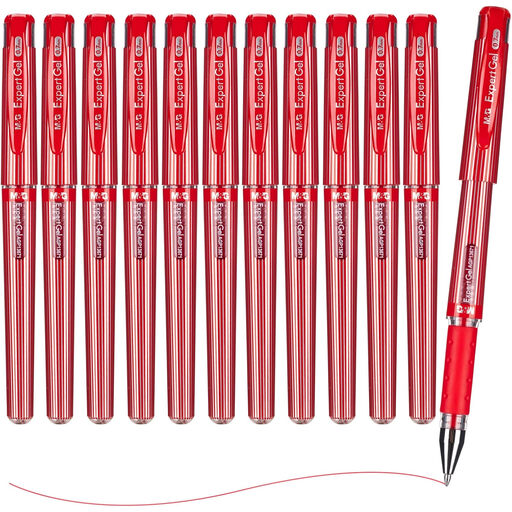
Why this fits the profile: The pack contains 12 red gel pens with a 0.7 mm tip. That suits correction work, markings and a shared stock for school or office.
The colour and tip size are clearly described. The product information also mentions a grip and a cap; check on receipt whether this matches your writing style.
12 pens, red gel ink, 0.7 mm and a non-slip grip according to the product description.
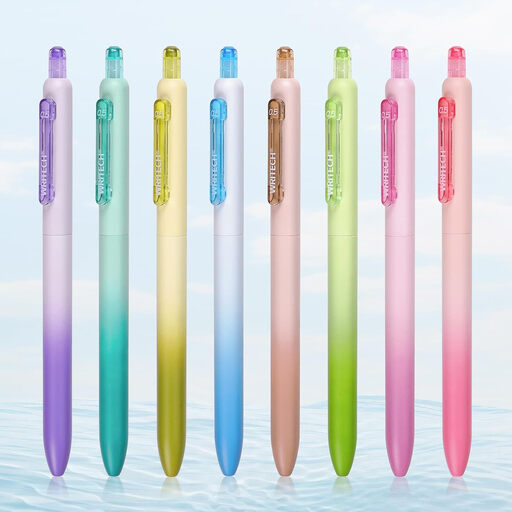
Why this fits the profile: This set is aimed at journaling, notes and colour-coding. The 0.5 mm tip and eight colours offer scope for detailed work without needing to buy a separate pen for each task.
The specifications mention a fine tip, retractable closure, ergonomic matte barrel and quick-drying ink. Still test the drying time on your own paper.
0.5 mm, eight colours, retractable mechanism and a silent click according to the product description.
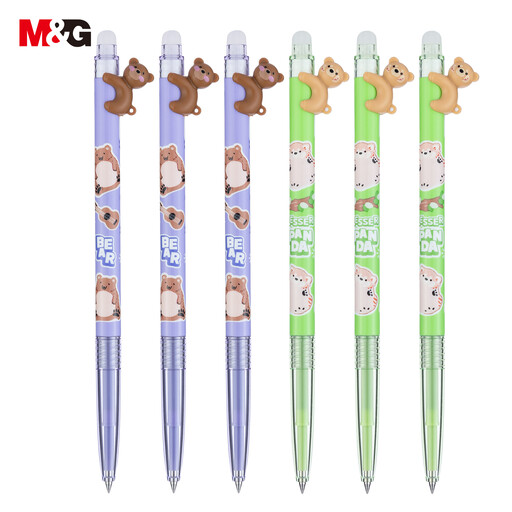
Why this fits the profile: The fine tip is designed for neat notes, planners and schoolwork. The heat-sensitive blue ink allows corrections without needing a separate eraser.
The erasability is explicitly stated, including the warning not to expose written text to high heat. That prevents a wrong choice for archive documents.
Six pens, 0.4 mm, blue erasable gel ink and a grip according to the product information.
We’ve put together a full, up-to-date list of products that fully meet these strict selection criteria and comply with current European safety regulations.
A gel pen isn’t the most logical choice for every task. Ballpoint pens usually use oil-based ink and are practical for forms and signatures. A rollerball pen has liquid ink and often writes lightly, but can bleed more on thin paper.
For creative projects, fineliners and markers are better suited when you want clear outlines or broad areas. Acrylic markers are intended for surfaces such as wood, glass, ceramic or canvas; don’t just use them as ordinary writing pens. For children, water-based, washable markers with an age recommendation are a more practical option. Always check the safety information, especially with small parts and children under three years old.
Yes, especially models of 0.5 or 0.7 mm. For schoolwork, choose a clearly readable colour, a comfortable grip and preferably a cap or retractable tip. For official documents, it’s wise to check in advance whether erasable ink is allowed.
The lifespan depends on use, storage and the amount of ink. Close pens with a cap after use and retract retractable tips. Store them dry and out of direct sunlight. A set of 10 or 12 pens is handy when several people use the same pens.
Paper, temperature and the amount of ink all play a role. Smooth paper often absorbs ink less quickly. Let the text dry for a moment and, if you experience a lot of smearing, choose a model whose product description mentions quick-drying ink. Always test new gel pens on the paper you use every day.
