
Vandaag of morgen in huis

Kwaliteit gegarandeerd

Welkomstaanbiedingen ontgrendelen: GRATIS bezorging | Tot 80% korting | Gratis 30 dagen JoyPlus-proefperiode
Download de app
A set of gel pens may seem easy to choose, but small differences can affect your writing comfort and ease of use. A fine tip can be ideal for diaries and small notes, while a broader tip lets you write faster when producing longer texts. The number of pens, colour selection and ink drying time also make a difference.
Pay particular attention to three common pitfalls:
Tip thickness affects the line, the feel on paper and the amount of ink released.
A needle tip is narrow and precise, while a bullet tip has a more rounded point. Also check whether the stated tip size refers to the metal tip or the resulting line on paper. These two measurements may differ.
For everyday use, black gel pens are often the practical choice. For highlighting, planning and bullet journalling, coloured gel pens are more useful. Do not look only at the total number of pens, but also at the distribution:
Look out for terms such as “quick-drying gel ink” or “quick dry”. Check whether the product uses gel ink, rollerball ink or ballpoint ink. The product description should clearly state which type of ink is used.
Erasable gel pens usually use heat-sensitive ink. The writing can be removed with the integrated friction eraser, but this also means that written information is not always permanent. According to the product descriptions for the erasable M&G models, high temperatures can affect written work.
For important forms, signed documents and archive notes, standard gel pens are generally the more sensible choice. For homework, planners and draft notes, erasable ink can be particularly practical.
With quick-drying ink, the risk of smudging is often lower, but the experience also depends on the paper, your writing speed and whether you write left- or right-handed. Store pens closed or with the tip retracted, as stated in the product information. Several models are recommended to be stored horizontally.
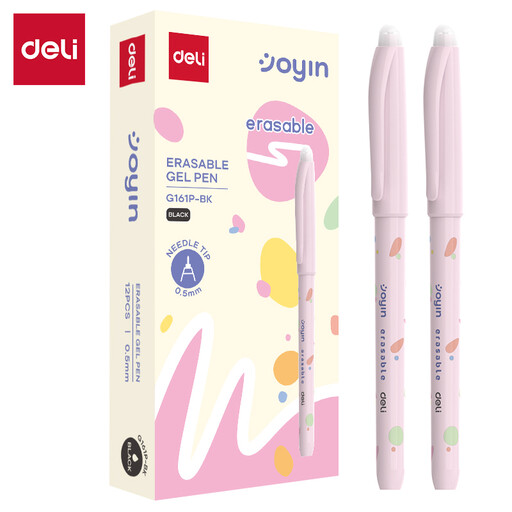
Why it suits this profile: A well-organised set of 12 black erasable gel pens for school, working from home, diaries and everyday notes.
The tip size and colour are clearly stated. This means you do not end up buying a large, unspecified mix if you mainly want to write in black.
0.5 mm needle tip; 12 pens; black heat-sensitive gel ink according to the product name.
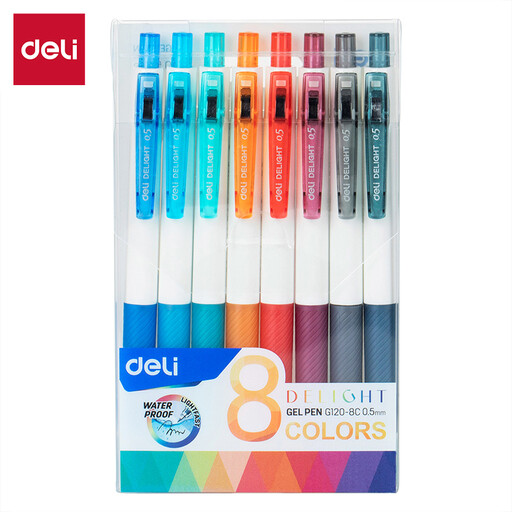
Why it suits this profile: Ideal for users who value a fine line, a comfortable grip and multiple colours for notes, planners and creative projects.
The specification states 0.5 mm, a rubber grip and eight different colours. This makes the set easy to assess for colour coding.
8 assorted colours; stainless steel needle tip; rubber comfort grip and quick-drying ink according to the description.
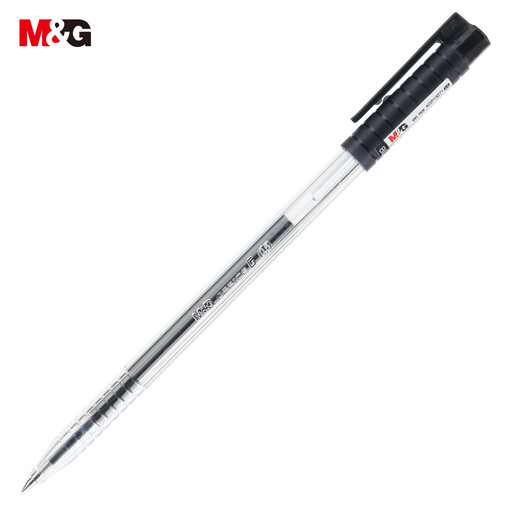
Why it suits this profile: Handy for offices, schools, training rooms and households where pens are used or misplaced regularly.
The pack states the exact quantity, colour and tip thickness. You are therefore buying a targeted supply rather than paying for unused colours.
50 pens; 0.5 mm bullet tip; black ink that dries quickly according to the product description.
We have compiled a complete, up-to-date list of products that fully meet these strict selection criteria and the applicable European safety regulations.
Gel pens usually provide a smooth writing experience and are suitable for notes, journalling and colour coding. Ballpoint pens often use oil-based ink and are practical for forms, everyday office work and writing on different types of paper. A 1.0 mm ballpoint pen, such as the WRITECH set, produces a broader line than a 0.5 mm gel pen.
A rollerball uses liquid ink. This can provide a smooth writing experience, but the ink may be more prone to bleeding through the paper or smudging, depending on the paper. For bullet journal pens, a fine gel pen or rollerball is often suitable, provided you test it on the paper first.
This varies by school, educational institution or examination body. Erasable ink is not permanent and can disappear when exposed to heat. Always check the exam rules. For official documents, a standard black gel pen is often the safer choice when permanent writing is required.
Put the cap back on capped pens immediately after use and retract retractable models. Store them in a dry place, away from direct sunlight and preferably according to the manufacturer’s instructions. If the ink temporarily stops flowing, writing on a separate sheet of paper can sometimes reactivate the tip.
The lifespan depends on the tip thickness, how often you write, the paper and the amount of ink. A 0.5 mm pen generally uses less ink per line than a broader 0.7 or 1.0 mm pen, but an intensive user can empty any pen more quickly. As well as the price, consider the number of pens in the pack and how you intend to use them.
