
Vandaag of morgen in huis

Kwaliteit gegarandeerd

Welkomstaanbiedingen ontgrendelen: GRATIS bezorging | Tot 80% korting | Gratis 30 dagen JoyPlus-proefperiode
Download de app
Gel pens write smoothly and are available in black, red and all sorts of colours. But sometimes a set doesn’t live up to expectations in practice. The ink may take longer to dry than expected, a fine tip may be too delicate, or a large pack may contain pens that aren’t comfortable to hold.
For school pupils, students, office workers and journalling enthusiasts, choosing the right pens isn’t just about how many there are. Pay particular attention to the tip size, closure type, grip and ink properties. Read on to find out what to look for and which gel pens suit different situations.
Drying time depends on how much ink is applied, the paper and your writing speed. Left-handed writers, in particular, often move straight over the text they’ve just written. Product descriptions sometimes mention “quick-dry” or “no smear”, but that doesn’t guarantee the same results on every type of paper or with every writing style.
So look for a clear description of the ink, and test it on a spare sheet before using it on important documents. Ink can also permanently stain fabrics and surfaces. Several product listings include this warning too.
A 0.5 mm gel pen will generally produce finer lines than a 0.7 mm gel pen. This difference matters:
A finer tip isn’t automatically more comfortable. If you press hard, you may damage a fine tip more quickly or interrupt the flow of ink.
A 50-piece gel pen set may seem appealing for a family, classroom or office, but it’s less practical if you’re mainly looking for a range of colours or a comfortable grip. Always check:
The stated tip size is a technical indication of the writing tip, not necessarily the exact line width you’ll get on every type of paper. Smooth paper usually gives a more even result than rough recycled paper. For school and office forms, black gel pens with a 0.5 mm tip are a practical choice. For corrections or colour-coding, coloured gel pens with a 0.5 or 0.7 mm tip may be more suitable.
Retractable gel pens have a click mechanism instead of a loose cap. This means there’s no cap to misplace, and the pen is ready to use straight away. Just remember to retract the tip after use to reduce the risk of the ink drying out.
With capped pens, make sure you put the cap back on securely. Several product descriptions also recommend storing pens horizontally, in a dry place and out of direct sunlight. If the ink temporarily stops flowing well, gently scribbling on scrap paper may get it going again. Don’t force the tip.
A soft, ribbed or triangular grip can give you more control during long writing sessions. This is worth considering when choosing gel pens for school, the office or journalling. Bear in mind that “ergonomic” describes a design choice, not a medical benefit. Choose a shape that suits the way you hold your pen.
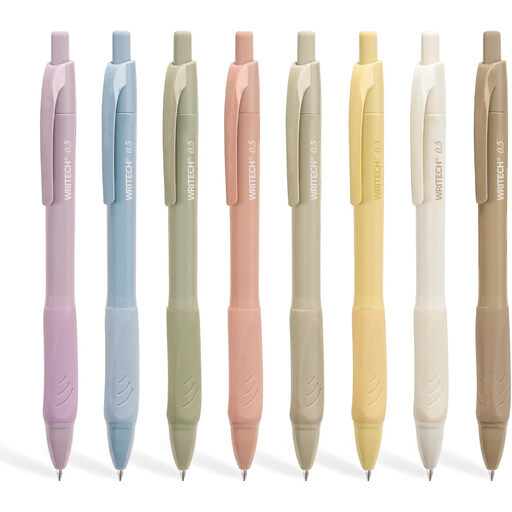
Why it suits this user: This set contains eight retractable gel pens with black ink and a fine tip. It’s suitable for everyday notes, schoolwork, diaries and use at home.
The product description specifies a 0.5 mm twin-ball tip, a soft triangular grip and quick-drying black ink. Always check how quickly it dries on your paper.
8 pens, black ink, 0.5 mm tip and a retractable tip with a grip.
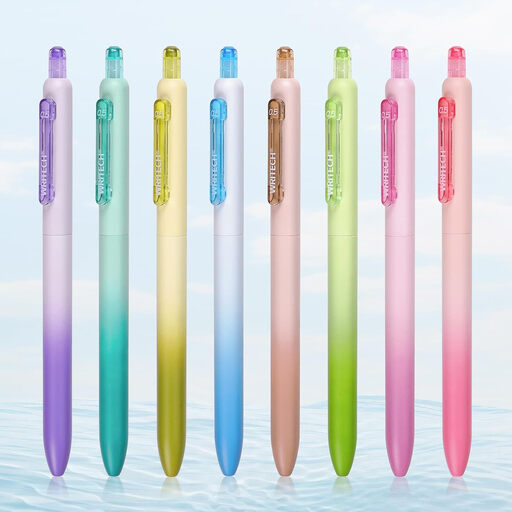
Why it suits this user: This colour set is designed for journalling, colour-coding and detailed notes. The matt barrel and quiet click make it suitable for use in a library, office or classroom.
According to the product description, the set has a quiet click mechanism, a 0.5 mm twin-ball tip and quick-drying ink. Whether it’s “smudge-free” will still depend on the paper, pressure and drying time.
8 different colours, fine 0.5 mm tip, retractable mechanism and ribbed matt barrel.
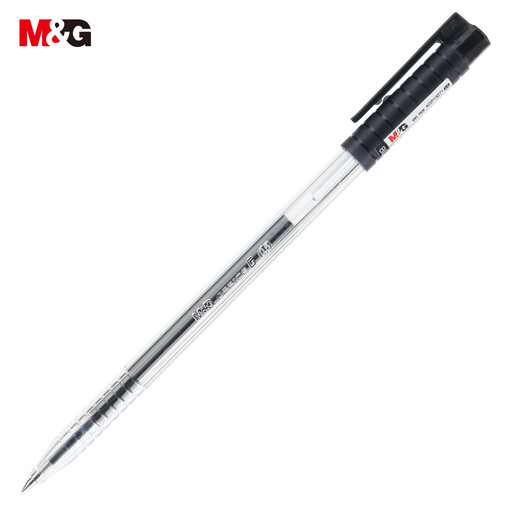
Why it suits this user: A pack of 50 black gel pens is a good fit for offices, schools, training rooms and families that regularly need pens.
The set makes the quantity clear: 50 pens with a 0.5 mm bullet tip and black quick-drying gel ink, according to the product description. There’s no choice of colours.
50 black pens, 0.5 mm tip, classic lightweight design, ideal for school and office use.
Quick-drying gel pens can reduce the risk of smudging, but no pen is completely smudge-proof in every situation. If you write with your left hand, it’s best to choose a pen with a fine or medium tip, avoid pressing too hard and use paper that doesn’t leave the ink sitting on the surface for too long. A retractable model also means a cap won’t get in the way while you write.
Erasable gel pens can be useful for practice and school notes. Before buying, though, check that the product information clearly explains how the ink is erased and which paper the pen is designed for. The technical information available for the capped children’s sets mentioned here is limited. So check the current product page, age warning and contents before ordering. Pens with small parts are not suitable for children under three.
We’ve put together a full, up-to-date list of products that meet these strict selection criteria and comply with current European safety regulations.
A 0.5 mm tip is usually a good choice. It takes up less space in a diary, notebook or form. If you press hard when writing, try the pen on scrap paper first to make sure the tip writes smoothly.
Yes. A 0.7 mm gel pen produces a broader, easy-to-see line, making it suitable for minutes, corrections and everyday writing. For small boxes or compact tables, 0.5 mm may be more practical.
Retract retractable gel pens after use, and replace the cap straight away on capped models. Store them in a dry place, out of direct sunlight, and follow the product instructions. If a pen temporarily skips, try writing gently on scrap paper instead of pressing harder.
