
Vandaag of morgen in huis

Kwaliteit gegarandeerd

Welkomstaanbiedingen ontgrendelen: GRATIS bezorging | Tot 80% korting | Gratis 30 dagen JoyPlus-proefperiode
Download de app
A gel pen set may seem simple to choose: look for a selection of colours, check the price and add it to your basket. In practice, gel pens vary considerably in nib size, grip, drying time and ease of use. A set with lots of colours is not automatically convenient if the ink bleeds through the paper, the pen dries out quickly or the nib does not suit your writing style.
As a Joybuy Product Recommendation Officer, I filter the most important product specifications for you. This makes it easier to assess marketing claims and choose a set that suits everyday writing, planning, drawing or studying.
Colourful packaging catches the eye, but first check which colours are actually included in the set. For school and the office, black, blue and red are often more practical than light or decorative shades alone. For journalling and planners, several vibrant colours can be particularly useful.
Also consider the number of pens. A 6-piece pen set is compact enough for a pencil case. An 8-piece pen set generally offers more options for colour-coding. A 12-piece pen set is useful for families, classrooms or office supplies, but takes up more space.
According to the product information provided by various brands, quick-drying gel ink can help reduce the risk of smudging. That does not mean every pen will dry instantly on every type of paper. Smooth planner paper, thin school paper and coated paper all behave differently.
Left-handed writers may wish to consider a 0.5 mm or 0.7 mm pen with quick-drying ink. If in doubt, test it first on a similar sheet of paper. Also check the warning that some inks may stain textiles and surfaces.
A long study session or an afternoon of bullet journalling makes the difference between an ordinary grip and a comfortable one clear. Look for a rubberised, ridged or ergonomically shaped grip. A click mechanism also prevents you from losing a loose cap, while a capped pen may be better protected from drying out when it is closed carefully.
A finer nib is not always better. Applying a lot of pressure can make a fine nib feel less comfortable. For quick notes, 0.7 mm gel pens are often more practical; for small planners and drawing, fineliner pens or 0.5 mm gel pens are the more logical choice.
Gel ink generally feels smooth and is available in standard and vibrant colours. Erasable gel pens use heat-sensitive ink. According to M&G’s product description, this ink can be removed with the rubber on the pen. Bear in mind that text may fade unintentionally when exposed to high temperatures. Therefore, use erasable gel pens mainly for planners, practice work and temporary notes, not for documents that need to be kept for a long time.
Ballpoint pens usually use oil-based ink and are often suitable for forms, signatures and general office work. For drawing on multiple surfaces, acrylic markers are a different product category. They are not intended to replace ordinary gel pens.
Check whether the pen has a cap, click mechanism or retractable nib. According to the product information, gel pens should preferably be stored horizontally and away from direct sunlight or extreme heat. Replace the cap after use or retract the nib. This helps prevent the ink from drying out.
For young children, water-based children’s markers with ventilated caps are a separate option. Always check the stated age recommendation and keep pens with small parts out of reach of children under three.
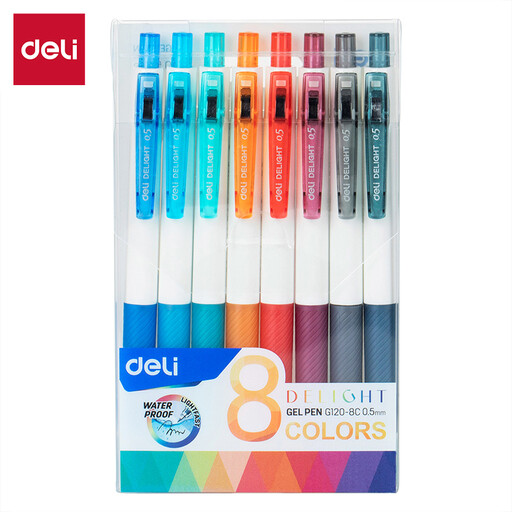
Why it suits this profile: This set combines eight colours with a fine 0.5 mm nib for school notes, journalling and simple colour-coding.
The colour selection and nib size are clearly specified. The rubber comfort grip helps during longer writing sessions; check for yourself how quickly the ink dries on your paper.
8 assorted colours, a fine 0.5 mm nib, rubber grip and a product description that lists writing, planning and sketching as suitable uses.
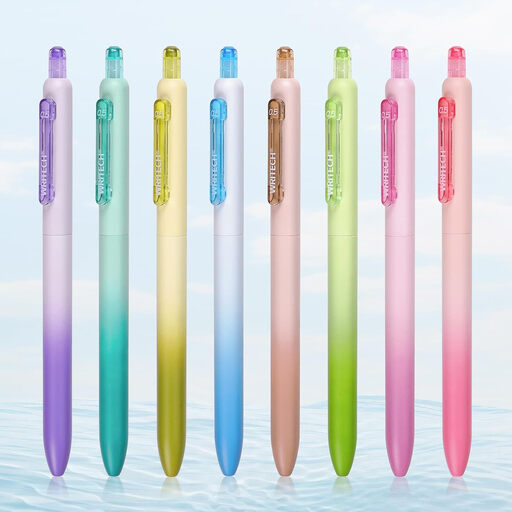
Why it suits this profile: These colourful pens are designed for calm, comfortable writing, journalling and note-taking where a fine line and quiet click are preferred.
The set specifies a 0.5 mm nib, eight colours, a silent-click mechanism and a ridged grip. This means important comfort features can be checked in advance.
8 colours, retractable nib, fine line and, according to the product information, quick-drying ink that can help reduce smudging.
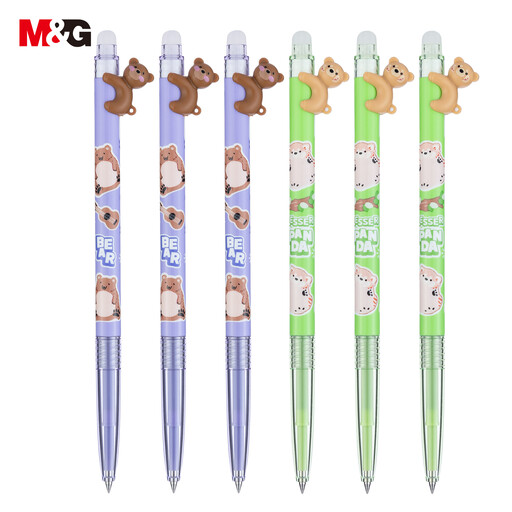
Why it suits this profile: Handy for schoolchildren, planners and anyone who regularly corrects notes without wanting to carry a separate rubber.
The heat-sensitive ink and rubber function are clearly described. This makes it clear that erasing is a key feature, but also that high temperatures can affect the text.
6 pens, a fine 0.4 mm nib, blue erasable gel ink and a comfort grip. The decorative animal clip makes the set easy to recognise in a pencil case.
We have put together a complete, up-to-date list of products that fully meet these strict selection criteria and the applicable European safety regulations.
Its lifespan depends on writing speed, nib size, ink capacity and how the pen is stored. A pen with a 0.5 mm nib will often use ink differently from a 1.0 mm pen when used with similar pressure. Close capped pens securely and retract retractable nibs after use. A set of 10 or 12 pens is practical if you write regularly and want to have a spare readily available.
Yes, but choose an ink colour and nib size suited to the task. Blue or black gel pens are a sensible choice for notes and forms. Red pens are useful for corrections. Colourful pens are ideal for planners and colour-coding. For official documents, always check whether a particular type of ink is accepted.
Gel pens use gel ink and often feel smooth to write with. Ballpoint pens usually use oil-based ink and are suitable for general writing. Fineliner pens generally have a fibre or plastic nib for a precise, consistent line. For painterly accents or use on multiple surfaces, choose acrylic markers; for children, water-based children’s markers are a more suitable category.
