
Vandaag of morgen in huis

Kwaliteit gegarandeerd

Welkomstaanbiedingen ontgrendelen: GRATIS bezorging | Tot 80% korting | Gratis 30 dagen JoyPlus-proefperiode
Download de app
A wrinkled shirt just before you need to head out for an important meeting. A dress that comes out of your suitcase crumpled on holiday. Ironing is often the solution, but who has the time (or inclination) to set up the ironing board for a single garment? A garment steamer seems like the perfect answer. This handy device promises to remove wrinkles quickly and effortlessly.
But the market is flooded with models making lofty promises. Many users discover after purchase that their new steamer leaks, is too heavy, or simply isn't powerful enough. As a Joybuy Product Recommendation Officer, I'm here to help you cut through the marketing jargon. Let's uncover the pitfalls and see what you really need to look for.
Before you buy a garment steamer, it's wise to know which common problems can lead to disappointment.
To avoid a bad purchase, it's better to focus on a few concrete specifications. These determine how effective and pleasant a garment steamer is to use.
Power (Watts) and Steam Output (g/min): The power, expressed in Watts, primarily determines how quickly the water heats up. A higher wattage (e.g., 1500W or more) generally leads to a faster heat-up time. Even more important is the steam output, measured in grams per minute (g/min). A value of 20 g/min or higher is recommended for effectively removing most wrinkles. The higher this number, the more powerful the steam and the faster you'll see results.
Water Reservoir: Capacity vs. Ergonomics: A handheld steamer should fit comfortably in your hand. Pay attention to the balance between the water reservoir's capacity and the total weight. For a travel steamer, a smaller, lighter model (around 100-150 ml) is ideal. For home use, a larger reservoir (250 ml or more) can be useful, provided the device is well-designed and the reservoir is detachable for easy refilling.
Design and Functionality: Are you looking for a device for steaming clothes without an ironing board? Then explicitly check if the model is designed to function leak-free both vertically and horizontally. A compact steamer with a collapsible handle is an excellent choice for travellers or those with limited storage space.
Not everyone has the same needs. That's why we've highlighted a few popular choices that suit specific requirements, based on their specifications.
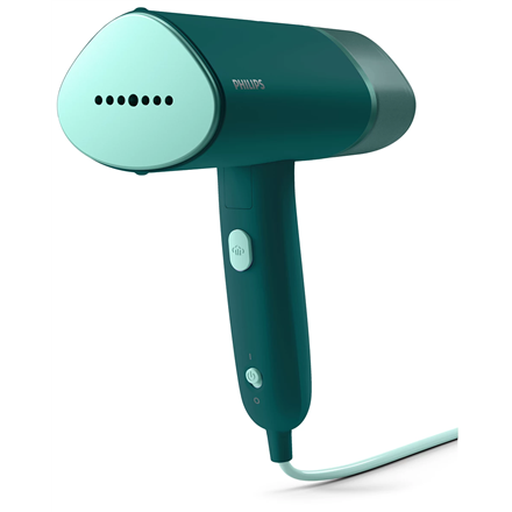
Why This Fits Their Persona: Ideal for those who are often on the go, for both business and leisure. This model is specifically designed to take up minimal space in a suitcase or travel bag.
Its collapsible design and light weight (0.77 kg) prevent it from becoming a cumbersome and heavy device, a common complaint with larger models.
Compact and collapsible: Fits easily into hand luggage. Quick heat-up time: According to Philips, the device is ready to use in 30 seconds.
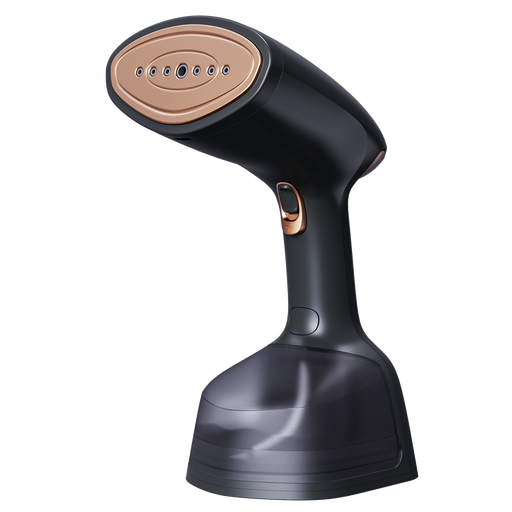
Why This Fits Their Persona: For those who want fast results and need to treat multiple garments in one go. This model combines high power with a reasonably large tank.
The high power (1800W) and steam output of up to 28 g/min ensure a powerful, stable steam flow, reducing the risk of water sputtering and removing wrinkles faster.
High power: At 1800W, it's one of the more powerful handheld steamers. Leak-proof design: According to the manufacturer, the device can be used both vertically and horizontally without leaking.
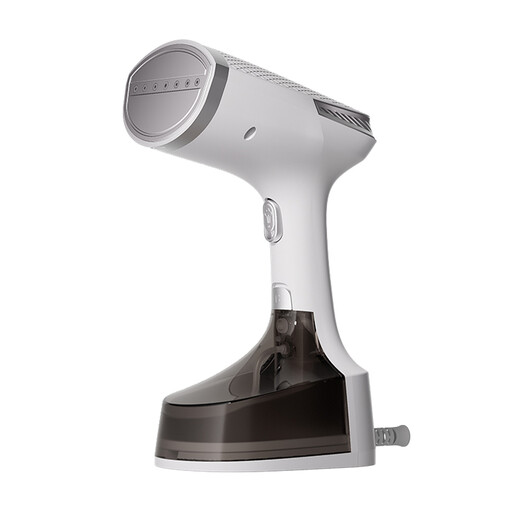
Why This Fits Their Persona: A great all-rounder for students or those living in a studio or small apartment. Powerful enough for daily use, yet compact and easy to store.
The combination of a powerful element (1600W) and a relatively large water tank (300 ml) offers a good balance between steaming duration and weight, preventing the device from becoming impractically heavy.
Good capacity: A 300 ml water reservoir allows you to steam multiple garments. Solid power: 1600W is more than sufficient for most fabrics and wrinkles.
We have compiled a complete, up-to-date list of products that meet these selection criteria and current safety standards.
For most everyday situations, yes. A garment steamer is ideal for refreshing clothes and removing light to medium wrinkles from fabrics like cotton, linen, and synthetics. However, for creating sharp creases, such as on a shirt collar or the pleat of trousers, a traditional iron remains superior.
To extend the lifespan of your device and prevent limescale buildup, it is recommended to use distilled or demineralised water. This is especially important in areas with hard tap water. If you do use tap water, be sure to descale the device regularly according to the manufacturer's instructions.
In general, garment steamers are safer for delicate fabrics than irons because there is no direct hot contact. Fabrics such as silk, chiffon, wool, and cashmere can usually be steamed safely. However, it is always wise to first check the garment's care label and test the steamer on a small, inconspicuous area of the fabric.
