
Vandaag of morgen in huis

Kwaliteit gegarandeerd

Welkomstaanbiedingen ontgrendelen: GRATIS bezorging | Tot 80% korting | Gratis 30 dagen JoyPlus-proefperiode
Download de app
A garden protection net may seem simple to choose, until you need to decide which mesh size, dimensions and material are right for your situation. A fine plastic net for a balcony will not automatically work as bird netting for a cherry tree. And lightweight garden netting is not designed to keep out hail or animals.
Most disappointing purchases usually result from three common pitfalls:
The opening determines what you want to keep out and how much air, light and water the net allows through.
A fine net keeps more out, but it can also be heavier and catch more wind. So check that the structure, poles and fixing points are suitable.
Many protective nets are made from polyethylene, such as HDPE or PE. Polypropylene, abbreviated to PP, is also used for bird and aviary netting.
According to TENAX’s own product descriptions, several models are UV-stabilised and designed to retain their colour and properties for longer. Treat this as a product specification, not a guarantee of a fixed lifespan. Check the net regularly for small tears, fraying and loose fixings.
Also look out for:
Do not measure only the area of your bed, tree or enclosure. Allow extra material for:
A roll measuring 1 x 10 metres is useful for a small garden barrier, planter or balcony. For an orchard or long fence, rolls of 30, 50, 100 or 200 metres are more efficient. When using netting for fruit trees, the width must be sufficient to cover the entire crown, without leaving gaps at the edges through which birds can get inside.
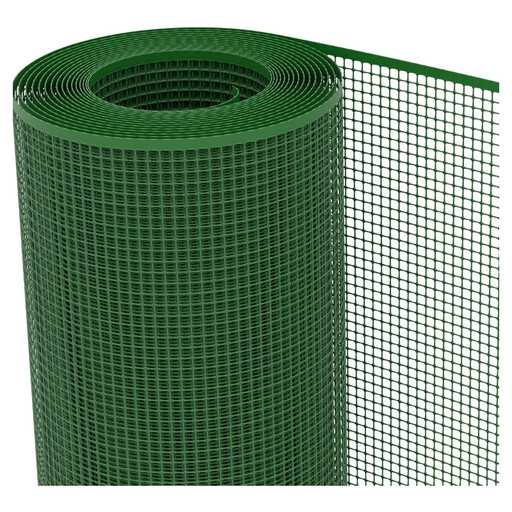
Why it suits this user profile: The compact roll is easy to manage for a first garden barrier, plant corner, balcony or small fence.
The product dimensions and mesh size are clearly stated: 1 x 10 m and 10 x 10 mm. This means you do not have to rely on a vague description.
HDPE, green colour, UV treatment, smooth non-sharp edge and easy to cut to size.
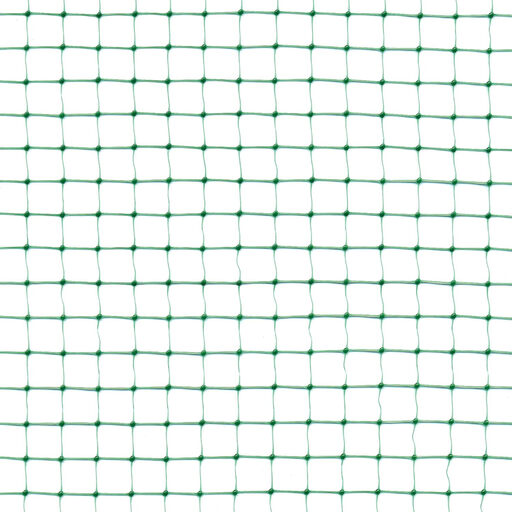
Why it suits this user profile: This wide roll is designed for fruit trees, bushes, vegetable gardens and larger cover structures.
The 10 x 10 mm mesh size and 4.8 x 200 m roll dimensions make it possible to check whether it is suitable before ordering.
Polypropylene, UV-stabilised according to the product description, reusable and suitable for allowing air, water and light through.
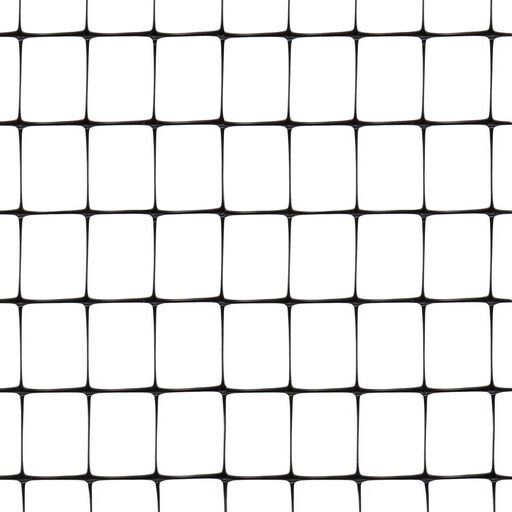
Why it suits this user profile: Suitable for a chicken run, aviary net, animal enclosure or garden barrier that needs to cover a larger area.
The roll measures 1.5 x 200 m and the material is explicitly stated as polypropylene. This helps when planning a long fence.
UV-stabilised according to the product description, lightweight to handle and also suitable for use as netting to keep out moles beneath a lawn.
We have put together a complete, up-to-date list of products that fully meet these strict selection criteria and the applicable European safety regulations.
A net only works properly when it is fixed correctly. Use suitable clips, ties, ground pegs, rope or weights. Keep the net away from fruit-tree branches when birds could otherwise peck through the mesh. For hail netting, a supporting structure is often preferable to placing the material loosely over the plants.
Pay attention to these points:
Garden bird netting with a mesh of approximately 10 x 10 mm is a common choice for fruit, berries and vegetable-garden plants. Make sure the net is large enough and securely fastened all the way around. According to the product description, hail netting can also be used against birds, but it has a different construction and purpose.
Not every garden net is suitable for this. Choose a product whose description specifies horizontal installation beneath a lawn or in the ground, such as aviary netting intended for this purpose. Lay the net at the recommended depth and avoid open seams along the edges.
This depends on the material, exposure to sunlight, tension, wind, hail and storage. UV-resistant means that the net has been treated or stabilised to withstand sunlight; it is not a promise of an unlimited lifespan. Inspect your garden protection net regularly and replace it when it becomes brittle or tears.
