
Vandaag of morgen in huis

Kwaliteit gegarandeerd

Welkomstaanbiedingen ontgrendelen: GRATIS bezorging | Tot 80% korting | Gratis 30 dagen JoyPlus-proefperiode
Download de app
Good garden outdoor lighting needs to do more than look attractive in a product photo. The light should suit its location, provide enough illumination and withstand the Dutch weather. At the same time, you do not want to pay for features you will hardly use.
Many buyers run into the same problems: a solar outdoor light that barely stays on in winter, a motion sensor that switches on whenever a cat walks past, or an IP44 outdoor light installed in a completely exposed location. Checking a few key product specifications can help you avoid these disappointing purchases.
The wattage mainly tells you about energy consumption, not directly how much light the lamp produces. So look at lumens (lm). A path light producing 180 to 350 lumens may be suitable for orientation, while a 500-lumen light provides more illumination at an entrance or driveway.
Also consider the light distribution. A downward-facing light reduces glare and is often well suited to a walkway. For a wall, you may prefer a wider beam.
A solar outdoor light does not need a fixed electricity connection, but its solar panel must receive enough daylight during the day. Do not place the light directly beneath a solid roof, next to a tall fence or in a north-facing location that is permanently in the shade.
The stated operating time also depends on charging conditions. On cloudy days and during the short winter days, the actual usage time may be lower. A solar outdoor light is therefore practical for ambient lighting and orientation, but it is not always suitable as constant primary lighting.
The IP code indicates how well a product is protected against the ingress of solid objects and water. The first digit refers to solid particles; the second refers to moisture.
An IP rating does not mean that a light is waterproof in all circumstances. Always check the product warnings and install the light according to the instructions.
Colour temperature is expressed in kelvin (K). Around 2700 K produces warm white light, which is often pleasant on a patio, at an entrance or on a façade. 4000 K looks more neutral and can be practical along a path. 6500 K is bright white and is often chosen when visibility is more important than a warm atmosphere.
Compare the lumen output with the intended use:
Aluminium, cast aluminium, stainless steel, plastic and glass are commonly used for garden lighting. Cast aluminium can provide a sturdy housing, while stainless steel is a good choice for a slim solar outdoor light. Plastic is often lightweight and easy to install.
Pay attention to the stability of freestanding lights and ground spikes. A tall light measuring 50 to 80 centimetres needs to be firmly secured in the ground. Extra anchoring may be required in soft soil. Only install an outdoor ground spotlight if the installation depth and drainage are suitable for the ground conditions.
An integrated LED outdoor light usually does not require a separate bulb. However, check whether the LED can be replaced. With a light featuring an E27 or GU10 fitting, you can choose a suitable LED bulb yourself, but make sure you observe the maximum wattage.
An outdoor light with a motion sensor is useful by a front door, garage or driveway. Check the detection angle, range and adjustment options. For a fixed 230V connection, installation must be carried out by a qualified electrician in accordance with the product information. Solar and rechargeable lights are easier to install, but require attention to sunlight and charging.

Why it suits this profile: This solar path lighting works without fixed wiring and is designed to be placed in a sunny location along a border, garden path or patio.
The product information explicitly states a charging time of 4–6 hours and recommends sufficient sunlight. This makes it clear in advance where this light will and will not be practical.
Stainless steel, IP44, 6500 K and a stated operating time of 8–12 hours after charging.
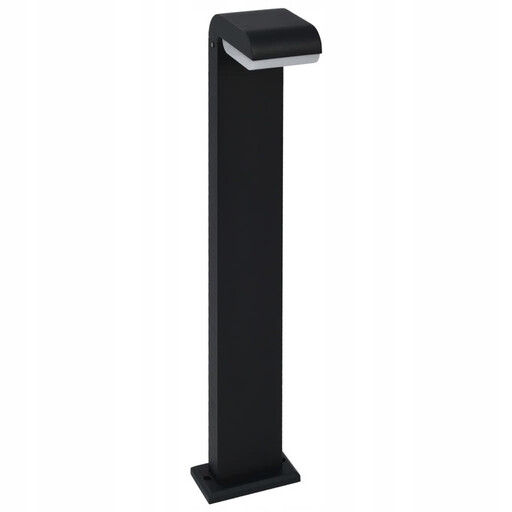
Why it suits this profile: The combination of cast aluminium, integrated LED and a height of 800 mm is ideal for anyone looking for a fixed, modern line of light along a driveway or garden path.
The relevant specifications are clearly stated: 9 W, 550 lm and IP54. You do not have to rely solely on lifestyle photos or general marketing copy.
Cast aluminium, opal diffuser, integrated LED, 550 lumens and IP54 protection.
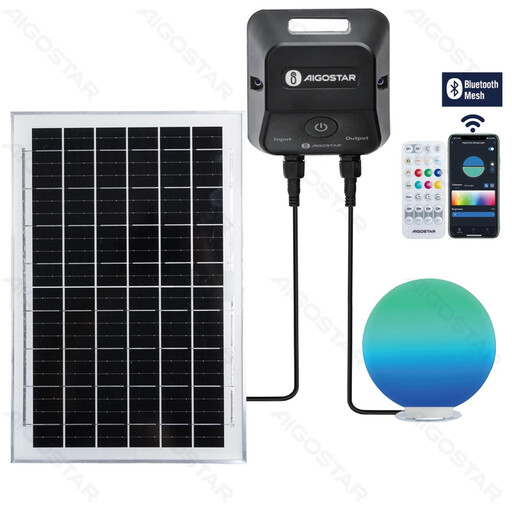
Why it suits this profile: This smart outdoor lighting is designed for users who want to combine colour, scheduling and brightness control via Bluetooth Mesh with a solar-powered solution.
The IP65 rating and operating temperature of -10 °C to 50 °C are stated. Positioning still depends on correct installation and sufficient sunlight.
IP65, Bluetooth Mesh control, RGB+CCT light, 350 lumens and a stated maximum battery life of 24 hours.
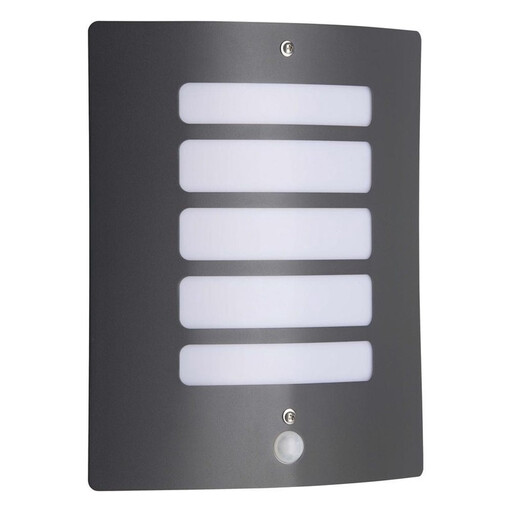
Why it suits this profile: This outdoor wall light is designed for a fixed connection at an entrance, on a façade or by a shed, and switches on via a motion sensor according to the product information.
The light is supplied without a bulb and has an E27 fitting with a maximum rating of 60 W. You can therefore choose a suitable LED bulb in advance, although installation by an electrician is still required.
E27 fitting, motion sensor, downward light distribution and IP44 protection against splashing water.
We have put together a complete, up-to-date list of products that fully meet these strict selection criteria and the applicable European safety regulations.
Regularly clear dust and leaves from the solar panel. With fixed lights, check that the cables, seals and connections are not damaged. An integrated battery has a limited lifespan; how long it lasts depends on charging cycles, temperature and usage.
To calculate the energy consumption of an LED outdoor light, look at its wattage and the number of hours it is switched on. A 9 W light operating for five hours a day theoretically uses 45 Wh per day. A motion sensor can reduce the number of operating hours. With solar lighting, you do not pay for mains electricity while it is in use, but its output still depends on sunlight and battery capacity.
For a sheltered façade or covered area, IP44 may be suitable. For a more exposed location, IP54 offers additional protection against dust and splashing water. A product rated IP65 is suitable when a higher level of protection against dust and water jets is required. Always check the installation instructions; no rating can replace correct positioning.
Operating time varies by model and weather conditions. Check the stated battery life, charging time and battery capacity. In winter, a panel may store less energy. Position it away from shade and keep the panel clean.
It can be, because the light only switches on when movement is detected. Actual consumption depends on the wattage, detection settings and how often the sensor is activated. With a fixed light, you must also take professional installation and a suitable power connection into account.
