What should you look for when choosing?
First work out how the connection reaches your garden office. Then count all your wired connections, and only then choose the speed or power feature you need.
| What to consider |
What to look for when buying |
Who should prioritise this? |
| Connection and ports |
Work out whether the uplink uses copper or fibre, and count that connection as a port. Include your workstation, storage and any other devices too. |
If I want to share one connection from my home with my workstation and other wired devices, I need to know how many ports I actually need. Around 36% of consumers give a working uplink and enough ports top priority. |
| Local transfer speed |
Check whether your workstation, NAS, cabling and relevant connections support 2.5 Gbit/s. A faster switch won’t make a Gigabit uplink any faster. |
When transferring large files between my workstation and NAS, I want both ends of the connection to support the speed I’ve chosen. Around 29% of consumers prioritise transfer speed. |
| PoE power |
Check that the receiving device supports PoE, and compare the required standard, power per port and total budget for the exact model. |
If I want to power a compatible access point or another device through the network cable, the switch needs to work with that device. Around 21% of consumers put PoE power first. |
| Management and expansion |
Check whether you need VLANs or other management features, and whether your other network equipment can be configured to use them. |
If I want to deliberately separate networks or connect more equipment later, I look for features I can actually use. Around 14% of consumers give management features or room to expand top priority. |
Joybuy products
This selection includes wired Gigabit expansion, models with PoE or management features, and a 2.5G switch. Choose based on your uplink, connected devices and the features you actually need.
 No image available
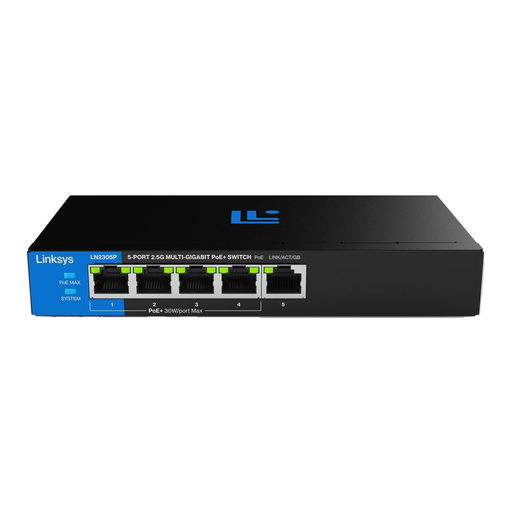
Linksys 5-port 2.5G PoE switch
Suitable for a wired studio setup connecting 2.5G devices and compatible PoE receivers.
The product information lists five 2.5G ports and four PoE+ ports. According to the information, total PoE consumption must not exceed 60 W.
Not suitable for wet or very damp environments; ensure there is adequate ventilation.
Joybuy
 No image available
TP-Link TL-SG105 5-port metal Gigabit switch
An option for adding wired connections when your studio connection and devices use Gigabit.
The TL-SG105 has five Gigabit ports. Once the uplink is connected, four ports remain for devices; this model does not offer 2.5G port speeds.
Joybuy
 No image available
TP-Link 5-port Gigabit PoE switch with 4 PoE ports
Suitable for a Gigabit setup with a compatible PoE device, for example if the switch needs to power that device through the network cable.
The product information lists four PoE ports. Before buying, check that the exact version and total PoE budget are suitable for your connected equipment.
The listed ports are Gigabit, and the product information advises against damp conditions and rain.
Joybuy
 No image available
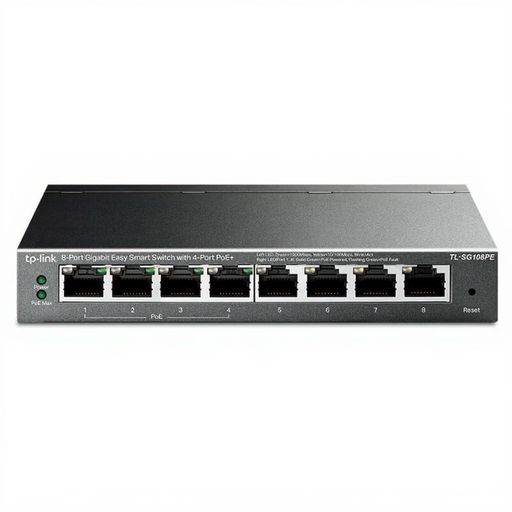
TP-Link 8-port Gigabit Easy Smart switch with 4 PoE ports
Suitable for connecting several wired devices when you also use compatible PoE equipment.
The product title lists eight Gigabit ports and four PoE ports. Check that the management features suit your network, and follow the installation requirements for ventilation, moisture and temperature.
Joybuy
 No image available
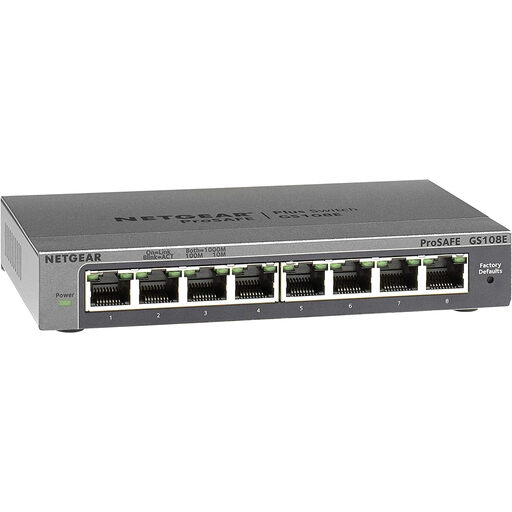
NETGEAR GS108E-400EUS
Consider this model if you want to expand a wired Gigabit network and need management features such as VLAN configuration.
The listed ports are Gigabit; for 2.5G transfers, the devices and connections involved must also support that speed.
Joybuy
Frequently asked questions
Can I connect a switch before there’s a network connection to the garden office?
No. A switch distributes an existing uplink to wired connections; it does not create the connection between your home and garden office. First decide how the connection will reach the office, then choose a suitable RJ45 or SFP connection.
Can I put a standard desktop switch outdoors or in a damp room?
Don’t assume that you can. The Joybuy instructions reviewed for the TL-SG1005P warn against moisture and rain. Check the installation requirements for the exact model, and put an indoor switch in a suitable dry place.
How do I connect a basic unmanaged switch?
Connect the switch to the power supply as instructed, connect one port to the uplink from your home, and use the other ports for your devices. Keep the ventilation clear and check the cable connections if you run into problems.
Do I need to notify anyone before digging a cable trench in my garden?
According to the Netherlands Cadastre, you must submit a digging notification if you dig, or arrange for digging, with a mechanical digger, even on your own land. A notification is not legally required when digging by hand, but take care and check whether any other rules apply to your location.
What should I know about CE marking and warranties in the Netherlands?
Check that the switch complies with the applicable EU product rules and has a CE mark where required. According to the Dutch government, there is no fixed statutory two-year warranty period in the Netherlands: you are entitled to a product that is fit for purpose. Many online consumer purchases also come with a 14-day cooling-off period; check whether this applies to your purchase.


