
Vandaag of morgen in huis

Kwaliteit gegarandeerd

Welkomstaanbiedingen ontgrendelen: GRATIS bezorging | Tot 80% korting | Gratis 30 dagen JoyPlus-proefperiode
Download de app
Good garden lighting needs to do more than look attractive. It needs to suit its location, provide enough light and stand up to the British weather. There are also a few common pitfalls that can leave you disappointed with your purchase.
A lamp with a high lumen rating isn’t automatically right for every purpose. For a garden path, soft, focused light may be more comfortable than a bright beam. An entrance or driveway, on the other hand, needs practical lighting. So, as well as checking the lumen count, consider the light colour, the direction of the beam and where you plan to install the lamp.
That’s not the case. IP44 outdoor lighting is protected against splashes from different directions, but it isn’t designed to be submerged or exposed to direct water jets. It’s best to install an IP44 lamp beneath an overhang or on a sheltered wall.
According to the IP rating, an IP65 outdoor light offers greater protection against dust and water jets. Correct installation is still important, though. Also check that the cables, connections and fixings are suitable for outdoor use.
A solar outdoor light needs direct daylight to charge its battery. In a shady garden, beneath dense foliage or on a north-facing wall, it may not stay lit for as long. For example, the product description for the UME path lights recommends 6 to 8 hours of direct sunlight for charging. Clean the solar panel regularly, and don’t place it behind glass unless the manufacturer specifically says this is suitable.
First, consider where you plan to install the light:
Product descriptions don’t always use the term waterproof outdoor light in a technically accurate way. Use the stated IP rating as a reliable point of reference, rather than relying on the marketing description alone.
Lumens indicate the amount of light a lamp produces. For comparison, the UME path lights are rated at 10 lumens per lamp and are designed to provide gentle guidance along a path. The Brilliant Alvero solar wall light is rated at 500 lumens, making it a more practical choice for an entrance or wall where you need more functional light.
Colour temperature is measured in kelvins:
Also consider the direction of the light. A GU10 wall light with a downlight mainly illuminates the area beneath it, while a light with a wider beam can illuminate more of the wall or entrance.
A solar-powered garden light is easy to install because it doesn’t need a mains connection. However, how long it stays lit depends on the amount of sunlight and the battery capacity. A fixed wall light provides more consistent performance but needs wiring.
An outdoor light with a motion sensor can be useful by a back door, shed or driveway. Check whether the sensor detects movement only or also works with a dusk sensor. With an integrated LED, the light source often can’t be replaced by the user. A light with a GU10 or E27 fitting gives you more flexibility to choose a different LED bulb later.
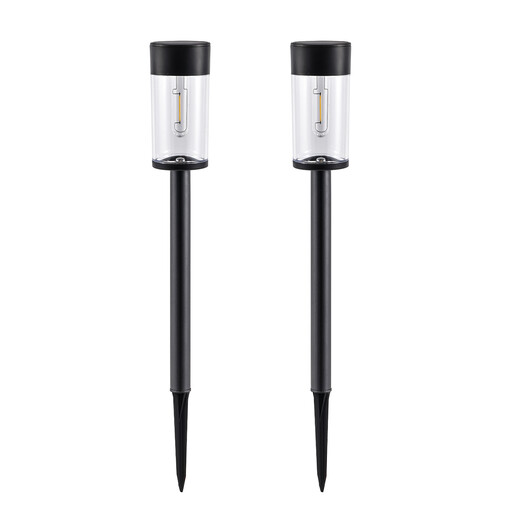
Why it suits this need: This set is designed for easy ground installation along a garden path, lawn edge or driveway. The lights switch on automatically using a light sensor.
The product description clearly states 10 lumens per lamp and an IP65 rating, so you won’t mistake its soft light for powerful security lighting.
Set of two, warm white 3000 K, automatic operation and an IP65 rating according to the product description.
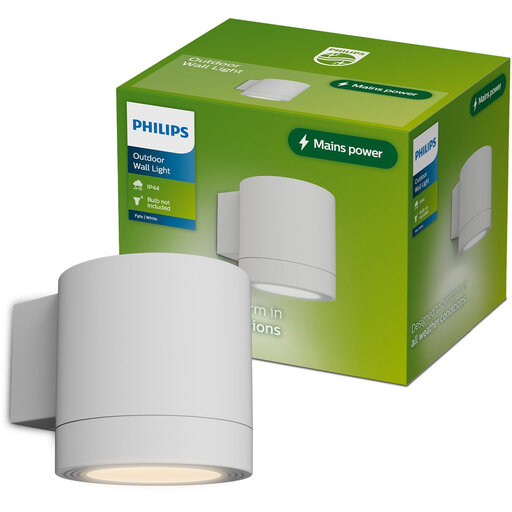
Why it suits this need: This compact wall light is ideal if you want to choose the GU10 light source, colour temperature and brightness yourself for a wall, balcony or entrance.
The GU10 bulb isn’t included. This is made clear, so you can choose a suitable LED bulb in advance.
Aluminium housing, GU10 fitting, downward-facing beam and an IP44 rating according to the product specifications.

Why it suits this need: This solar wall light is designed for an entrance, patio or wall where you want a wireless installation and extra light when movement is detected.
The product specifications list two lighting modes, a motion sensor and an IP44 rating. This lets you choose between ambient lighting and automatic activation.
1000 lumens, 3000 K, solar-powered and an integrated motion sensor, according to Philips’ product description.
We’ve put together a complete, up-to-date list of products that meet these strict selection criteria and the applicable European safety regulations.
Yes, but performance depends on the amount of direct daylight, the location and how well the light is maintained. Check the IP rating, position the panel somewhere as unobstructed as possible and clean it regularly. The light may stay on for less time during the darker winter months.
A low light output is often enough to help you find your way. The UME lights are rated at 10 lumens each. An entrance, driveway or security-focused application needs more light, so compare models by their lumen rating, sensor function and beam direction.
A solar outdoor light doesn’t use mains electricity while charging. The costs mainly come from the initial purchase and, depending on the model, future maintenance or battery replacement. For a fixed LED outdoor light, you’ll need to factor in the electricity consumption stated on the product packaging or in its specifications.
