
Vandaag of morgen in huis

Kwaliteit gegarandeerd

Welkomstaanbiedingen ontgrendelen: GRATIS bezorging | Tot 80% korting | Gratis 30 dagen JoyPlus-proefperiode
Download de app
Good garden lighting does more than just illuminate your outdoor space attractively. Lights can make a pathway visible, make a patio cosier, or add extra ambience to a balcony during a party. Yet it’s easy to choose a product that disappoints in practice.
Pay particular attention to three common pitfalls:
The IP code indicates what a product is protected against. With IP44, the lamp is protected against solid objects larger than 1 millimetre and against splashing water from any direction. This is suitable, for example, for a covered patio or a sheltered garden.
IP65 offers a higher level of protection against dust and water jets. The lamp still shouldn’t be submerged. In addition to the IP rating, always check the installation instructions. Cable connections, plugs and solar panels must be kept away from standing water.
Colour temperature is expressed in kelvin:
An outdoor light string with 3000K, for example, works well around a seating area. For a driveway or garden path, a fixed LED garden light with a wider light distribution may be more practical.
First, decide where the light will go and how long the illuminated area needs to be. A battery-powered model is flexible to place, but requires regular replacement of AA batteries. Solar garden lighting doesn’t need a plug socket, but does need enough daylight. A mains cable provides a constant power supply, although the socket must be suitable for outdoor use.
Also pay attention to:
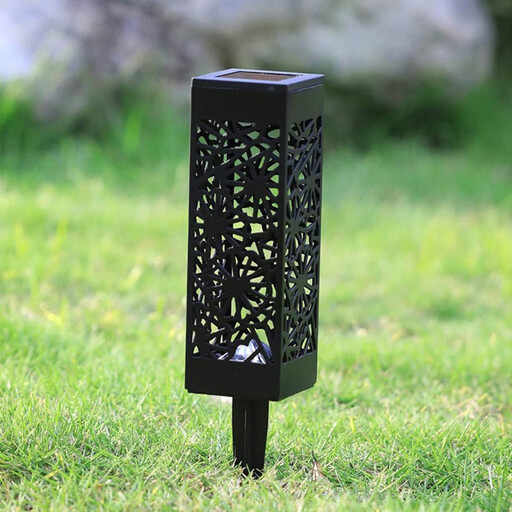
Why this fits the profile: This set is ideal for anyone who wants to light a garden path, border or balcony without any wiring. The six individual lights can be placed directly into the ground.
The product description clearly states an IP65 rating, a charging time of 4–6 hours and a stated burning time of 5–8 hours. Performance still depends on sunlight and weather conditions.
Six lights, warm white LED light, no cable required and a stated IP65 protection rating.

Why this fits the profile: This fixed garden post is ideal for a driveway, pathway or garden finish where a permanent lighting solution is desired.
The specifications state 2700K, 800 lumens, 4.3 watts and IP44. This allows you to judge the lamp on verifiable data rather than just on mood images.
Aluminium housing, 96 cm height, warm white light and a stated lifespan of 50,000 burning hours according to the product description.
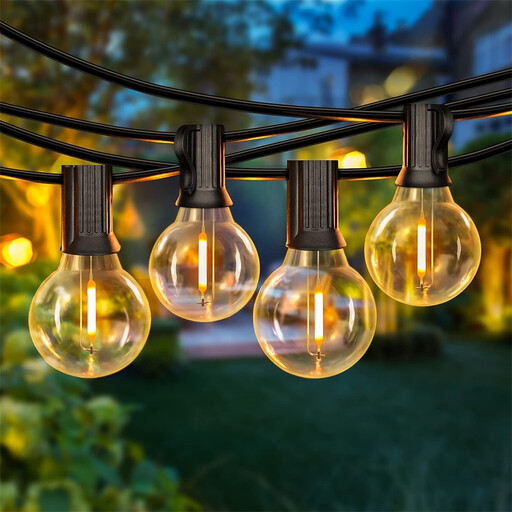
Why this fits the profile: Party organisers, hospitality businesses and large gardens often need a long cable and a constant power supply. This model is designed for decorative use both indoors and outdoors.
The 30-metre length, replaceable bulbs and plug-in power supply are clearly stated. Keep connections away from standing water and do not exceed the stated maximum linking length.
30-metre length, dimmer function, timer, multiple light modes and replaceable G40 bulbs.
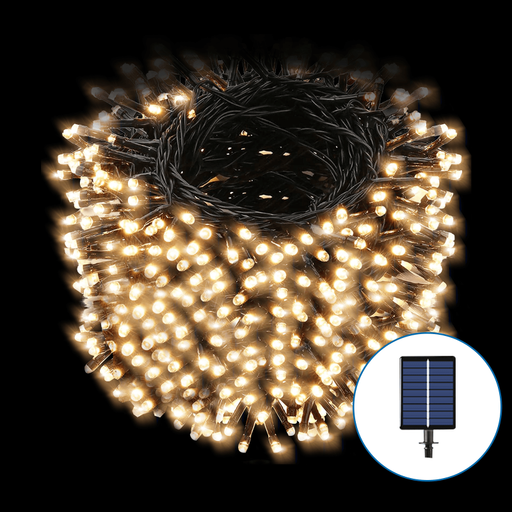
Why this fits the profile: If you want an outdoor light string without a plug socket, this solar option offers a 10-metre cable and a separate 2-metre lead to the panel.
The product information states a charging time of 4–6 hours, a stated autonomy of 8–12 hours and IP65. Place the panel in an unobstructed sunny spot for the best chance of sufficient charge.
100 LEDs, eight light modes, 10-metre light string, IP65 and a built-in rechargeable battery.
We’ve put together a full, up-to-date list of products that fully meet these strict selection criteria and comply with current European safety regulations.
Fix light strings securely along a fence, pergola or balcony edge. Don’t leave cables loose across a pathway. For a fixed mains-powered lamp, the connection must be suitable for outdoor use and installation must follow the instructions. According to the product information, the Philips Splay Garden Post Light must be earthed.
Use solar garden lighting in a spot where the panel isn’t shaded for long periods by a tree, wall or parasol. Clean solar panels regularly with a soft, dry cloth. With battery-powered lighting, it’s a good idea to remove the batteries when the product won’t be used for an extended period.
That depends on the wattage, the number of lights and how long they’re used. LEDs generally use very little power, but check the stated wattage per light point. Solar lighting runs on stored solar energy, while battery-powered models shift the cost to replacement batteries.
That depends on the IP rating, the installation and the manufacturer’s instructions. IP44 is designed for splashing water and needs a sheltered position. IP65 offers more protection, but this still doesn’t mean the lamp can be submerged. Store loose battery components and delicate accessories away during prolonged bad weather.
The burning time after a full charge varies by model. The product information might state values such as 5–8 hours or 8–12 hours. In the UK, cloud cover, short days and a shady balcony can reduce output. So choose a spot with as much direct daylight as possible, and compare the charging and burning times before you buy.
