
Vandaag of morgen in huis

Kwaliteit gegarandeerd

Welkomstaanbiedingen ontgrendelen: GRATIS bezorging | Tot 80% korting | Gratis 30 dagen JoyPlus-proefperiode
Download de app
Good garden lighting should suit the location, how you use it and the Dutch weather. A light for a path needs different features from a string of lights for a patio. Yet many products look similar online. It’s easy to focus on the number of LEDs or an attractive product photo, while important details about brightness, positioning and water resistance are less obvious.
A string of lights with lots of LEDs may provide mainly decorative lighting. For a path, driveway or dark corner, light output in lumens matters too. For example, a solar path light with 10 lumens per lamp provides gentle wayfinding light, but isn’t designed to brightly illuminate a large patio.
Always check the IP rating. IP44 protects against splashing water, but not immersion or direct jets of water. According to the product specifications, IP65 provides protection against dust and water jets from different directions. Even with IP65, you shouldn’t place the solar unit underwater.
Solar garden lighting depends on direct sunlight. Shade from a fence, tree or canopy reduces charging time. Cloudy weather and a low sun can also affect how long the lights stay on. So a stated run time, such as 8 to 14 hours, is a product specification based on certain charging conditions, not a guarantee for every night.
For paths and borders, warm white light at around 2700 to 3000K usually creates a relaxing feel in the garden. The UME path lights use 3000K and, according to the product information, provide 10 lumens per lamp. That makes them suitable for subtle path lighting and marking the edge of a lawn.
For a more festive look, consider a solar string of lights with several lighting modes. RGB garden lighting also offers coloured effects. For everyday use, dimming and an adjustable colour temperature can sometimes be more practical than simply having a wide range of colours.
For outdoor use, the IP rating, seals and construction matter more than appearance alone. Also consider the materials:
Solar garden lights don’t need a socket or permanent cable. Check whether the switch needs to be set to “on” before the first charge. Position the panel out of the shade and clean it from time to time with a soft cloth.
Electric outdoor lighting can provide more consistent light, but requires a socket and careful cable management. With smart garden lighting, you’ll also need to consider Wi-Fi, an app and any account registration. Always make sure cables don’t create a trip hazard.
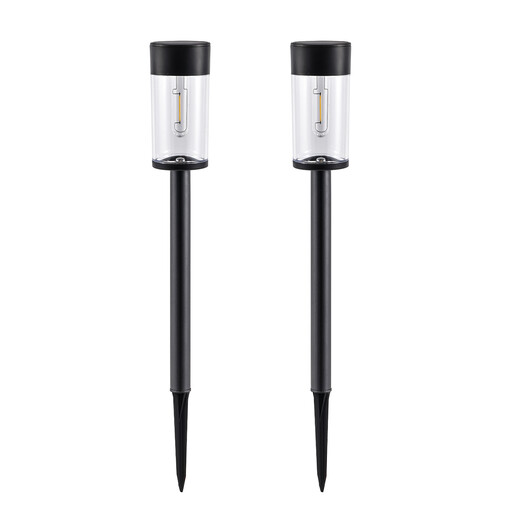
Why it suits this profile: This set is designed for easy placement along a garden path, border, lawn edge or driveway. The lights are secured with ground stakes and, according to the product information, switch on and off automatically.
The specifications state both 10 lumens per lamp and an IP65 rating. So you can see upfront that these provide gentle path lighting, not powerful lighting for a large area.
3000K warm white light, two lights per set, solar-powered and a stated run time of 8–12 hours under the specified charging conditions.
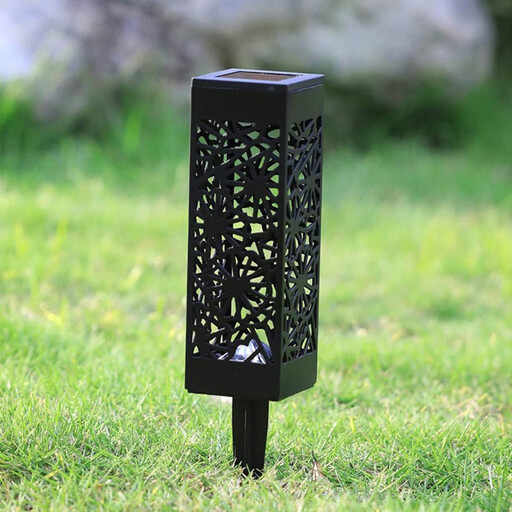
Why it suits this profile: This six-light set is ideal for larger borders, paths and flower beds where you want to create an even pattern without wiring.
The product information states a charging time of 4–6 hours and a run time of 5–8 hours. You can therefore compare the expected performance with the hours of sunlight available.
Six warm white solar garden lights, an IP65 rating according to the product specifications, and a decorative cut-out pattern.
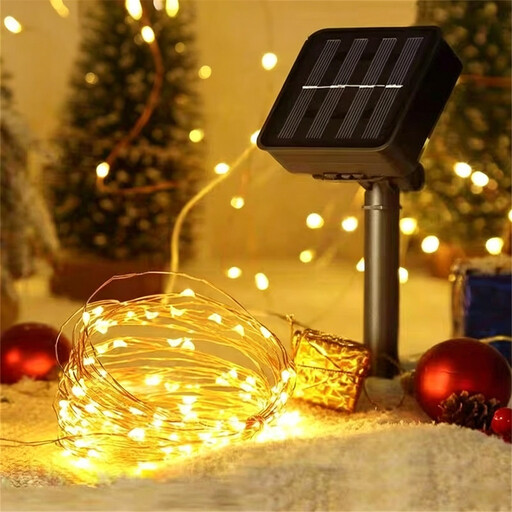
Why it suits this profile: With two strings of lights, each 49 ft long and featuring 75 LEDs, this set is designed for patios, balconies, trees, fences and festive decorations.
The length, number of LEDs, eight lighting modes and IP rating are all listed. The solar panels do need direct sunlight and must not be submerged.
Warm white light, a memory function, eight effects and, according to the product information, 8–14 hours of illumination after sufficient charging.

Why it suits this profile: This electric set is ideal if you want to adjust your lighting using an app, voice control and a dimmer. No permanent installation is needed: simply position the ground stakes and plug in the cable.
The specifications state IP44. So use these lights somewhere that can withstand splashing water, and don’t run the cable across a path.
Control via the Tuya app, RGB lighting and adjustable colour temperature from 3000–6500K, dimming, and a light output of 660 lumens according to the product specifications.
We’ve put together a complete, up-to-date list of products that meet these strict selection criteria and the applicable European safety regulations.
Yes, but how long the lights stay on depends on direct sunlight, the season, cloud cover and the position of the panel. Place outdoor solar lights in a sunny spot and keep the panel free from dirt and leaves.
Solar garden lighting uses energy from sunlight during the day and doesn’t need to be connected to the mains. It does need maintenance, and over time the built-in battery may lose capacity. With electric LED garden lighting, you’ll pay for electricity, but the lights can stay on more consistently.
Lifespan varies depending on the light, battery, materials and exposure to the weather. Check the stated warranty, IP rating and care instructions. For solar products, keeping the panel clean helps; before storing a light for an extended period, follow the instructions.
