
Vandaag of morgen in huis

Kwaliteit gegarandeerd

Welkomstaanbiedingen ontgrendelen: GRATIS bezorging | Tot 80% korting | Gratis 30 dagen JoyPlus-proefperiode
Download de app
Buying a garden light might seem straightforward, until you discover that not every outdoor light is suitable for where you want to install it. A solar garden light that barely gets any sun during the day will give off very little light in the evening. An IP44 outdoor light can handle splashes, but it isn't designed for a spot where water pools. And a nice LED outdoor light can be impractical if the colour temperature or mounting method doesn't suit your garden.
With this guide, you can compare garden lighting based on verifiable specifications. That way, you can make a more informed choice for path lights, an outdoor wall light, garden post lights or outdoor lighting with a motion sensor.
A black metal light might look great against your house, but the design tells you nothing about brightness, power source or protection against moisture. Always check the lumen output, the IP rating and how the light is connected.
For ambient garden lighting, a softer light output is often sufficient. For a driveway, entrance or dark passageway, you may need more light.
Solar garden lights work with a solar panel and internal battery. According to Aigostar's product information, sufficient sunlight is needed for optimal performance. A light placed under dense foliage or on the north side of a house may therefore stay on for less time than expected.
When looking at solar lights, pay attention to:
IP44 means a light is protected against solid objects larger than 1 millimetre and splashing water from any direction. This is not the same as being fully waterproof. Several products in this selection therefore state that they must not be submerged or exposed to powerful jets of water.
Where possible, place an IP44 outdoor light on a sheltered wall, under an overhang or in a location where water does not collect. For every application, you should follow the specific product's installation instructions.
Colour temperature is expressed in kelvin (K):
A light with 2700K, such as certain Philips outdoor lights, gives warm white light according to the product specification. The Aigostar solar ground light in this selection states 6500K and is therefore more focused on cool white light along a path or border.
Wattage mainly indicates energy consumption. For the amount of light, you need to look at lumens (lm). A Philips Fyns solar wall light, for example, states 1000 lumens. The Philips Swyn solar wall light states 400 lumens per light point. That difference matters when you want to illuminate an entrance rather than just add a decorative accent.
For a long driveway or wide garden, multiple light points are often more practical than one very bright light. This reduces dark gaps and keeps the lighting more even.
There are three practical options:
A fixed outdoor wall light with a GU10 or E27 fitting is often supplied without a bulb. This gives you freedom to choose the colour temperature and brightness, but it also means you need to buy a suitable LED bulb. Have fixed electrical connections carried out by a qualified electrician if you are unsure about the wiring.

Why this fits the profile: This solar garden light is easy to push into the ground and needs no mains connection. That makes it suitable for borders, small paths and rental properties.
The product details state a charging time of 4–6 hours, a run time of 8–12 hours and IP44. Just make sure you place it in a sunny spot.
Stainless steel housing, 6500K cool white light, 550 mm height and a NiMH battery.
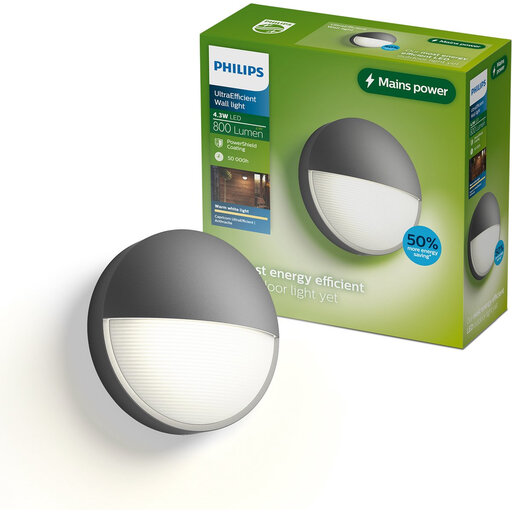
Why this fits the profile: For a fixed wall, entrance or patio, this outdoor wall light offers integrated LED light without a separate fitting.
The specifications mention 800 lumens, 2700K and IP44. So you can see both the light output and colour temperature in advance; the LED light source is integrated.
4.3 W per light point, aluminium housing and warm white light at 2700K.

Why this fits the profile: This garden post light is designed for paths, borders, patios and driveways where a fixed light point is desired.
The height of 96 cm and light output of 800 lumens are specified in advance. IP44 means splash protection, not submersion.
Integrated LED, 2700K warm white light and an aluminium finish with PowerShield coating according to the product description.
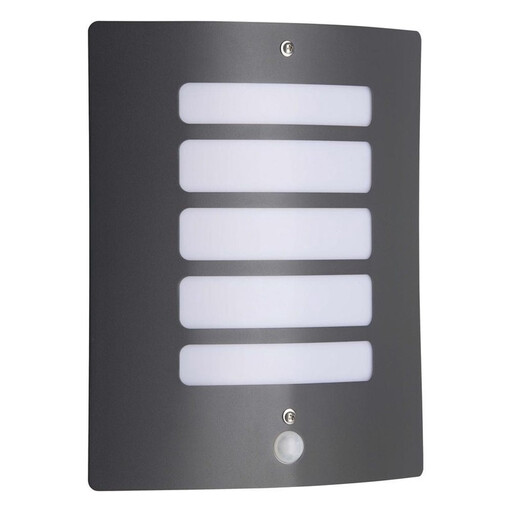
Why this fits the profile: This outdoor light with motion sensor is ideal for a front door, garage, side path or entrance where light is only needed when movement is detected.
The sensor function, E27 fitting and maximum load of 60 W are stated in the product details. You choose a suitable LED bulb yourself.
E27 connection, integrated motion sensor, 29 cm height and IP44 for outdoor use.
Before buying, check that the dimensions fit the available space. For path lighting, you also need to consider the distance between light points and the width of the path. Place solar lights with the panel free from shade and clean the panel regularly.
For a fixed outdoor light running on 230 volts, the power must be switched off before installation. Products with a GU10 or E27 fitting are sometimes supplied without a bulb. In that case, check the maximum wattage and choose a suitable LED bulb. Clean outdoor lights with a soft, dry cloth and do not use harsh chemicals.
We have put together a full, up-to-date list of products that fully meet these strict selection criteria and comply with current European safety regulations.
Yes, IP44 is suitable for many sheltered outdoor applications, such as a wall, patio or entrance. The rating protects against splashing water, but not against submersion or powerful jets of water. Always check the installation instructions and do not place the light where water can collect.
The run time per night depends on sunlight, charging time, battery capacity and temperature. Product details may state a run time of 8–12 hours or up to 24 hours, but actual performance can vary by season and location. Placing the light in a sunny, shade-free spot helps the battery charge better.
The consumption depends on the wattage and the number of hours it is on. A 4.3 W light uses approximately 4.3 kWh over 1000 hours of use. With solar lighting, no mains connection is needed, but you do pay for the purchase and should factor in battery maintenance or eventual replacement.
