
Vandaag of morgen in huis

Kwaliteit gegarandeerd

Welkomstaanbiedingen ontgrendelen: GRATIS bezorging | Tot 80% korting | Gratis 30 dagen JoyPlus-proefperiode
Download de app
Solar outdoor lighting seems simple: install the light, let the solar panel charge and enjoy the light in the evening. In practice, though, some purchases can disappoint. A light may work well in summer but stay on for less time during the Dutch winter. And a high lumen count doesn’t always mean the light will be pleasant or directed where you need it.
The most common pitfalls are:
Light output is measured in lumens (lm). A modest light output is often enough for garden path lighting or decorative solar garden lights. For a driveway, garage or back door, a solar outdoor light with a motion sensor and a higher lumen rating may be more practical.
Also check the colour temperature in Kelvin (K):
A 500-lumen light, such as the Brilliant Alvero, may be suitable for an entrance or exterior wall. For a large property, a solar floodlight with wider light coverage makes more sense.
An IP rating consists of two digits. The first digit refers to protection against solid particles; the second refers to moisture.
Always check the installation instructions. A high IP rating doesn’t automatically mean that every cable connection or connector is suitable for an unprotected installation. With wireless outdoor lighting, the solar panel should also be kept clear of dirt and leaves.
A solar outdoor light runs on a built-in battery. How long it stays on depends on the battery capacity, the amount of sunlight, the selected brightness and the outdoor temperature. During the darker winter months, the light may stay on for less time than in summer.
A motion sensor helps save energy by making the light brighter only when movement is detected. Check:
Solar outdoor lights without a sensor usually have a fixed or automatic dusk-to-dawn setting. That’s often enough for ambient lighting; for a driveway or back door, a sensor can give you more control.
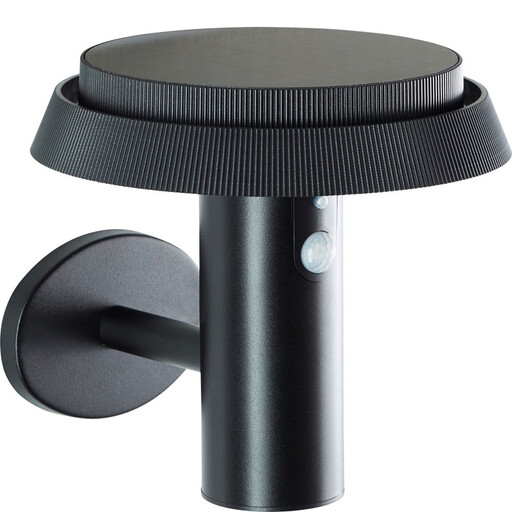
Why it suits this type of buyer: This compact solar wall light is designed for an entrance, exterior wall or garden path where you want to install a light without fixed wiring. With 500 lm, 3000 K and a motion sensor, it’s a straightforward choice for a first installation.
The product information gives specific figures rather than making a general claim about brightness. Bear in mind, though, that IP44 offers splash protection, not complete waterproofing.
Integrated LED, solar-powered, motion sensor, dimming function, 500 lm and warm white light at 3000 K.
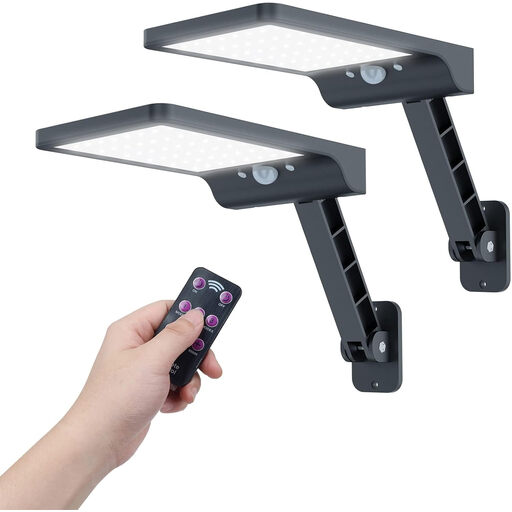
Why it suits this type of buyer: This two-light set is ideal if you want to illuminate several areas, such as a front door and fence or a patio and garden path. The remote control makes it easier to switch between modes.
The listing specifies IP65, a 2200mAh battery, three modes and a PIR sensor with a 120° detection angle. Before installation, check that both panels will receive enough direct daylight.
Two lights, remote control, three lighting modes, IP65 rating and installation without mains wiring.

Why it suits this type of buyer: This solar floodlight is designed for larger areas such as a garage, driveway, patio or garden. Its three adjustable light heads give you more ways to direct the light.
The product description specifies 302 LEDs, 3000 lm, IP65, three modes and a 180° detection angle. The stated 7000 K is cool white, so check that it suits your intended use.
Three adjustable heads, wide coverage, motion sensor, three modes and an IP65 rating.
We’ve put together a complete, up-to-date list of products that meet these strict selection criteria and comply with current European safety regulations.
Position the solar panel so it faces as much open sky as possible. Avoid direct shade from trees, walls and balcony edges. Mount a wall light on a stable surface and check that the sensor isn’t constantly triggered by passing traffic or moving branches.
Clean the panel regularly with a soft cloth. For integrated LED lighting, don’t use harsh cleaners or open the casing yourself. For fixed 230V lighting, such as some outdoor LED floodlights, the connection must be suitable for outdoor use. Have any changes to the electrical installation carried out in accordance with the applicable safety regulations.
Yes, but the time it stays on may be reduced by shorter days, cloudy weather and lower charging output. Choose a spot that gets as much direct daylight as possible and keep the panel clean. A motion sensor can help you make better use of the available battery capacity.
It depends on the area and the type of light coverage you want. A lower lumen count may be enough to find your way by a door or along a garden path. For a wide driveway or garage, a more powerful solar floodlight with multiple light heads is more practical. Check the beam angle too, not just the lumen figure.
The light doesn’t use mains electricity during normal operation, as the solar panel charges the battery. However, factors such as limited sunlight, battery wear and a high brightness setting can affect performance. So check more than just the purchase price: look at the battery specifications, sensor features and whether parts can be replaced.
