
Vandaag of morgen in huis

Kwaliteit gegarandeerd

Welkomstaanbiedingen ontgrendelen: GRATIS bezorging | Tot 80% korting | Gratis 30 dagen JoyPlus-proefperiode
Download de app
Choosing a garden dining table seems straightforward: pick the colour, check the price and place your order. Yet problems often only appear after a few weeks. A table turns out to be too large for the patio, wobbles on uneven ground or needs more upkeep than expected. Terms like “weather-resistant” are also not always interpreted correctly.
So pay particular attention to these three common pitfalls:
Dimensions without accounting for chairs and walking space
A 150 cm table may fit, but once you add chairs all around, the space required increases significantly. Measure not just the tabletop, but also the clearance around it.
Confusing weather resistance with maintenance-free
Product information may state a table is resistant to the elements, while covering, cleaning or periodic treatment is still advisable. A wooden garden table generally needs more maintenance than a plastic garden table.
Not checking extra features
A garden table with a parasol hole is practical, but check the diameter and whether you still need a parasol base. With an extendable garden table, also check how much space the table takes up when fully extended.
Dimensions don’t automatically determine how many people can dine comfortably. Check:
A table measuring 101 × 68 cm is relatively compact and can suit a balcony, a small patio or a campsite pitch. An outdoor table of 140 × 80 cm offers more surface area. For larger groups, a 225 × 100 cm model is, according to the product description, suitable for up to 10 people.
Note: the stated capacity may vary per product. Some models list “suitable for 1 person” in the product information, even when the dimensions are larger. Use your own chair layout as a practical check.
A plastic garden table is lightweight, easy to clean and simple to move. Polypropylene or other plastics can be handy for families, campsites and households that store the table regularly.
A wooden garden table brings a natural look. Acacia wood is a hardwood with a dense grain. According to vidaXL’s product information, certain models have an oil finish and are intended for outdoor use. Clean wood with a damp cloth and follow the manufacturer’s maintenance instructions. Also check whether the wood needs re-oiling periodically.
“Suitable for outdoor use” doesn’t mean every table should sit permanently outside, unprotected, in rain, wind and frost. Ideally place a patio table on a level surface. Use a cover when the table won’t be used for an extended period and don’t let water stand on the top for long.
For a balcony garden table, weight, size and ease of moving are especially relevant. A heavy wooden table tends to be more stable, but is harder to relocate. A lightweight plastic table is more practical if you regularly change your layout.
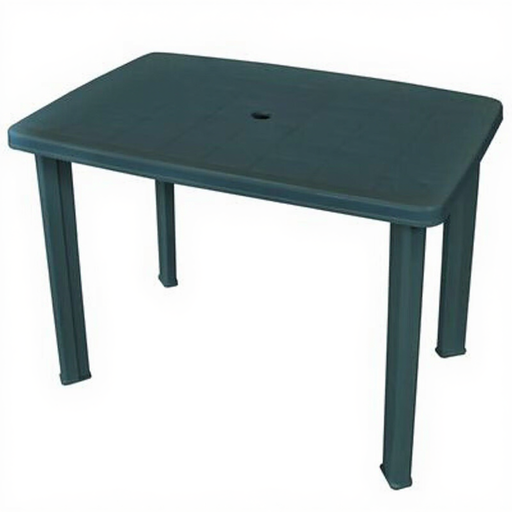
Why it fits this profile: The compact plastic table weighs just 6.26 kg, making it easy to move, and is suitable for garden, patio or campsite. The green top gives it a distinctly outdoor look.
The exact dimensions mean you won’t rely solely on lifestyle images. The parasol hole and simple assembly are clearly stated in advance.
Plastic construction, weather-resistant product description, parasol hole and low weight.
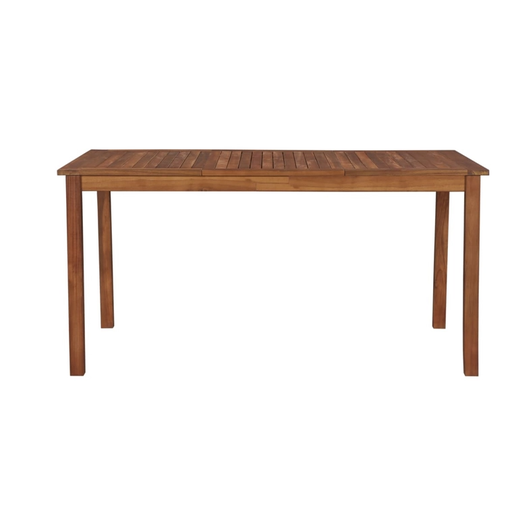
Why it fits this profile: This solid acacia wood table measures 150 × 90 × 74 cm, ideal if you want a generous surface and a natural look.
The material and oil finish are specified. Do keep in mind that wood requires maintenance and this model does not have a parasol hole.
Solid acacia wood, 20.60 kg product weight, rectangular top and simple assembly.
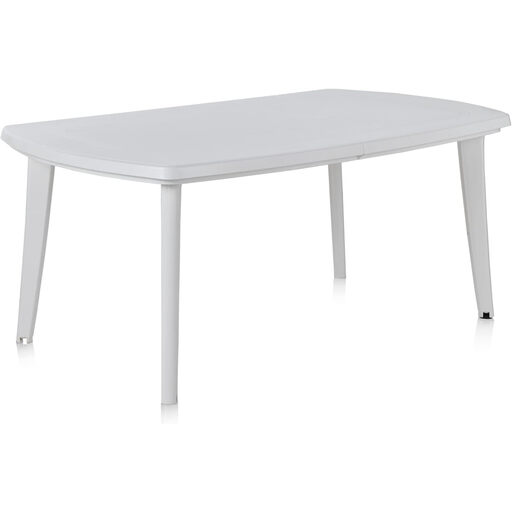
Why it fits this profile: According to the product description, the extendable outdoor table expands to 225 × 100 × 73 cm and seats up to 10 people.
The extended size is listed, so you can check in advance whether your patio has enough space. Also check how the mechanism operates and the clearance it needs.
Recycled resin according to the product description, UV protection, white finish and seating capacity up to 10.
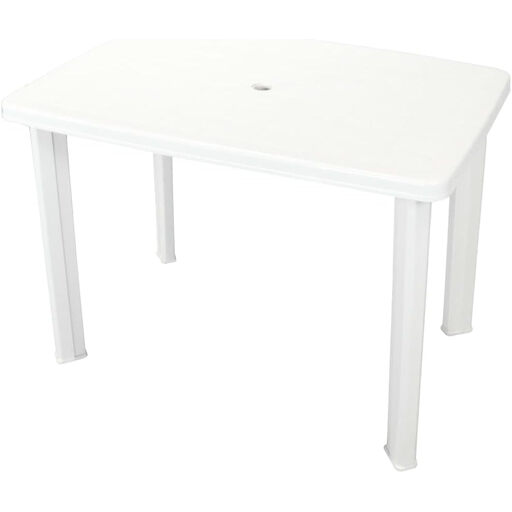
Why it fits this profile: The white, compact model suits a light patio or balcony scheme and, according to the product information, is easy to assemble and clean.
The dimensions and 3.6 cm parasol hole diameter are stated in advance. That way, you can compare the model with your available space and parasol.
Plastic top, white colour, parasol hole and suitable for use on the patio, in the garden or at the campsite.
We’ve compiled a complete, up-to-date list of products that fully meet these strict selection criteria and comply with current European safety regulations.
For dining outdoors, a flat tabletop is important. Wipe away food residues and spilled drinks as soon as possible. After assembly, check that all fixings are tight and add protective caps to the feet if the surface is delicate.
With wood, inspect the finish regularly. With plastic, watch for discolouration, small cracks and warping after prolonged exposure to sun or frost. Storing the table dry and sheltered over winter can keep it looking neat for longer, but lifespan depends on the material, usage, assembly and weather conditions.
The products in this selection are, according to the stated information, covered by at least two years’ statutory warranty under EU consumer law. This is separate from normal wear, incorrect maintenance or damage due to improper assembly.
That depends on the number of chairs and the space you have. Measure the table plus at least the space chairs need to be pushed back. For a balcony, around 101 × 68 cm is often more practical than a 150 × 90 cm table. Always check the actual dimensions of your patio or terrace.
A plastic garden table is usually easy to clean with a damp cloth and mild detergent. A wooden garden table needs more attention, especially when the wood has an oil finish. For both materials, follow the manufacturer’s care instructions.
No. Check the diameter of the hole and the size of the parasol pole. With a model that has a 3.6 cm hole, the pole must fit that size. A parasol base may also be needed for stability, especially in windy conditions.
