
Berry grower with limited space
You want extra freezer space, but need to be able to position and open a chest freezer without blocking your work area. The Consumentenbond explains that a chest freezer has a lid on top.


First, measure the floor space and the clearance above the lid: a chest freezer will only fit if you can open the lid fully. Then compare its freezing capacity in kg per 24 hours with the quantity of berries you want to add on a day when you harvest, and check its annual energy consumption in kWh too. If the only available space is under a fixed worktop, a front-opening model may be more practical. For large harvests, make sure the freezing capacity is up to the job.
You want extra freezer space, but need to be able to position and open a chest freezer without blocking your work area. The Consumentenbond explains that a chest freezer has a lid on top.
Your choice depends mainly on how many fresh berries you add in one day, not just on the freezer’s storage capacity in litres. The Voedingscentrum advises against freezing too much at once.
You want to factor in the energy use of an additional appliance and keep small portions neatly organised. Milieu Centraal recommends checking the energy label and annual energy consumption, among other things.
A good fit if: you have floor space next to the worktop and can open the lid without obstruction.
Bear in mind: you’ll need to keep the space above the freezer clear. Storage capacity doesn’t tell you how many fresh berries it can freeze in a day.
A good fit if: your available space is under a fixed worktop, or you often want to find portions separately.
Bear in mind: check the capacity, door clearance and freezing capacity of each model. A front-opening model won’t automatically fit every alcove.
A good fit if: you want to store more and have suitable floor space elsewhere.
Bear in mind: more storage space takes up more room. Check separately how many fresh berries the model can freeze per 24 hours.
When it comes to garden berries, it’s not just about how much fits in the freezer. You’ll also want to know how much you can freeze at once and how easy it is to find portions later.
| What to consider | What to look for when buying | Who is this important for? |
|---|---|---|
| Positioning and opening | Measure the floor space, the route to it and the clearance above the lid. Compare these with the model’s dimensions and installation instructions. | If I have limited space around the worktop, I want to be sure I can open the freezer where it’s positioned. Around 36% of consumers make positioning their first consideration. |
| Fresh harvest per day | Compare the weight of berries you want to add in one day with the stated freezing capacity in kg per 24 hours. Freeze in small portions. | When my harvest comes in all at once, I want to know how much I can put in the freezer at the same time. Around 29% of consumers focus mainly on peak harvests. |
| Annual energy consumption | Compare the stated consumption in kWh per year for models that suit your space and needs. Don’t look at the energy rating alone. | If I’m considering an extra appliance, I want to weigh up its energy use alongside the capacity I need. Around 21% of consumers prioritise annual energy consumption. |
| Finding portions | Check whether there’s a removable basket and how you can organise small bags. Freeze berries in a thin layer to help stop them sticking together. | If I store lots of small portions, I want to be able to find them quickly later. Around 14% of consumers make organisation their top priority. |
Capacity in litres tells you how much you can store; freezing capacity in kg per 24 hours tells you how many fresh products the manufacturer says the freezer can freeze in that time. These figures answer different questions.
Compare the quantity of berries you expect to harvest in a day with the specifications for the exact model. Don’t freeze too much at once.
A chest freezer opens from the top. Even if its external dimensions fit, a worktop or other obstacle could stop you opening the lid.
Measure the full space, the route to it and the clearance above the lid. For a front-opening model, also check how much room the door needs.
The energy rating on its own doesn’t tell you the stated annual energy consumption of a specific model.
For models that fit your space and capacity needs, also compare the kWh per year figure on the energy label.
Inventum offers compact and larger chest freezers. The VK562W is a compact model you can compare by its dimensions and stated freezing capacity.
The Beko CF100EWN is a freestanding compact chest freezer.
According to the manufacturer, the Tomado TCF0991W is a compact chest freezer with a capacity of 99 litres.
A larger chest freezer may be worth considering if you have more floor space outside your main work area.
This selection includes compact chest freezers and front-opening freezers for berries and limited space around the worktop. Compare the dimensions, freezing capacity and layout with your own space and harvest.
 No image available
This top-opening model may suit a compact floor space, provided there’s room to open the lid.
Capacity: 99 litres. Stated freezing capacity: 4,5 kg per 24 hours.
The product information lists a −18 °C setting and annual energy consumption of 169 kWh.
Dimensions: 54,5 × 47,6 × 83,5 cm. Includes a wire shelf.
 No image available
This compact top-opening model has a removable basket and may suit your space if you can keep the area above the lid clear.
Capacity: 99 litres. Stated freezing capacity: 4,5 kg per 24 hours.
The product information lists a temperature setting down to −24 °C and annual energy consumption of 169 kWh.
Stated energy rating: E. Includes a removable wire basket.
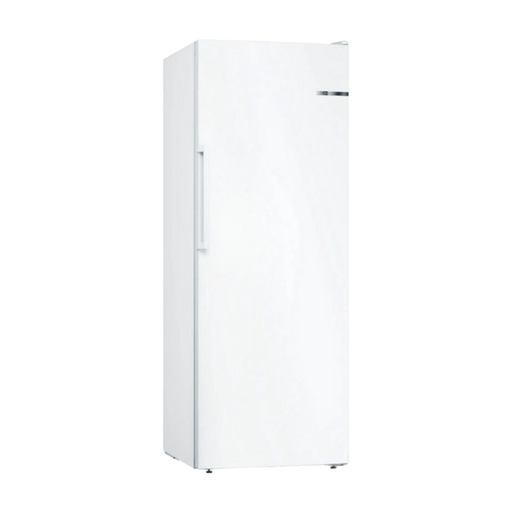 No image available
A front-opening model may be an alternative if there’s little clearance above the appliance. Check how much room you’ll need to open the door.
The product information lists a freezing capacity of 16 kg per 24 hours and a −18 °C setting.
The product information mentions SuperFreeze, VarioZone and a BigBox. For large quantities of fresh food, it recommends switching on SuperFreeze 24 hours in advance.
 No image available
This front-opening model may suit a space under the worktop. Measure the available space and check that there’s room to open the door.
Capacity: 60 litres. Stated freezing capacity: 6 kg per 24 hours.
Temperature control: −12 to −20 °C. The freezer has three drawers.
Dimensions: 55 × 58 × 85 cm.
 No image available
A front-opening model may suit a space with limited clearance above the freezer. Check that the door can open fully where you plan to put it.
Capacity: 60 litres. Stated freezing capacity: up to 6 kg per 24 hours.
The product information lists a temperature setting down to −24 °C and three compartments.
Dimensions: 44,5 × 47,5 × 84,5 cm.
Wash the berries and pat them dry. For redcurrants, the Voedingscentrum recommends spreading them in a thin layer on a tray, or using a sealed container or freezer bag. A layer that’s too thick can freeze together. Set the freezer to at least −18 °C and don’t freeze too much at once.
Only if you can open the lid fully. If the worktop blocks the lid, the space isn’t suitable. For a front-opening freezer, measure the space it needs for positioning and opening too.
The energy label shows the energy rating, while the kWh per year figure helps you compare the stated annual energy consumption of specific models. Milieu Centraal also recommends choosing a suitable size. The energy rating alone doesn’t tell you how much energy a specific appliance is labelled as using each year.
According to the Rijksoverheid, you’re entitled to a product that’s fit for purpose, but there’s no fixed statutory warranty period in the Netherlands. If a product is faulty, contact the seller. Any manufacturer’s warranty is in addition to this.
Products covered by EU energy labelling rules must also display the label clearly in online shops. The European Commission states that household refrigerators and freezers are covered by these rules. Check the label for the exact model being offered.