If you mainly play in a dark room and deep blacks and good visibility from different seats matter to you, compare OLED TVs with mini-LED LCD TVs on those points. If you plan to keep the same scoreboard or HUD on screen for long periods, also weigh up OLED’s image retention considerations. Then check that the Game Mode, VRR, refresh rate and HDMI connections suit your gaming device: a stated Hz rating doesn’t guarantee that a game will run at that frame rate.
Who is this choice relevant to?
Players who care about dark images
If you usually play in low ambient light, compare how dark scenes and blacks look. Check from the seats your fellow players will be using, too; the Consumers’ Association discusses black levels and viewing angle as factors to consider when choosing between LCD and OLED.
Players in fast-paced local matches
If responsive controls and smooth motion are your priorities, check the Game Mode and the output supported by both your TV and gaming device. Philips describes Auto Low Latency Mode as a feature that can switch the TV to low-latency settings when a gaming device is connected.
Households with long gaming sessions
If the same HUD or scoreboard is often on screen for a long time, take OLED’s potential for image retention into account. The Consumers’ Association highlights this as a consideration, but does not specify a fixed safe playing time for every current model.
What should you look for when buying?
Start with the picture you want in a dark room and the seating positions of all the players. Then check gaming output and connections, and finally measure whether the screen size will suit the room.
OLED
Best for: playing in the dark when deep blacks and visibility from different seats are important.
Consider: keeping the same scoreboard or HUD on screen for a long time makes image retention a consideration; the Consumers’ Association does not set a fixed safe usage time.
Mini-LED LCD
Best for: anyone looking to compare an LCD alternative with local dimming, for example if the same interface is often visible for a long time.
Consider: with LCD, dark scenes may reveal backlight bleed or unevenness, and the viewing angle may be more limited than with OLED; assess the specific TV from your seating positions.
| Consideration |
What should you check? |
Who is this important to? |
| Contrast and seating positions |
View dark scenes from the intended seats and check the panel type and screen size. |
If I play in a dark room and fellow players watch from different seats, I want to assess the blacks and the picture from the side. Around 29% of consumers prioritise contrast and visibility from different seating positions. |
| Controls and motion |
Check Game Mode, VRR, the compatible HDMI input and the output settings on your own console or PC. |
For fast-paced local matches, I want to know whether my device and game support the output I’m looking for, rather than relying solely on the TV’s Hz rating. Around 36% of consumers give responsive controls and smooth motion top priority. |
| Screen size and setup |
Measure the viewing distance, available width and furthest seating positions. |
If several of us are watching from different seats, the screen needs to fit the room and be easy for everyone to see. Around 21% of consumers prioritise screen size and visibility from the shared gaming setup. The Consumers’ Association cites around 2.4 times the screen diagonal as a general preferred viewing distance based on its own research; this isn’t a required distance for gaming. |
| Interface on screen for long periods |
Consider your own sessions and variation in what’s displayed, and read the care instructions for the exact model. |
If the same HUD or scoreboard often stays on screen for a long time, I want to factor that into my choice between OLED and LCD. Around 14% of consumers rank prolonged static images above other purchasing concerns. |
Common pitfalls
-
Assuming a high Hz rating means a high game frame rate or low input lag
A TV’s supported refresh rate, your gaming device’s output and input lag are different things. A high stated refresh rate doesn’t automatically mean your game will run at that frame rate.
Check Game Mode, the HDMI input you’re using, and the output from your own device and game.
-
Assuming every OLED screen has the same risk with a fixed scoreboard
The Consumers’ Association describes image retention after prolonged use of a static image in a test of older OLED TVs. That test doesn’t establish a fixed safe playing time or outcome for every current model.
Consider how long the same interface stays on screen during your sessions and read the care instructions for the exact model.
-
Assuming all HDMI ports are the same
For the Sony K-55XR8M2, Sony specifies VRR for HDMI 3 and 4, not all four HDMI inputs.
Before buying, work out which ports your gaming devices and any audio equipment will need.
-
Mistaking a similar series or model code for the same product
A matching series name or part of a model code doesn’t prove that it’s the same TV version.
Compare the full model code and specifications before treating one product as a replacement for another.
Brands worth comparing
LG
The LG OLED55C68LA from the C6 range is an OLED option to compare for gaming in the dark and gaming features.
- LG specifies up to 165 Hz at 4K for this model, with G-SYNC compatibility and FreeSync Premium.
- These are stated features, not a measured input lag or a guarantee that a game will deliver 165 frames per second. Keeping the same image on screen for a long time remains a consideration with OLED.
TCL
The TCL 55C7K is a mini-LED LCD option for anyone looking to assess local dimming alongside OLED.
- TCL specifies QD-mini-LED and a native refresh rate of 144 Hz for the 55C7K.
- Assess black levels and any haloing from your actual viewing position; don’t assume that stated features are directly comparable with measured results.
Philips
The Philips 55OLED810/12 is an OLED option with gaming features and Ambilight, worth considering if lighting behind the TV is part of your setup.
- Philips lists VRR up to 144 Hz and integrated Ambilight lighting.
- Ambilight hasn’t been shown to improve gaming performance. OLED’s image retention considerations still apply if static interfaces stay on screen for long periods.
Sony
The Sony K-55XR8M2 BRAVIA 8 II is an OLED option to compare if you’re connecting several devices to the TV.
- Sony specifies a 120Hz screen and VRR on HDMI 3 and 4.
- According to Sony, VRR isn’t available on all HDMI inputs. Check that the port layout suits your gaming devices and any eARC audio equipment.
Joybuy products for gaming in a dark room
The models below are LG OLED TVs in different screen sizes with stated gaming features, for anyone considering OLED for local multiplayer in a dark room.
 Image unavailable
LG OLED83C67LA 83-inch OLED evo AI C6 4K Smart TV
OLED may suit anyone who values black levels in a dark room; if you keep the same HUD or scoreboard on screen for a long time, bear OLED’s image retention considerations in mind.
83 inch; 4K; 120 Hz native; VRR up to 165 Hz; G-SYNC Compatible; FreeSync Premium; ALLM.
View at Joybuy
 Image unavailable
LG OLED65C68LA 65-inch OLED evo AI C6 4K Smart TV
This OLED TV is worth comparing if black levels and gaming features are important to you; factor in prolonged static images when making your choice.
65 inch; 4K; 120 Hz native; VRR up to 165 Hz; G-SYNC Compatible; FreeSync Premium; ALLM.
View at Joybuy
Image unavailable
LG OLED55C68LA 55-inch OLED evo AI C6 4K Smart TV
The 55-inch version is an OLED option to consider if the size suits your viewing distance and you want to compare gaming features. Keeping the same image on screen for a long time remains a consideration with OLED.
55 inch; 4K; 120 Hz native; VRR up to 165 Hz; G-SYNC Compatible; FreeSync Premium; ALLM.
View at Joybuy
 Image unavailable
LG OLED48G69LS 48-inch OLED evo AI G6 4K Smart TV
This 48-inch OLED version is an option if the size suits your room and seating distance. If the same game interface stays on screen for a long time, bear OLED’s image retention considerations in mind.
48 inch; 4K; 120 Hz native; VRR up to 165 Hz; G-SYNC Compatible; FreeSync Premium; ALLM.
View at Joybuy
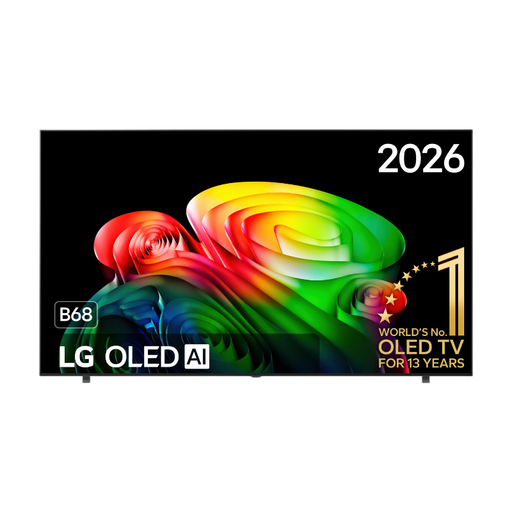 Image unavailable
LG OLED77B68LA 77-inch 4K OLED Smart TV
Compare this OLED version for screen size and stated gaming features. If static elements stay on screen for a long time, it’s still worth factoring in OLED’s image retention considerations.
77 inch; 4K; 120 Hz; VRR 144 Hz; G-SYNC Compatible; FreeSync Premium; ALLM.
View at Joybuy
Frequently asked questions
Do I need 144 or 165 Hz for local matches?
Not necessarily. Check which refresh rates the TV supports through the input you’re using, and what output your gaming device and game can deliver. LG lists up to 165 Hz at 4K for the OLED55C68LA; Sony specifies a 120Hz screen and VRR on HDMI 3 and 4 for the K-55XR8M2.
How do I choose a screen size if everyone plays from a different seat?
Measure the viewing distance and furthest seating positions before choosing a screen diagonal. The Consumers’ Association cites around 2.4 times the screen diagonal as a general preferred viewing distance based on its own research; also check that the picture remains easy to see from the side.
What should I consider for long gaming sessions with a fixed HUD?
Consider how long the same interface stays on screen and follow the care instructions for your chosen model. The Consumers’ Association described image retention after prolonged use of a static image in a test of older OLED TVs; that test doesn’t establish a fixed safe playing time or risk of burn-in for a new model.
What should I look for in terms of energy use and service?
Compare the EU energy label for the exact version, including the separate HDR information. In the Netherlands, there is a legal guarantee but no fixed statutory guarantee period; if a fault develops, contact the seller. Installation and additional warranty services are separate purchase options.
What rules apply to online purchases in the Netherlands?
For online purchases from a business, a 14-day cooling-off period applies in many cases; whether it applies depends on the purchase. The Dutch Government explains that the cooling-off period and legal guarantee are separate matters. An additional manufacturer’s warranty does not replace the legal guarantee.


