What to look for in a gaming TV
OLED TV
A good fit if: you have several seating positions and deep blacks matter; check the viewing angle of the specific model.
Bear in mind: Sony warns that static images displayed on an OLED screen for long periods or repeatedly can cause image retention.
Mini-LED/LCD TV
A good fit if: daylight and reflections are a consideration; compare the brightness and reflections of the specific TVs.
Bear in mind: viewing angles vary between LCD models, so check the picture from the seats at either end as well.
| Buying consideration |
What to look for |
Who should consider this? |
| Screen size and visibility |
Measure the viewing distance and the space available for the TV and its stand; check the specific model from different seats. |
If everyone needs to watch or play at the same time, the screen should suit both the room and the seating arrangement. Around 36% of consumers put visibility from multiple seats first. |
| Console and game output |
Check what your console and game support, as well as the HDMI port you’ll use, including 120Hz and VRR. |
If responsive gameplay is a priority for co-op, choose features your equipment and games can actually use. This matters to around 29% of consumers who prioritise console responsiveness. |
| Picture in daylight and during long sessions |
Compare the TV’s reflections and viewing angle; for OLED, check the guidance on static images and screen care. |
If the TV is on during the day or regularly displays the same game elements, the lighting and screen technology matter. Around 21% of consumers prioritise these conditions. |
| Energy consumption |
Compare the energy label for the exact screen size and version; check the separate information for SDR and HDR. |
If the TV will be used for many shared hours, factor its energy consumption into your choice. Around 14% of consumers prioritise energy use and viewing time. |
The percentages link each buying consideration to consumers who would make it their top priority in this shared co-op scenario. The Consumers’ Association recommends taking viewing distance into account; Energielabel.nl lists consumption per 1,000 hours and provides separate information for HDR.
Joybuy TVs for gaming
The Joybuy options below focus on OLED TVs and one SQD Mini-LED model. Choose a size to suit your viewing distance, and check that your console and games support the listed features.
 No image available
OLED77G68LW
An OLED option to include when comparing TVs for local co-op; measure your viewing distance and available space.
Check the screen size and gaming features of this exact version. For OLED, follow the manufacturer’s guidance on static images and screen care.
View at Joybuy
 No image available
LG OLED65C68LA, 65 inch, 4K
A 65-inch OLED version to weigh up against the distance between the seating positions and the screen.
The product name lists 120Hz native and VRR up to 165Hz. Check whether your console and games support that output, and bear in mind the guidance on static images for OLED.
View at Joybuy
No image available
LG OLED55C68LA, 55 inch, 4K
A 55-inch OLED version to compare if you want to match the screen size to your room and viewing distance.
The product name lists 120Hz native and VRR up to 165Hz. Check whether your connected console and games can make use of these features, and follow the guidance on static images for OLED.
View at Joybuy
 No image available
LG OLED48G69LS, 48 inch, 4K
A 48-inch OLED version to consider if the available space is a factor in choosing your screen size.
The product name lists 120Hz native and VRR 165Hz. Check the output supported by your console and game, and follow the guidance on static images for OLED.
View at Joybuy
 No image available
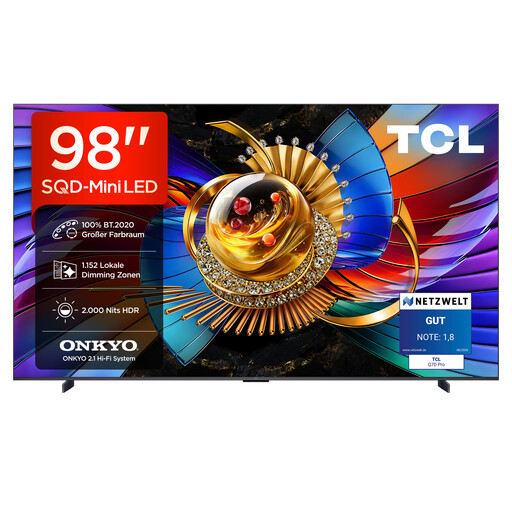
TCL 98Q7D PRO, 98 inch, 4K SQD-Mini LED
A very large screen to consider only if your room has enough space and viewing distance; measure the space first.
The product name lists 144Hz. Check that your game and console support the output you want, and assess the screen in your living room’s lighting conditions.
View at Joybuy
Frequently asked questions
Do you need 120Hz for local co-op games?
No, not just because you’re playing co-op. Check that your console, game and TV all support 120Hz output. PlayStation Support explains the settings for PS5; Nintendo Netherlands lists a maximum of 60 fps at 4K for Switch 2.
What can we check if a console feels sluggish?
First, check which HDMI input it’s connected to and whether gaming mode is switched on. HDMI Licensing Administrator explains that ALLM can automatically switch compatible equipment to a low-latency mode; on PS5, you can check the detected output under Screen and Video.
What should we bear in mind during long gaming sessions on OLED?
Bear in mind Sony’s warning that static images displayed for long periods or repeatedly, such as game elements, can cause image retention. Follow the care instructions for your exact TV; the warning does not mean that a particular gaming session will cause damage.
Do we need to buy extra warranty cover for a TV in the Netherlands?
No, not to have statutory rights: according to the Dutch Government, the Netherlands has no fixed statutory warranty period. If you’re considering paid extra cover, check what it offers in addition to your existing rights; if a product is faulty, the seller must provide a solution.
How do we compare TVs’ energy consumption?
Compare the energy label for the exact screen size and version. Energielabel.nl lists consumption per 1,000 hours and provides separate information for HDR, so you can compare the figures side by side.


