Start by considering the viewing distance and the seats furthest from the screen. A larger screen can make it easier for players sitting further away to follow the action, while the viewing angle matters for those sitting at the sides. Also take the room’s lighting into account, and check that both your console and game support the output you want; 120 Hz only matters if both can make use of it. OLED and bright LCD or mini-LED TVs involve different trade-offs.
Who is this relevant to?
Players spread around the room
You want players sitting at the sides or further from the TV to be able to follow the action too. Compare the screen size with the viewing distance, and assess the picture from the seats furthest away and at the sides. The Consumentenbond suggests a viewing distance of around 2.4 times the screen diagonal as a comfortable starting point.
A group in a bright living room
You play in daylight and want to weigh brightness and reflections against the viewing angle. A bright screen alone doesn’t tell you whether everyone will be able to follow the picture from the sides.
A group playing for a long time
You want responsive controls, but first check what the console and games actually output. For longer sessions, also consider fixed on-screen elements that remain visible for a long time.
What should you look for when buying?
Measure the viewing distance and check the picture from the seats furthest away and at the sides before choosing a screen size. The Consumentenbond suggests around 2.4 times the screen diagonal as a comfortable starting point. Use this ratio as a guide, rather than a fixed rule for every room.
| Buying concern |
What to look for |
Most relevant to |
| Screen size and seating |
Measure the distance from the seats and assess the actual screen from the furthest and most angled viewing positions. |
When we play with people sitting at different distances or to the sides, we want everyone to be able to follow the action. Around 33% of consumers prioritise visibility from seats spread around the room. |
| Picture in daylight |
Compare brightness and reflections in similar ambient light, and check the picture from an angle on the sofa too. |
When we often play during the day, we want the picture to remain visible without overlooking those sitting at the sides. Around 27% of consumers prioritise playing in a bright room. |
| Console and game |
Check the console and game output, the HDMI port in use, and the game mode or ALLM setting. |
If we want to use features such as 120Hz output, our console and the specific game must support them. Around 20% of consumers prioritise console performance that meets their needs. |
| Long sessions and static images |
Consider how long game elements remain visible, follow the model’s maintenance instructions and compare energy consumption per 1,000 hours on the energy label. |
If we play for a long time with fixed elements on screen, we want to take those conditions into account and be able to compare energy use. Around 20% of consumers prioritise long-term use and running costs. |
Common mistakes
-
Choosing based only on screen size
Viewing distance affects which size feels comfortable, but a larger screen doesn’t replace a usable viewing angle for players sitting at the sides.
Measure your setup and assess your chosen model from the furthest playing positions.
-
Assuming 144 Hz means 144 frames per second in every game
The console output and the game both affect the frame rate actually available. A high stated panel refresh rate won’t automatically make a game run faster.
Check the game, console output and HDMI port first. If you have a standard Nintendo Switch, don’t automatically prioritise the highest panel refresh rate.
-
Assuming mini-LED guarantees good viewing from the sides, or treating OLED burn-in as a certainty
Brightness and viewing angle are separate considerations. In a 2017 test of older OLED models, the Consumentenbond reported image retention; that test doesn’t predict the risk for a new model or your particular usage.
Assess a mini-LED model from the sides, and if you’re considering OLED, take into account how long fixed game elements stay on screen.
-
Taking out an extended warranty without comparing the terms
Your statutory rights apply alongside any additional cover. The Dutch government points out that the retailer must provide a solution if something goes wrong.
Check what extra rights the additional cover gives you and compare them with your statutory rights.
Brands to compare
Philips
The Philips 65OLED850/12 is a 65-inch OLED TV with Ambilight and a 144 Hz screen refresh rate, according to Philips.
- The Consumentenbond generally describes OLED TVs as having wider viewing angles.
- These features don’t prove that this model is better for every group setup. If static images remain visible for a long time, take the OLED trade-offs into account too.
TCL
The TCL 65C6K and 65C7K are mini-LED options; TCL states that both models have a native refresh rate of 144 Hz.
- These models offer LCD alternatives to consider for a bright room.
- A stated refresh rate or mini-LED screen type doesn’t show how the picture will look from your side seats or what a particular game will output.
Samsung
Samsung identifies the QE65QN90FATXXN as a 65-inch QN90F mini-LED TV.
- This model offers another LCD option to compare with OLED in terms of screen size and room lighting.
- Assess the viewing angle and gaming performance of the specific variant separately; the screen type alone doesn’t determine either.
LG
The LG 65QNED86B6B is a 65-inch QNED mini-LED TV.
- LG describes local dimming as a mini-LED product feature.
- Check the viewing angle and connections of the specific variant separately; product claims about picture quality don’t guarantee how it will perform with your seating setup.
Joybuy TVs for this setup
This Joybuy selection includes OLED and mini-LED TVs in a range of screen sizes. Compare the screen diagonal with your viewing distance, and check which gaming features your console and games can use.
 No image available
LG OLED83C67LA 83-inch OLED evo AI C6 4K Smart TV
The 83-inch screen gives you a specific diagonal to compare with the group’s viewing distance.
83 inch, 4K OLED, 120 Hz and VRR up to 165 Hz.
View on Joybuy
 No image available
LG OLED65C68LA 65-inch OLED evo AI C6 4K Smart TV
The 65-inch size is a useful starting point for comparing with your viewing distance and seating positions.
65 inch, 4K OLED, 120 Hz and VRR up to 165 Hz.
View on Joybuy
No image available
LG OLED55C68LA 55-inch OLED evo AI C6 4K Smart TV
Use the 55-inch diagonal to check whether everyone can follow the action from their seat.
55 inch, 4K OLED, 120 Hz and VRR up to 165 Hz.
View on Joybuy
 No image available
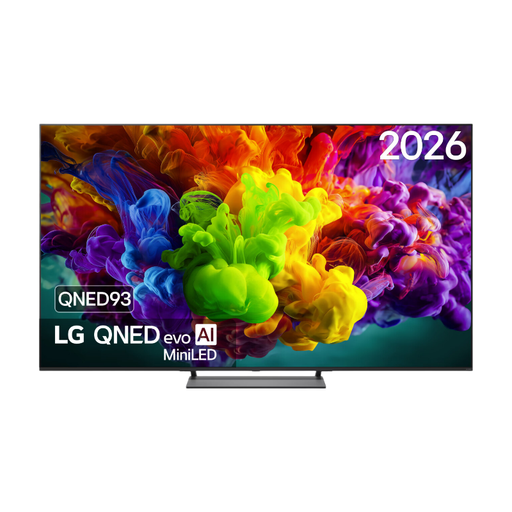
LG 65QNED93B6A 65-inch QNED evo AI Mini LED 4K Smart TV
This 65-inch mini-LED screen is an LCD option to assess in your room’s lighting and from the side seats.
65 inch, 4K Mini LED, 120 Hz and VRR up to 144 Hz.
View on Joybuy
 No image available
TCL T8D 85-inch 4K QD-Mini LED Smart TV (2026)
The 85-inch screen gives you a specific diagonal to compare with the distances between players around the room.
85 inch, 4K QD-Mini LED, 144 Hz and HDMI 2.1.
View on Joybuy
Frequently asked questions
Do I need a 120Hz TV for platform games on a Nintendo Switch?
No, not for a standard Nintendo Switch: Nintendo states that TV mode supports output up to 1080p. For Switch 2, 4K depends on the TV and game, with a maximum of 60 fps at 4K. Consider 120 Hz if you also use a console and games that support this output.
Why can’t I get the resolution I want from my Switch 2?
Nintendo lists the TV, settings and HDMI port in use as possible causes. Check these, and place the console in its dock before changing the TV output.
Can I connect a Nintendo Switch Lite to the TV for group play?
No. Nintendo says the Switch Lite doesn’t support TV mode; using a different TV won’t change this limitation.
What should I consider when playing for long sessions on OLED?
Consider how long the same game elements remain on screen, and follow the maintenance instructions for your chosen model. An older Consumentenbond test reported image retention under prolonged, mostly static test conditions, but it doesn’t predict the risk for a current model or your own playing habits.
Which consumer rules apply when buying a TV online in the Netherlands?
For distance purchases, the Dutch government says you usually have a 14-day cooling-off period. You also have statutory rights; if there’s a problem, contact the retailer. A TV energy label includes details such as the energy class and consumption per 1,000 hours. Check which terms apply to your purchase.


