
A group with seats spread around the room
You want players sitting beside or at an angle to the screen to be able to follow the game. Viewing angle, screen size and viewing distance all play a part.


For cooking game nights with players sitting in different places, making sure everyone can see the screen from the outer seats is a good place to start. Consider viewing angle, screen size and viewing distance together. The Dutch Consumers’ Association generally describes OLED TVs as having wider viewing angles, but that does not tell you how every model will perform in your room. Check for reflections and input lag too, and factor in possible image retention if the same content is displayed repeatedly for long periods.
You want players sitting beside or at an angle to the screen to be able to follow the game. Viewing angle, screen size and viewing distance all play a part.
You play near windows or bright lights and want to assess reflections where the TV will go, rather than relying on the name of the panel type alone.
You want a responsive set-up, while also taking fixed on-screen elements, energy use and maintenance into account during longer sessions.
Start by mapping out the seating and viewing distance. Then assess the light around the screen, and only after that compare gaming settings and input lag.
| What to consider | What should you check? | Who might find this important? |
|---|---|---|
| Visibility for the whole group | Map out the seats and the furthest viewing distance. Assess the viewing angle and how easy the screen is to read from the outer seats. | If I want everyone to follow the instructions from their seat, I look at the outer seats as well as the distance from the screen. Around 33% of consumers put visibility for the whole group first. |
| Reflections in the room | Check where windows and lights are reflected on the screen, and assess the exact model in similar lighting conditions. | If there are windows or bright lights, I want to assess distracting reflections where the TV is going, rather than relying on a product name alone. Around 27% of consumers give reflections and performance in bright conditions top priority. |
| Responsive controls | Compare input lag in Game Mode at the resolution and refresh rate used by your console or PC. | If responsive controls matter during co-op action, I compare input lag using the signal we’ll actually use. Around 20% of consumers put responsiveness ahead of the other considerations. |
| Repeated use and energy consumption | Compare the EU energy label for the exact model, and consider long sessions with fixed on-screen elements. | For regular game nights, I also want to factor in electricity use and long-term performance, especially if the same game screen appears often. Around 20% of consumers prioritise running costs and lifespan. |
The Dutch Consumers’ Association describes OLED TVs as generally having wider viewing angles. With OLED, very prolonged repetition of static images is also worth considering. RTINGS describes an extreme test load, which does not predict what will happen during normal club game nights. Compare input lag separately from the stated refresh rate: they are not the same thing.
When you’re playing as a group, some players may sit at an angle to the screen. A picture that looks good straight on doesn’t show how easy it is to see the game information from the outer seats.
Map out the full seating arrangement, viewing distance and viewing angle before choosing a screen size.
Refresh rate and input lag are different things. A stated frequency on its own doesn’t tell you how quickly a TV responds to your controls.
Compare input lag in Game Mode using the signal your console or PC actually outputs.
A different model number may refer to a different model; similar names do not prove that two products are identical.
Check the full model number and relevant specifications before comparing models.
The terms that apply to a purchase may depend on who the legal buyer is. Consumer rights do not automatically apply in the same way to an order placed in an association’s name.
Before paying, confirm whose name the order will be placed in and ask which returns and warranty terms apply to that buyer.
The OLED65C54LA is a Dutch-market 65-inch OLED model that can be used as a reference point when players are spread around the room.
The Dutch-market QE65S95FATXXN is a 65-inch OLED model to compare if reflections in your club’s room are a concern.
The Dutch-market 65C7K is a Mini LED model to consider as an alternative for frequent gaming sessions with fixed on-screen elements.
The Dutch-market 65PML9009/12 is a Mini LED option to consider if you also want to factor in integrated Ambilight lighting.
This selection includes LG OLED models, as well as TVs with QNED Mini LED or other gaming features listed in the product information. Compare the size and specifications with your viewing distance, the light in the room and the device you’ll connect.
 No image available
The 65-inch size gives you a specific screen size to compare with your club’s viewing distance and seating arrangement.
The product name lists 4K, 120 Hz, VRR up to 165 Hz and Dolby Vision. The product description lists four HDMI 2.1 ports.
If the same game with fixed on-screen elements is played repeatedly for very long periods, possible image retention remains a consideration. The extreme test load mentioned does not predict the result of normal club game nights.
No image available
The 55-inch size is one option to compare with the distance between the screen and the furthest seat.
The product name lists 4K, native 120 Hz and VRR up to 165 Hz. The product description lists four HDMI ports.
If the same game with fixed on-screen elements is played repeatedly for very long periods, possible image retention remains a consideration. The extreme test load mentioned does not predict the result of normal club game nights.
 No image available
The 48-inch size is a smaller screen option to compare with the space available and your viewing distance.
The product name lists 4K, native 120 Hz and VRR 165 Hz.
If the same game with fixed on-screen elements is played repeatedly for very long periods, possible image retention remains a consideration. The extreme test load mentioned does not predict the result of normal club game nights.
 No image available
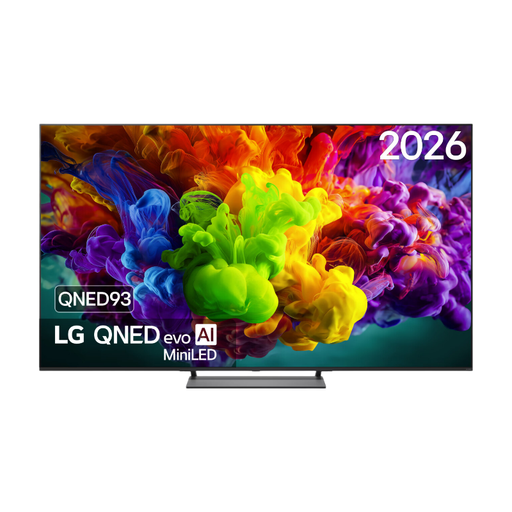
This Mini LED TV is an alternative to include in your comparison if you play often and have fixed images on screen.
The product name lists 4K, 120 Hz and VRR up to 144 Hz. The product description lists four HDMI 2.1 ports and ALLM.
 No image available
The 65-inch size and stated viewing angle are features to check against your club’s seating arrangement and viewing distance.
The product description lists 4K, 60 Hz, Game Mode Plus, ALLM and VRR. The stated input lag of ≤ 10 ms is a product claim, not an independent measurement.
Not necessarily. The Dutch PlayStation Store page for Overcooked! 2 lists local co-op for up to four players and says PS Plus is required for online play. Check the requirements for the game and platform you choose.
Connect your console or PC and compare how the controls feel with Game Mode switched on. Then check from the outer seats that the game information is easy to read and that windows or lights aren’t reflected on the screen. Input lag depends on the signal and settings.
Not just because of the genre. First check what signal your device and game output, then compare input lag with that signal. A stated panel refresh rate is not a measurement of response time.
Check the EU energy label and product information in EPREL for the exact TV model. The European Union uses an A–G rating for televisions; compare consumption figures on the same stated usage basis.
The ACM states that consumers who buy a TV online generally have 14 days from delivery to change their mind. Don’t automatically apply this to an order placed in an association’s name: the applicable terms depend on who the legal buyer is. Before ordering, ask which returns and warranty terms apply to that buyer.