Start with the viewing distance, seating and number of players: a larger screen only helps if everyone can see their own section clearly. Then look for picture-response features that your racing game and console actually support. For film nights, compare OLED with mini-LED/LCD, and bear in mind that fixed game elements can remain on screen for long periods with OLED.
Who is this choice relevant to?
Racers playing with three or four people
You want every player to be able to follow their section of the screen from their own seat. Nintendo confirms that Mario Kart 8 Deluxe on Switch supports split-screen for up to four players in TV mode; check the game mode available in your own racing game.
Console racers who want a quick response
You’ll want to check the game mode and supported refresh rate. A higher frame rate only matters if the console and game you use can output it too. HDMI Licensing Administrator lists 4K/120 Hz, VRR and ALLM as separate gaming features to check.
Film and gaming fans
You use the same room for racing and films, so you’ll want to compare screen technology, lighting and picture quality from different seats. Sony advises avoiding static images on screen for long periods with OLED.
What should you look for when choosing?
OLED TV
When is it a good fit? If films in a darkened room are important to you, compare an OLED TV in the right size with the gaming connections you need.
Worth considering: Scoreboards or HUD elements that stay on screen for long periods can raise the risk of image retention; Sony advises against displaying static images for extended periods.
Mini-LED/LCD TV
When is it a good fit? Consider this option if you’re looking for a large screen or play during the day. Check the specific size and picture quality from the seats at the sides.
Worth considering: A series-wide claim about brightness or viewing angle doesn’t automatically tell you how every size will perform in your room.
A 60 Hz TV
When is it a good fit? If your console and racing game don’t offer 120 fps output, and screen size matters more to you than a higher refresh rate, a suitable 60 Hz model may be enough.
Worth considering: HDMI 2.1 and VRR alone don’t prove that a TV has a 120 Hz panel. Philips, for example, also describes a 60 Hz model with these connection and gaming features.
| What to consider |
What should you check? |
Who is it important to? |
| Clear split-screen picture |
Test the racing game with the number of players you want, and measure the viewing distance, available space and position of the seats at the sides. |
If I want everyone to follow their section of the screen from their own seat, I’ll consider screen size and viewing angle; around 33% of consumers put picture clarity first. |
| Responsive, smooth racing |
Check the game and console output modes, the right HDMI input, native panel refresh rate, VRR and ALLM. |
If I want a quick response, I’ll check which features my own console and game support; around 27% of consumers give gaming responsiveness top priority. |
| Films as well as gaming |
Compare the TV’s HDR formats with your films and sources, and check the picture under the lighting you use at home. |
If I watch films and races on the same screen, I’ll consider film picture quality alongside gaming features; around 20% of consumers put film picture quality first. |
| Room and usage |
Measure the TV with its stand and check the model-specific energy label and audio connection for your existing set-up. |
If I want to know whether the TV will suit my room and devices, I’ll check its dimensions, connections and energy use; around 20% of consumers make these practical considerations their top priority. |
Buying pitfalls
-
Confusing HDMI 2.1 with a native 120 Hz panel
A TV may list HDMI 2.1 and VRR but still have a 60 Hz panel. The connection and panel refresh rate are separate features.
Check the native refresh rate, the right input and the output mode supported by your own game and console.
-
Assuming the TV adds split-screen
Split-screen depends on the game mode. Nintendo, for example, confirms support for up to four players in Mario Kart 8 Deluxe on Switch; that doesn’t apply to other games.
Before choosing a TV, check how many local players and which game modes your racing game supports.
-
Comparing screen technology alone
Seating, lighting and room dimensions all affect how clearly everyone can see the racing picture. With OLED, game elements that stay on screen for long periods also need consideration.
Measure your space and check the picture from every player’s seat. If you choose OLED, factor in long sessions with fixed HUD elements or scoreboards too.
-
Assuming paid extra cover replaces your statutory rights
The Dutch government points out that the retailer is responsible for ensuring a product is fit for purpose. Extra cover doesn’t replace that statutory protection.
Compare the cover and exclusions of any extra warranty with your existing statutory rights, and check what additional cover it offers.
Brands worth comparing
LG
The OLED evo C6 range is worth considering if you’re looking for film and gaming features on one screen. LG lists 4K and gaming up to 165 Hz for the 65-inch OLED65C68LA.
- The C6 model mentioned combines OLED with 4K.
- Compare the exact size and connections. Bear image retention in mind during long sessions with static racing elements, and don’t assume the specifications apply to other LG ranges.
Samsung
The Dutch S95H OLED and QN90F mini-LED are different screen options. The manufacturer lists a specific 65-inch S95H model and a 75-inch QN90F model.
- The ranges mentioned include both OLED and mini-LED models to compare by size and usage.
- Check the full model code, screen size and HDR features you want for the version you’re considering.
TCL
TCL describes its Dutch C8K as a QD mini-LED range with a native refresh rate of 144 Hz and sizes including 65 and 75 inches.
- The range includes several screen sizes to compare with the space available.
- Check the size and HDMI inputs on the specific model; claims about the range don’t necessarily apply to every version.
Philips
Philips lists OLED, Ambilight, Dolby Vision and VRR up to 144 Hz for the 65OLED810/12.
- Ambilight may appeal if you want the lighting behind the screen to contribute to the atmosphere in your room.
- Check the native panel refresh rate for each model: Philips also lists a 60 Hz model with HDMI 2.1 and VRR.
Sony
According to Sony, the BRAVIA 5 range includes mini-LED models in different screen sizes. Sony also describes 4K/120 Hz gaming settings for compatible BRAVIA TVs.
- The range mentioned is available in different sizes, so you can match it to your layout and seating.
- General set-up information doesn’t specify the port configuration for every model. Check the details for each one; Sony advises avoiding static images on screen for long periods with OLED.
TVs for large racing and film set-ups
These Joybuy products are large OLED and mini-LED/LCD TVs to compare for split-screen races and film nights. Check each model for the features your game, console, room and seating require.
 No image available
TCL T8D 85-inch 4K QD-Mini LED Smart TV (2026)
The 85-inch size is worth comparing if you’re looking for a large screen for multiple split-screen views.
4K; 144 Hz; VRR and ALLM. The available frame rate and features also depend on the source and game you use.
The product title lists HDMI 2.1 and Onkyo 2.1 audio.
View at Joybuy
 No image available
TCL 75T8D 75-inch 4K QD-Mini LED TV
The 75-inch version is one size to compare if several players will be using the same screen.
4K; 144 Hz; VRR and ALLM. Check that your console and game support the output you want.
The product title lists Dolby Vision, HDR10+ and Onkyo 2.1 audio.
View at Joybuy
 No image available
METZ 86MQE8000Z 86-inch QLED 4K TV
The 86-inch screen is a large option; measure your available space and viewing distance first.
The product title lists 144 Hz, HDMI 2.1 and FreeSync Premium. Check that your source supports the features you need.
The product information lists HDR10+, Dolby Vision and Dolby Atmos.
View at Joybuy
 No image available
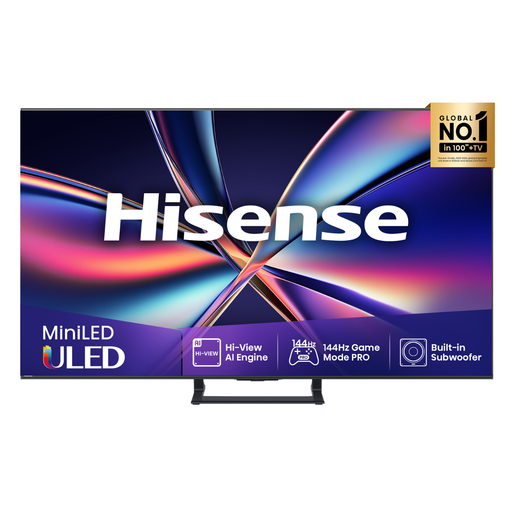
Hisense 75E8Q 75-inch 4K Mini-LED Smart TV
The 75-inch size is worth comparing for a set-up where several players watch the same screen.
The product information lists 144 Hz, FreeSync and HDMI 2.1 with support for 4K/120 fps, ALLM and VRR. Check which features your own source can use.
The product information lists Dolby Vision and HDR10+.
View at Joybuy
 No image available
LG OLED83C67LA 83-inch OLED evo AI C6 4K Smart TV
This 83-inch OLED is worth comparing for a large film and gaming set-up. Bear static images in mind during long sessions with fixed HUD elements.
The product title lists 120 Hz and VRR up to 165 Hz. The product information lists four HDMI 2.1 inputs; check which connection and output your source needs.
The product information lists Dolby Vision, G-SYNC Compatible and FreeSync Premium.
View at Joybuy
Frequently asked questions
Does a gaming TV make every racing game support split-screen?
No, split-screen depends on the game and platform. Nintendo lists up to four players in split-screen for Mario Kart 8 Deluxe on Switch in TV or tabletop mode; check the local multiplayer mode of other games separately.
How do you set up your TV for fast-paced racing?
Use the right HDMI input and check the game mode, output resolution and any 120 Hz and VRR settings on your TV and source. Sony describes 4K/120 Hz settings for compatible BRAVIA set-ups; available features vary by TV and source.
How should you use an OLED TV during long racing sessions?
Don’t leave fixed menus and scoreboards on screen for longer than necessary. Sony identifies static video game content as a possible cause of image retention. For cleaning, it advises using a clean, dry microfibre cloth and not applying liquid directly to the screen.
Where can you find a comparable indication of energy use?
Compare the labels and product information for the exact models, including separate HDR information. The European Commission explains the A–G labels and additional model details in EPREL; an energy label class alone won’t predict your personal energy bill.
What are your rights when buying a TV online in the Netherlands?
For an online distance purchase from a business, the Dutch government says you generally have 14 days to change your mind. You’re also entitled to a product that is fit for purpose; if there’s a problem, contact the retailer about your statutory guarantee. If you pay for extra cover, check what it offers in addition to your statutory rights.


