First, measure the viewing distance from both seats and check how much space you have. A 42–43-inch TV is a size worth comparing, not a one-size-fits-all choice for every small living room. Then consider the room’s lighting and the features your console and football game actually support: LCD may be worth considering in a bright room, while OLED is an option if deep blacks matter to you. For 120 Hz or VRR, the TV, connection, console and game all need to be compatible; PlayStation also says that both the TV and game must support 120 Hz output.
Who is this TV guide for?
Football gamers short on space
You play alongside someone on the sofa and want both of you to see the whole pitch, without the TV being too big for its spot. Measure the viewing distance, TV stand and both seating positions; the Consumers’ Association discusses viewing distance and screen size as factors to consider when choosing.
Console gamers looking for smooth gameplay
You want a suitable Game Mode and are considering 120 Hz or VRR. These features are only usable if the TV, connection, console and game support them; PlayStation also highlights this requirement for 120 Hz output.
Budget-conscious casual football gamers
You mainly play locally from time to time and want to check whether a 60 Hz model suits your needs before choosing a screen with a higher refresh rate. Check the specifications for the exact model variant.
What should you look for when choosing?
Start with the viewing distance and the space available, then check which gaming features are compatible with your console and football game.
| What to consider |
What to look for |
Who is this important for? |
| Size and visibility for two players |
Measure the viewing distance from both seats and check the width and stand of the exact TV. Use viewing distance as a guide, not as a fixed screen size. |
If I’m playing with someone from two seats on the sofa, I want to see the whole pitch without the TV being too big for the room. Around 31% of consumers prioritise size and visibility for two players. |
| Responsiveness and smooth gameplay |
Check for Game Mode or ALLM, and see whether the HDMI input, console and game you intend to use support the desired output. |
When playing football games, I want the controls and picture to feel responsive, but I only want to choose features my console and game support. Around 25% of consumers put responsiveness at the top of their list. |
| Features you can actually use |
Compare the full model number with the manufacturer’s information and check the native refresh rate of the exact variant. |
I only play from time to time, so I want to work out which features I’ll actually use first. The features you can genuinely use matter most to around 25% of consumers. |
| Picture quality in daylight and contrast |
Consider the light and reflections where the TV will sit, and compare the picture from both seats. Check the specifications for each model. |
If the room gets a lot of light during the day, I want to know how the picture looks from both seats; in a dark scene, contrast may matter more. Picture quality in the room’s lighting is the top priority for around 19% of consumers. |
Common buying mistakes
-
Assuming a ‘120Hz’ listing proves the panel has a native 120 Hz refresh rate
The Joybuy listing for the Hisense 43E7S mentions 120Hz, while Hisense Netherlands lists the standard 43E7S as a 4K/60Hz model. The 43E7S PRO is a different variant, for which Hisense specifies a native 144Hz Game Mode.
Compare the full model number and check the refresh rate with the manufacturer for that exact version.
-
Measuring only the screen diagonal
A TV may fit by diagonal measurement but still be too wide or tall, including its stand, for your furniture. The Consumers’ Association therefore also recommends checking the dimensions of the TV and stand.
Measure the viewing distance from both seats and check the dimensions of your chosen model, including its stand.
-
Assuming a high Hz rating improves every football game
A high maximum refresh rate doesn’t guarantee that a console or game will output at that frame rate. Philips specifies 144Hz HDMI VRR for the 42OLED810/12 when gaming on a PC connected via HDMI.
Check the game, console or PC, HDMI input and TV as one complete setup before taking a feature into account.
Brands to compare
LG
The OLED42C68LA is a 42-inch OLED option to compare if a compact screen with gaming features is on your shortlist.
- LG specifies up to 4K/165 Hz, G-SYNC compatibility and FreeSync Premium for this model. These are stated specifications, not a guarantee that a console football game will reach that refresh rate.
- If you play for long periods with static game elements on screen, follow LG’s screen care guidance; it doesn’t guarantee that image retention is impossible.
Philips
The 42OLED810/12 is a 42-inch OLED model with Ambilight; the 43PUS8909/12 is a separate 43-inch LCD option.
- Philips specifies 144Hz HDMI VRR for PC gaming on the 42OLED810/12 and 120 Hz for the 43PUS8909/12.
- The PC requirement for 144Hz HDMI VRR applies to the 42OLED810/12 and shouldn’t be taken as a claim about console gaming. Ambilight is a feature to compare, not proof of better football gaming performance.
Hisense
The 43E7S and 43E7S PRO are two different 43-inch models with different stated refresh rates.
- Hisense Netherlands specifies 4K/60 Hz for the standard 43E7S and a native 144Hz Game Mode for the PRO.
- A Joybuy listing mentions 120Hz for the standard 43E7S. Check the full model number and don’t attribute the PRO’s specification to the standard E7S.
Samsung
The QE43QN90FATXXN is a 43-inch mini-LED model to compare with OLED and LCD options.
- The full model number and mini-LED screen technology give you specific points of comparison between screen types.
- Don’t infer the refresh rate, connectivity or availability from the model name; check these details for the exact version.
TVs at Joybuy
This selection includes 42- and 43-inch TVs to compare after measuring the viewing distance and available space. Gaming features vary by model; check that your console and game support them.
 No image available
LG OLED42C68LA 42-inch 4K OLED Smart TV
A 42-inch OLED option to compare if the viewing distance and available space suit this size.
4K OLED; HDMI 2.1; ALLM, VRR and FreeSync.
If you play for long periods with static game elements on screen, follow LG’s screen care guidance; it doesn’t guarantee that image retention is impossible.
View at Joybuy
 No image available
METZ 43MQF7500Z 43-inch QLED 4K UHD Google TV
A 43-inch model to compare with other screen sizes once you’ve measured both seating positions and the available space.
QLED 4K UHD; Google TV; HDMI 2.1, VRR and MEMC.
View at Joybuy
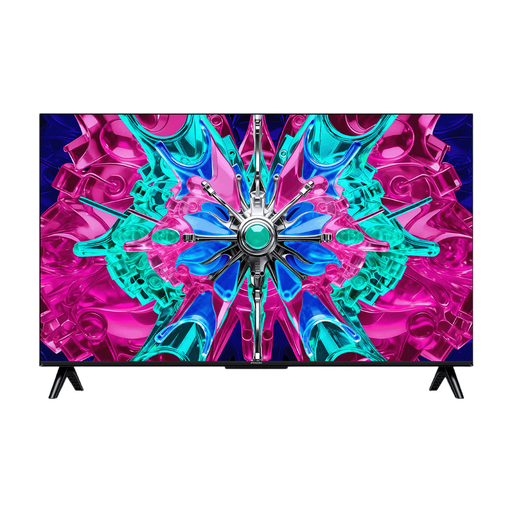 No image available
iFFALCON U65A 43-inch 4K LED Smart TV
A 43-inch LED option to compare if you’re mainly looking for a suitable size and a stated Game Mode.
4K LED; Game Master Mode.
Check the refresh rate for the exact version: product listings mention both 50 Hz and 60 Hz.
View at Joybuy
 No image available
TCL 43T6C 43-inch 4K QLED TV
A 43-inch QLED model to compare with other options if its size suits your viewing distance and TV stand.
4K QLED; VRR, ALLM and HDMI 2.1. The product title mentions 120 Hz; check support for the exact version and HDMI input.
View at Joybuy
 No image available
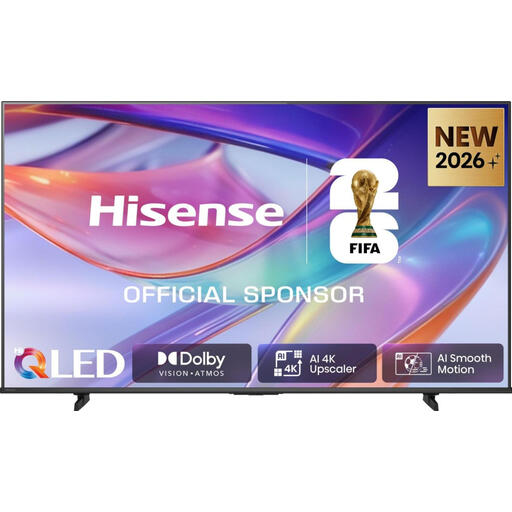
Hisense 43E7S 43-inch 4K QLED Smart TV
A 43-inch QLED model to compare if you want to find out which features you’ll actually use for occasional local gaming.
Hisense Netherlands specifies 4K/60 Hz for the standard 43E7S; the manufacturer also lists Game Mode, ALLM and VRR. A Joybuy listing mentions 120Hz, so check the exact variant and don’t treat this as a confirmed 4K/120Hz TV.
View at Joybuy
Frequently asked questions
Does a TV for local football matches always need to have 120 Hz?
No, 120 Hz isn’t essential for every local football game. PlayStation specifies 120 Hz output for TVs and games that support it, so check that your console, TV and game are all compatible.
How do I set up a TV connected to a PlayStation 5?
Go to Settings > Screen and Video > Video Output to check which capabilities the connected display reports. Only enable 120 Hz output or VRR for compatible TVs and games; on a compatible TV, ALLM can automatically switch to a low-latency mode.
How can I reduce concerns about static game elements being displayed for long periods on an OLED TV?
Avoid leaving static menus or paused screens on for longer than necessary, and follow the care instructions for your model. LG describes screen protection and image retention features for its OLED TVs; this doesn’t guarantee that image retention is impossible.
What if the TV turns out to be faulty after purchase, and what applies when ordering online?
According to the Dutch government, if a product is faulty, the seller must provide a solution; your statutory rights may also apply after any additional warranty period has ended. For consumer purchases made at a distance, a 14-day cooling-off period applies in many cases, with some exceptions. Check the terms for your specific order.
How should I compare the energy consumption of TVs?
Use the EU energy label and the model information in EPREL for the exact TV. Compare figures measured on the same basis; you can then use them alongside your own viewing habits to estimate your energy consumption.


