
Players with limited floor space
You want to play sports games with motion controls and make sure the TV and furniture don’t get in the way. Nintendo recommends leaving enough space around players for Nintendo Switch Sports.


First, measure your viewing distance, where the TV will go and the clear space players need to move around in. Only then decide on the screen size. For a responsive gaming experience, check input lag in Game Mode using the signal from your own console. If people will be playing from different angles, take viewing angles and reflections into account too: a high refresh rate won’t solve a lack of space, and it doesn’t tell you anything about input lag on its own.
You want to play sports games with motion controls and make sure the TV and furniture don’t get in the way. Nintendo recommends leaving enough space around players for Nintendo Switch Sports.
You notice lag in fast-paced games and want to assess input lag with your console and the TV’s Game Mode. RTINGS explains how Game Modes can limit image processing to reduce input lag.
You play with others from different spots around the room, so you’ll also want to consider viewing angles and reflections.
Start with your viewing distance, the TV’s external dimensions and the clear space you have for playing. Then compare picture and gaming features with the players’ positions and your console’s capabilities.
| What to consider | What should you check? | Who is this important for? |
|---|---|---|
| Screen size and placement | Measure your viewing distance and compare the TV’s external dimensions, including the stand, with the space available. The Consumentenbond uses viewing distance divided by 2.4 as a starting point for the diagonal in centimetres, not as a fixed rule. | If I sit close to the screen, I want a diagonal that’s comfortable to watch and external dimensions that fit my TV unit. Around 28% of consumers prioritise screen size and placement. |
| Clear space for playing | Check where players will stand and how much clear space there is around them. For Nintendo Switch Sports, Nintendo recommends wearing wrist straps and leaving enough space clear. | When playing motion-controlled games, I want to be able to swing my arms without hitting furniture or the screen. Around 22% of consumers prioritise clear space for playing. |
| Gaming responsiveness | Compare an input lag measurement for the exact model, in Game Mode and with your console’s signal. RTINGS explains the relationship between Game Mode, image processing and input lag. | When timing matters, I want to know how the TV responds to my console in Game Mode, not just how high its stated refresh rate is. Around 22% of consumers prioritise responsive controls. |
| Viewing from different positions | Check the model from the places where players will sit or stand, and look out for reflections. The Consumentenbond notes that OLED TVs generally offer wider viewing angles, while QLED TVs are often brighter; compare the specific model. | When we play together, I want everyone to have a good view from their different spots, and I’ll take reflections into account too. Around 17% of consumers prioritise visibility for multiple players. |
| Total costs and support | Check the energy label for the exact model and ask about the cost of any installation you need. Compare any additional warranty with your existing rights. | If I want to keep total spending under control, I want to compare the TV, any installation and running costs side by side. Around 11% of consumers prioritise total costs and support. |
The TV and stand also need to fit in the space you’ve chosen, while leaving enough room for players to move around during sports games.
Measure the viewing distance, the available space on your TV unit or wall, and the playing area separately.
Panel refresh rate and input lag describe different things. The source also needs to be able to provide the signal being used.
Check the input lag for the exact model in Game Mode, using the signal from your console.
A retailer’s description isn’t proof of measured performance or of the identity of a differently named model.
Compare the full model number and look for data for that exact version before assuming two models are the same.
In the Netherlands, you have legal rights if a product isn’t as it should be; an extra warranty doesn’t automatically replace them.
Compare the terms of an additional warranty with your existing rights before paying for it.
The OLED42C69LB is a compact OLED option with gaming features.
The QE43QN90FATXXN is a 43-inch Neo QLED Mini LED model to compare with compact alternatives.
The 43PUS9000/12 is a 43-inch QLED TV with Ambilight.
The P7L series offers a QLED option, with versions starting at 43 inches.
These Joybuy products are 42- or 43-inch TVs to compare for gaming in a narrow living room. Measure the external dimensions and playing space yourself; a stated refresh rate is no substitute for an input lag measurement.
 No image available
The 42-inch version is a compact option to assess against your viewing distance and the space available for playing.
The product name lists 4K and OLED.
 No image available
The 43-inch size is a compact option to compare with the space available and your viewing distance.
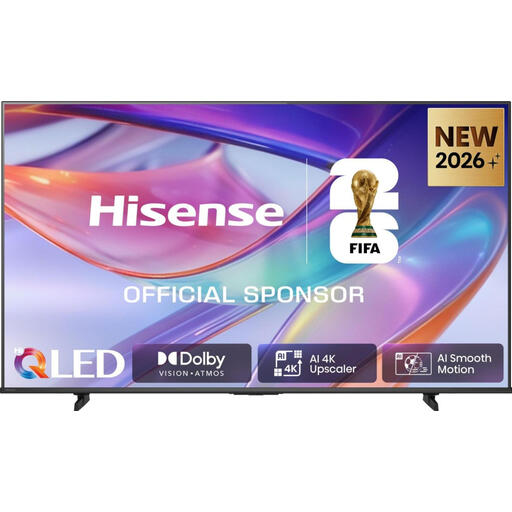
The product name lists 4K, QLED and 120 Hz. Check the input lag separately for the exact version.
 No image available
This 43-inch version is worth comparing if the available width and playing space are your main considerations.
The product name lists 109 cm, 4K UHD and QLED.
 No image available
The 43-inch version is a compact option to check against your viewing distance and the clear space around players.
The product name lists 4K and QLED.
 No image available
This 43-inch version is worth comparing with the space available and the distance from your seating or playing position.
The product name lists 4K. For gaming features, check which input and signal apply.
Measure from your eyes to where you plan to put the screen. The Consumentenbond uses the viewing distance in centimetres divided by 2.4 as a starting estimate for the diagonal in centimetres. Compare nearby sizes too, then check the actual external width.
Nintendo recommends wearing wrist straps and leaving enough space around players. Move furniture if necessary before you play; a smaller screen won’t, by itself, make a cramped playing area safe.
Not based on the capabilities of that console alone: Nintendo lists TV settings up to 1080p for the original Switch. Compare 4K or higher refresh rates separately if you also use other compatible equipment.
Look for an input lag measurement for the exact model in Game Mode, using a signal supported by your console. A stated refresh rate alone won’t answer that question.
No. Nintendo says the Switch Lite doesn’t support TV Mode; check this before choosing a TV to use with that console.