
Gamers with limited space for a screen
You share a narrow living room with the TV, so measure both the distance from your eyes to the screen and the width and height of the space where the TV will go.


Start by measuring your viewing distance and available space. A 42–43-inch TV could be an option, but it isn’t a one-size-fits-all choice for every narrow living room, according to the Dutch Consumers’ Association. Next, check whether your console or PC and your games support the features you want, such as 120Hz output. Viewing angles and reflections from every seat matter too.
You share a narrow living room with the TV, so measure both the distance from your eyes to the screen and the width and height of the space where the TV will go.
You want to know whether your console, PC and games support features such as a low-latency mode, 120Hz output or VRR. A high figure on the box doesn’t automatically mean your games will use it.
You play side by side and want everyone, including those in the outer seats, to see what’s happening on screen. Viewing angles and reflections are therefore worth considering, as the Dutch Consumers’ Association also advises.
Could be a good fit if: contrast and viewing from multiple seats are important to you.
Bear in mind: reflections and static game elements that remain on screen for long periods. In an older test, the Dutch Consumers’ Association found image retention after prolonged exposure to static images.
Could be a good fit if: you use your TV in daylight and want to compare a compact model with OLED.
Bear in mind: black levels and picture quality from an angle vary by model. Assess them from the seats you’ll be using to play.
| What to consider | What should you check? | Who should pay extra attention? |
|---|---|---|
| Size and placement | Measure the viewing distance and the available width and height, including the stand if the TV will sit on furniture. The Dutch Consumers’ Association suggests 32–43 inches as a guide for a viewing distance of 200 cm, not as a gaming recommendation. | If I’m sitting in a narrow room, I want the TV to fit without losing sight of the viewing distance; around 33% of consumers put fit first. |
| Response and gaming features | Check the capabilities of the exact TV model, the HDMI input you’ll use, your system and your games. PlayStation says 120Hz output and VRR also require support from the game and TV. | I want my system and the arena games I play to support the features I choose; around 27% of consumers prioritise useful gaming features. |
| Viewing from multiple seats | Assess viewing angles and reflections from the outer seats, in the lighting conditions you typically have at home. | If we’re sitting side by side with several players, I want to be able to assess the picture from every seat; around 20% of consumers prioritise visibility for all players. |
| Light, long sessions and energy use | Compare visibility in your own lighting conditions and check the exact model’s energy label for its SDR and HDR consumption. If you use OLED, vary static images during long sessions. | I want to take daylight, long gaming sessions or electricity use into account; around 20% of consumers make one of these their main buying concern. |
A TV with the screen size you want could still be too wide or too tall for your furniture or wall. You should also consider how far the players will sit from the screen.
Measure the space and viewing distance before choosing a model. Include the stand in your measurements if the TV will sit on furniture.
Available output depends on the source, TV, input and game. Specifications can also vary between model variants.
Check the exact size variant, the HDMI input you’ll use, and the output settings on your own system and games.
An older test by the Dutch Consumers’ Association found image retention after prolonged exposure to static images, but did not establish a fixed timeframe or test the newer models mentioned here.
Avoid leaving the same still image on screen for long periods, and weigh this consideration against how you use your TV.
The OLED42C68LA is a 42-inch OLED model to compare if you’re looking for a compact screen.
The 42OLED810/12 is a 42-inch OLED alternative with Ambilight.
The QE43QN90FATXXN is a 43-inch mini-LED TV to compare with compact OLED models.
The K-43S3 is a 43-inch TV with gaming features, but Sony does not list VRR support for it.
The C655 series is worth comparing with more compact or more basic LCD options.
This selection includes compact 42- and 43-inch TVs, including OLED and QLED models. Check that the gaming features listed are supported by the TV, your system and your games.
 No image available
A 42-inch OLED option for a compact viewing space. Measure the available space and viewing distance before choosing a size.
The product information lists a width of 932 mm, ALLM, VRR, AMD FreeSync and 4K 120 fps via HDMI. Check that your system, input and games support the features you want.
 No image available
A 43-inch QLED option to compare if you’re looking for a compact screen.
The product description lists VRR, HDMI 2.1 and a 144Hz refresh rate. Check that your source and games support this output.
 No image available
A 43-inch QLED TV to consider when comparing options for a compact gaming space.
The product information lists 120Hz, ALLM, VRR and HDMI 2.1. Check that the features you want work with your own system, input and games.
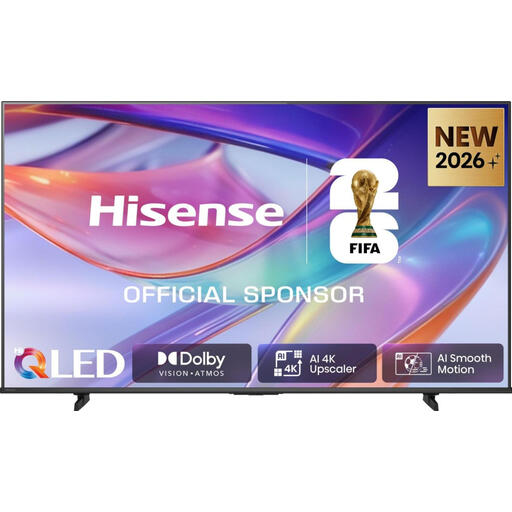 No image available
A 43-inch QLED TV to compare for a compact set-up.
The product information lists 120Hz, ALLM and VRR. Check that your source and the games you play support the output you want.
 No image available
A 43-inch QLED option if you want to weigh up a compact screen against other sizes.
The product information lists VRR and ALLM. Check that your system and games support these features before relying on them.
No. The right size depends on the viewing distance and the space available for the TV. Measure the distance from the players’ eyes and check the dimensions including the stand. The size categories suggested by the Dutch Consumers’ Association are guidelines, not a fixed answer for every set-up.
On your PS5, go to Screen and Video to check the information about the connected HDMI device and the settings for 120Hz output, VRR and ALLM. PlayStation says that both the connected TV and the games in question must support 120Hz and VRR.
First, check that the TV fits on the furniture with its stand and find out what mounting requirements apply to the exact model. Adjust the picture at home to suit the lighting you usually have, then assess it from the seats you’ll use for gaming.
On the Dutch energy label, compare each model’s consumption in kWh per 1,000 hours for both SDR and HDR. You’ll also need to know how much you use the TV and your electricity tariff to estimate your own costs. There is no fixed statutory guarantee period in the Netherlands. If a product is faulty, contact the seller; the outcome depends on the circumstances of the fault.