What should you look for when choosing?
First, measure the viewing distance, then check whether players in the seats furthest to the sides can follow the picture. The Consumentenbond suggests around 2.4 times the screen diagonal as a comfortable starting point for viewing distance. Check that this also works for your room and layout.
| What to consider |
What to look for when buying |
Who is this most important for? |
| Response time and smooth motion |
Check for Game Mode or ALLM, VRR, the HDMI input and which picture mode your specific game supports. |
If I want responsive controls during local matches, I look at what my console and game can actually deliver. Around 25% of consumers rank response time as their top buying priority. |
| Visibility from different seats |
Measure the viewing distance and check the picture, text and reflections from the seats furthest to the sides. |
When we watch from different places with several players, I want everyone to be able to follow the action. Around 25% of consumers give group viewing the highest priority. |
| Films as well as games |
Compare dark scenes, reflections and the picture from an oblique angle. If you’re considering OLED, read the instructions on static images. |
If I use the same TV for films and games, I consider how it looks in my room and how I use fixed game elements. Around 20% of consumers put picture quality for films first. |
| Connecting consoles and audio |
Count your devices and check which picture signals each HDMI input supports, as well as how to connect your audio system. |
If my consoles and sound system need to stay connected at the same time, I check the port layout on the exact model. Around 15% of consumers give connections and sound the highest priority. |
| Running costs and lifespan |
Compare energy labels for similar models and check exactly what any paid additional cover includes. |
If I want to factor in energy use and my rights after purchase, I compare the product information and terms. Around 15% of consumers put running costs and lifespan first. |
Joybuy products
This selection includes 4K TVs for local matches and home cinema use: OLED models and LCD TVs with QD-Mini LED. Choose a screen size to suit your viewing distance, and check that the gaming features listed are right for your console and games.
 No image available
LG OLED83C67LA 83-inch OLED Evo AI C6 4K TV
The 83-inch screen is an option to compare if you’re looking for a large picture for gaming and have the viewing distance to suit it.
OLED Evo, 4K, 120 Hz, VRR up to 165 Hz, Dolby Vision, G-SYNC compatibility and FreeSync Premium are listed in the product name.
Prolonged use with static HUD elements or scoreboards is still a consideration. The older test cited by the Consumentenbond doesn’t predict the risk for this model.
View at Joybuy
 No image available
LG OLED65C68LA 65-inch OLED Evo AI C6 4K TV
Compare this 65-inch model with your viewing distance if you’re considering OLED for local matches and films.
OLED Evo, 4K, 120 Hz, VRR up to 165 Hz, ALLM, Dolby Vision, Dolby Atmos and four HDMI 2.1 inputs are listed in the product name or specifications.
Prolonged use with static HUD elements or scoreboards is still a consideration. The older test cited by the Consumentenbond doesn’t predict the risk for this model.
View at Joybuy
 No image available
TCL 65T8D 65-inch QLED TV with QD-Mini LED
This 65-inch LCD model with QD-Mini LED is an alternative to consider alongside OLED for your home cinema setup.
4K, 144 Hz VRR, FreeSync Premium, Dolby Vision and Dolby Atmos are listed in the product name.
Check the viewing angle and picture in the room where you plan to use the TV.
View at Joybuy
 No image available
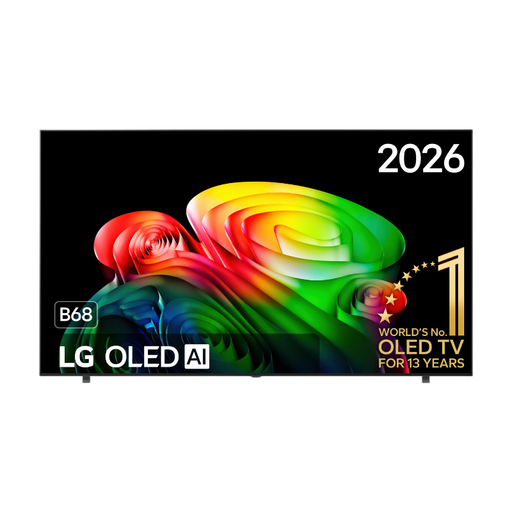
LG OLED77B68LA 77-inch 4K OLED TV
The 77-inch screen is worth considering if you’re looking for a larger gaming picture. Check it’s suitable for your viewing distance.
OLED, 4K, 120 Hz, VRR up to 144 Hz, Dolby Vision, Dolby Atmos, G-SYNC compatibility and FreeSync Premium are listed in the product name.
Prolonged use with static HUD elements or scoreboards is still a consideration. The older test cited by the Consumentenbond doesn’t predict the risk for this model.
View at Joybuy
 No image available
TCL 75Q7C 75-inch 4K Mini LED TV
Compare the 75-inch screen with your viewing distance and the position of players at either end of the sofa.
4K, Mini LED, 144 Hz VRR, HDMI 2.1, ALLM, FreeSync Premium Pro, Dolby Vision and Dolby Atmos are listed in the product name or specifications.
Consider viewing angles and reflections in your own room. Screen features don’t tell you which picture mode each game supports.
View at Joybuy
Frequently asked questions
Do you need a 120 Hz TV for local multiplayer?
No, not for every game. First check which picture modes your console and the specific game support. Nintendo, for example, states that the Switch 2 outputs a maximum of 60 fps at 4K; a higher Hz figure on the TV won’t turn that into a 4K/120 fps game.
How do you choose a screen size when players sit in different places?
Measure the distance from your eyes to the screen and use the viewing distance suggested by the Consumentenbond—around 2.4 times the screen diagonal—as a starting point, not a strict rule. Then check that players in the seats furthest to the sides can see the picture and text clearly too.
What should you check when connecting a console and soundbar?
Check the manual for the exact TV model to see which HDMI inputs support the picture mode you want and which connection is intended for your audio system. Xbox Support warns that inputs on the same TV may support different resolutions; settings or firmware may also matter.
How should you deal with fixed scoreboards on an OLED TV?
Vary the content on screen and follow the usage and care instructions for the model you buy. An older Consumentenbond test found image retention after fixed elements had been displayed for a prolonged period, but it doesn’t give a set safe time limit or risk figure for current TVs.
In the Netherlands, do I only have rights during the manufacturer’s warranty?
No. According to the Dutch government, there’s no fixed statutory warranty period in the Netherlands; if a product is faulty, the retailer is your point of contact. What you can reasonably expect from a product and how it has been used may be taken into account when assessing a specific fault.


