Start by measuring the distance from the furthest seats and choose a screen size that suits the layout. For mixed use, Sony Support gives approximate viewing distances of 3.1 metres for 75-inch TVs and 3.52 metres for 85-inch TVs. For competitive gaming, also check the input lag of the exact model in the game mode you’ll use, and make sure its HDMI port supports the signals from your console or PC. A high refresh rate alone doesn’t prove that input lag is low.
Who is this choice relevant for?
Tournament organiser with spectators at a distance
Measure the distance from the furthest seats and assess the screen size and sightlines from where players and spectators will be sitting. Sony Support provides recommended viewing distances for mixed use.
Competitive fighting game player
Check the input lag in the game mode you’ll actually use, and make sure the connections suit your console or PC. Sony Support explains that HDMI features can vary by TV model and port.
Organiser of long gaming sessions
Take room lighting, static on-screen elements and maintenance into account. For models covered by EU energy labelling rules, check the model-specific energy label and its EPREL registration. EPREL is managed by the European Commission.
What factors determine your choice?
Large mini-LED TV
A good fit when: viewers are sitting well back from the screen and a large size matters, for example in a bright room.
Keep in mind: a stated panel refresh rate doesn’t tell you the input lag. Check this for the exact model and game mode.
OLED TV
A good fit when: contrast and smooth motion are important, and the size is sufficient for your measured viewing distance.
Keep in mind: for long gaming sessions with static on-screen elements, follow the care instructions for the specific model.
| What to consider |
What to check before buying |
Who is this important for? |
| Visibility from the furthest seats |
Measure the greatest viewing distance and assess which screen size will fit the intended position. For mixed use, Sony Support gives around 3.1 metres for a 75-inch TV as a guide. |
If I want players and spectators to follow the action from the back row, I start with the distance and sightline; around 36% of consumers say visibility is their top priority. |
| Responsive controls |
Look for input lag measurements for the exact model and game mode you’ll use. Also check the HDMI port and the output settings on your gaming device. |
Players performing timed actions want their controller inputs to appear on screen without delay; around 29% of consumers put control responsiveness first. |
| Picture quality in the tournament venue |
Assess the model from seats away from the centre and under similar lighting conditions. Treat claims about brightness and anti-reflection as manufacturer claims. |
If the seats are spread out and the venue is lit, I want to know what players and spectators will see from those positions; around 21% of consumers give picture quality in the room the highest priority. |
| Long gaming sessions |
Compare the energy label for the exact model and read its model-specific screen care instructions. |
Organisers of long sessions will want to consider maintenance and energy information in advance; around 14% of consumers put usage time and costs at the top of their list. |
Which pitfalls can you avoid?
-
Choosing based only on the highest number of hertz
The panel’s refresh rate isn’t the same as the frame rate a game actually runs at, and it doesn’t tell you the TV’s input lag on its own.
Check your gaming device, the HDMI port it supports and an input lag measurement for the exact model in the game mode you plan to use.
-
Choosing a screen size without measuring the furthest seat
A screen that doesn’t suit the viewing distance can make the action less comfortable to watch for spectators sitting further back. For mixed use, Sony Support gives approximate viewing distances of 2.69 metres for 65-inch TVs and 3.1 metres for 75-inch TVs.
Measure the actual distance and check the sightlines before choosing a size. Treat recommended distances as a guide, not a hard limit.
-
Assuming similar model names mean the same specification
A model name alone doesn’t confirm that different versions have the same connections or specifications.
Compare the full manufacturer code and the specifications of the version you’re planning to buy.
Which brands are worth considering?
TCL
The Dutch 75C7K is a 75-inch QD mini-LED option. TCL lists a native refresh rate of 144 Hz for this model.
- Its size and stated panel refresh rate are useful points of comparison for a setup with viewers sitting at a distance.
- Check the input lag and viewing angle of the version you choose separately; TCL’s claims about brightness and contrast are manufacturer claims.
Hisense
The Dutch 75U7Q PRO is a 75-inch 4K mini-LED option. Hisense lists a refresh rate of up to 165 Hz in game mode.
- The 75-inch size and stated game mode are worth considering when comparing TVs for a venue.
- The stated refresh rate alone doesn’t prove the input lag or show how the picture looks from seats at the side.
LG
The Dutch OLED65C68LA is a 65-inch OLED model. LG lists gaming support up to 4K/165 Hz for this model.
- An option to compare if 65 inches suits your measured viewing distance and contrast is important.
- For long sessions with static on-screen elements, take LG’s care instructions for the specific OLED model into account.
Samsung
The Dutch S95H is a 65-inch OLED model. Samsung describes this version as having an anti-reflection screen.
- Its size and Samsung’s model-specific description of the screen are useful points to assess.
- The anti-reflection feature is a manufacturer claim, not an independent guarantee for every venue. Also check the input lag measurement for the exact model.
Sony
BRAVIA 5 is a mini-LED option. Sony publishes viewing distance guidance and documents which HDMI ports support certain signals on applicable models.
- The guidance and model-specific port information can help you decide on the screen size and connection.
- Don’t assume every BRAVIA or every port has the same HDMI capabilities; check the information for the exact model.
Joybuy TVs for viewing from a distance
These Joybuy picks focus on large screen sizes for gaming and spectators watching from a distance.
 No image available
LG OLED83C67LA 83-inch OLED evo AI C6 4K TV
The 83-inch size is worth considering for a setup with spectators watching from a distance.
The product name lists 120 Hz and VRR up to 165 Hz; check which signals your gaming device can actually output.
For long sessions with static on-screen elements, follow LG’s care instructions for the specific OLED model.
Joybuy
 No image available
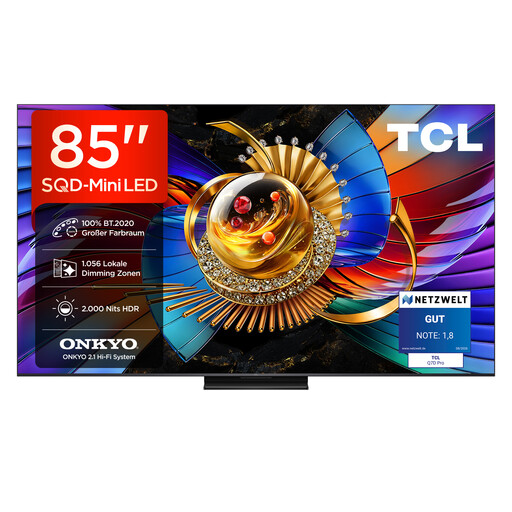
TCL 85Q7D PRO 85-inch 4K SQD mini-LED TV
The 85-inch size could suit a room where viewers sit further from the screen. First, measure the available space and viewing distance.
The product name lists 4K and 144 Hz. Check the input lag separately for the exact game mode.
Joybuy
 No image available
iFFALCON 85U75A 85-inch 4K QLED TV
The 85-inch size is worth considering for a tournament venue with spectators watching from a distance.
The product name lists 4K and 144 Hz. Check that your gaming device and TV connection support the picture signals you want to use.
Joybuy
 No image available
TCL 75Q7C 75-inch 4K mini-LED TV
A 75-inch option to compare if this size suits your viewing distance and setup.
The product name lists 4K and 144 Hz; check the input lag and supported signals for your gaming device.
Joybuy
 No image available
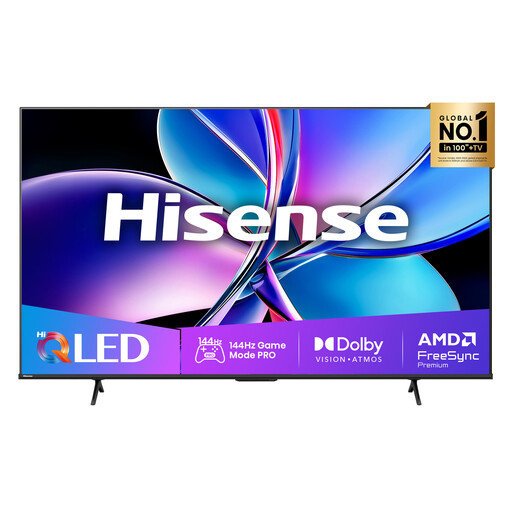
Hisense 85E7Q PRO 85-inch 4K QLED TV
The 85-inch size is a contender for viewers watching from a distance; check the sightlines in your room.
The product name lists 4K and 144 Hz. The stated refresh rate is not a measurement of input lag.
Joybuy
Frequently asked questions
Is 120 Hz essential for every fighting game?
No. First check the frame rate the game and your gaming device actually run at. The connection and settings need to support the signal, and low input lag in game mode remains a separate consideration.
What should I check if 4K/120 Hz isn’t available?
Check whether the HDMI port on the exact TV model supports 4K/120p, whether the cable is suitable and whether the signal settings for that port are correct. Sony Support notes that features and settings can vary by model and port.
How should you use an OLED TV during long gaming sessions with static HUD elements?
Follow the care instructions for the exact model. LG explains where to find Pixel Cleaning in the menu of OLED TVs from 2022 onwards; the menu path may vary by model year. This is maintenance advice, not a guarantee that image retention won’t occur.
What energy information can you check for a TV in the Netherlands?
Compare the EU energy label and look up the exact model in EPREL. The European Commission describes EPREL as a database of energy performance information for models covered by EU energy labelling rules.
What are your rights when you buy a TV online?
When you buy from a business at a distance, you generally have a 14-day cooling-off period, with some exceptions. The Netherlands government distinguishes between buying from a business and buying from a private individual. Your statutory rights are separate from this: if a TV doesn’t meet what you could reasonably expect under normal use, the seller must resolve the problem in line with the ACM’s guidance. This is not a fixed two-year guarantee period.


