
Organisers with players seated to the sides
You’re seating players and spectators around a single TV. RTINGS.com points out that a wide viewing angle can be important when several people are watching from different positions.


For a fighting game tournament with players seated away from the centre, first check how the picture looks from the outer seats, then compare measured input lag at the signal used during play. OLED is one option to compare for a wide seating arrangement; LCD remains relevant if long periods showing the same game interface, lots of ambient light or other practical considerations matter more. A TV’s 120 or 144 Hz specification does not prove that the game and source will run at that frequency.
You’re seating players and spectators around a single TV. RTINGS.com points out that a wide viewing angle can be important when several people are watching from different positions.
You want to know how quickly an action appears on screen, so you compare input lag at the resolution and refresh rate you actually use. PlayStation Support states that 120Hz output requires support from both the TV and the game.
You consider how long the same game interface will remain on screen, as well as the display technology. RTINGS.com highlights prolonged static images as something to bear in mind with OLED.
Start by checking visibility from the outer seats, then compare measured input lag using the signal that will be used during the tournament. RTINGS.com describes input lag as the time between sending a signal and displaying it; PlayStation Support says that 120Hz output requires support from both the TV and the game.
| What to consider | What to look for | Who is this important for? |
|---|---|---|
| Visibility from the side seats | View the same picture from the outer seats you plan to use, and check viewing-angle measurements for the exact model. The panel type alone doesn’t guarantee the viewing angle of a particular TV. | If I’m playing from an outer seat, I want to follow the picture easily without having to keep changing places. Around 34% of consumers prioritise visibility from the side seats. |
| Input response | Compare input lag measurements at the resolution and refresh rate you’ll use; also check the game mode and the connected source’s settings. | At a tournament, I want my controller inputs to appear on screen quickly. Around 33% of consumers prioritise responsiveness with the signal they’re playing on. |
| Prolonged static images | Consider how long the same interface will remain on screen, and check the model’s usage and warranty terms. An exceptionally long, accelerated test is not a prediction of lifespan under normal, varied use. | If the same game interface is on screen for a long time, I want to consider how I’ll use the TV when choosing display technology. Around 20% of consumers prioritise prolonged use with static images. |
| Lighting and power consumption | Assess the screen in the lighting conditions of your gaming space and compare the EU energy label in kWh/1000 hours for the models you’re considering. | In a bright gaming space, I want to judge the picture clearly and take running costs into account. Around 13% of consumers give lighting and power consumption top priority. |
A higher refresh rate doesn’t automatically mean your game and source support that output frequency. Input lag is a separate specification, too.
Check the game’s output, the TV settings and input lag measurements for the signal you’ll actually use.
Mini-LED describes the backlighting; the name alone doesn’t tell you what the picture looks like from an angled seat.
Assess the exact model from an outer seat and check measurements or a viewing-angle test for that version.
According to ACM ConsuWijzer, there is no fixed duration for the statutory guarantee in the Netherlands. What you can expect from a product depends, among other things, on the product and the circumstances.
Keep your proof of purchase and information about product claims. Contact the retailer if you think the product is faulty.
LG Netherlands lists the OLED65C68LA as the Dutch version of the OLED C6. This makes it an OLED option to compare for a wide seating arrangement.
Philips specifies Ambilight and VRR up to 144 Hz for the 55OLED810/12. Philips says the picture looks good from an angle, but this is a manufacturer claim, not an independent measurement of this model.
Samsung lists Glare Free for the Dutch 55-inch S95H version with model code QE55S95HFTXXN.
TCL Netherlands lists the 55C6K as a QD-mini-LED/LCD model with an HVA panel and a native refresh rate of 144 Hz.
This selection includes QNED and QD mini-LED TVs with stated gaming features. For each model, check the viewing angle from the outer seats and the input lag with the signal you’ll use.
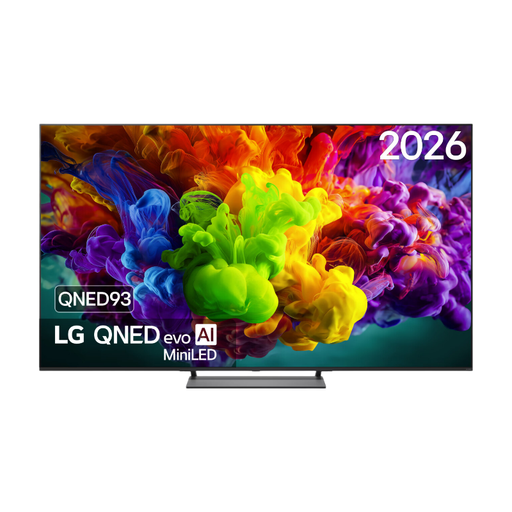 No image available
Worth considering if you’re looking for a TV with explicitly listed gaming features; those features don’t prove its viewing angle or measured input lag.
55 inches; 4K; native 120 Hz; VRR up to 144 Hz; ALLM; HDMI 2.1; Game Optimizer.
 No image available
The listed connectivity and gaming features may be useful when connecting a console or PC; assess viewing angle and input lag separately.
65 inches; 4K; 144 Hz; VRR; ALLM; HDMI 2.1; FreeSync Premium; Game Master.
 No image available
A 50-inch model to compare if its screen size suits your gaming space; the listed features alone don’t tell you how well it can be seen from a side seat.
50 inches; 4K; 144 Hz; HDMI 2.1; ALLM; FreeSync Premium Pro; Game Master.
 No image available
Compare this larger screen with the space available and your seating positions; the listed gaming features don’t prove it has a wide viewing angle or low input lag.
75 inches; 4K; 144 Hz; VRR; ALLM; HDMI 2.1; FreeSync Premium; Game Master.
 No image available
Check whether the 86-inch screen suits your room and seating arrangement; the stated features are no substitute for viewing-angle or input-lag measurements.
86 inches; 4K; 144 Hz; HDMI 2.1; FreeSync Premium.
Not necessarily. Check which output frequency the specific game and source support. PlayStation Support states that 120Hz output requires both a TV and a game that support 120 Hz; a higher TV specification won’t automatically change the game’s output.
Turn on game mode, or check that ALLM switches automatically if both the source and TV support it. Then test the input and output frequency you’ll use during the tournament.
Compare the energy labels for the exact models in kWh/1000 hours. The European Commission lists this unit for the power consumption of displays; to work out the cost, you’ll also need to know how long the TV is used and your electricity tariff.
No. The source, game and TV must all support the relevant output. Check the settings on all three and compare input lag at the resolution and refresh rate you actually use.